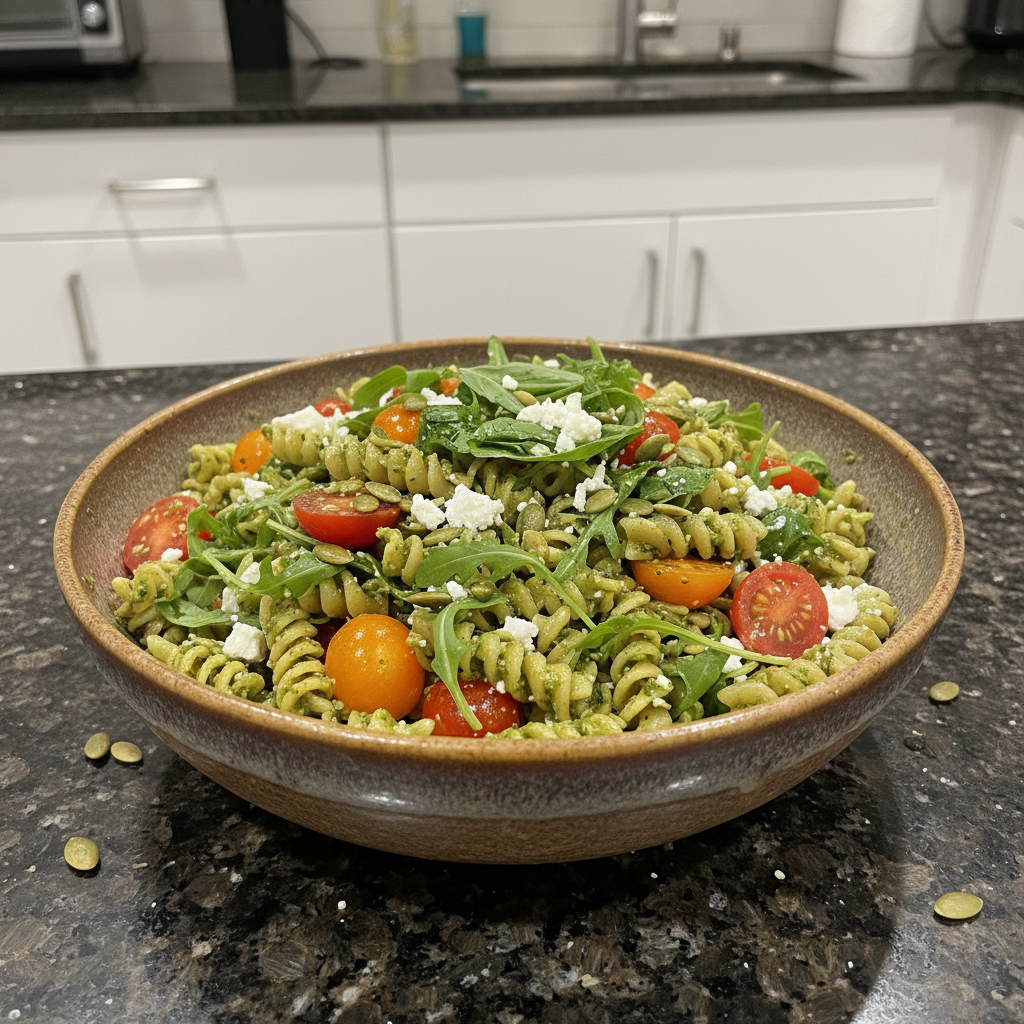
Imagine a vibrant bowl of pasta, coated in a bright green pesto, bursting with the sweetness of cherry tomatoes and the peppery bite of arugula. This Pesto Pasta Salad is not just a meal; it’s an experience! It’s incredibly versatile, perfect as a light lunch, a satisfying side dish, or even a complete dinner. Get ready to discover how to make this refreshing and flavorful pesto pasta salad with a simple, zesty twist that elevates it to a whole new level.
Why You’ll Love This Zesty Pesto Pasta Salad
Recipe
This isn’t your average pasta salad. The secret ingredient makes all the difference!
Bright and Zesty Flavor: The addition of grated lemon zest to the pesto is the key to this pasta salad’s amazing flavor. The lemon zest enhances the pesto’s flavor profile, adding a bright, citrusy note that complements the basil and other ingredients beautifully. The volatile oils in the zest provide a more complex lemon flavor than juice alone.
Quick and Easy: This recipe is incredibly simple and quick to make, perfect for those busy weeknights when you need a delicious meal in minutes.
Family-Friendly: This pesto pasta salad is a crowd-pleaser, loved by both adults and children alike. It’s a great way to get everyone to eat their veggies!
Meal Prep Friendly: You can easily make this pasta salad ahead of time, making it perfect for easy lunches or dinners throughout the week. If you are looking for another meal prep friendly recipe, check out this recipe for high protein pasta salad.
Ingredients Needed
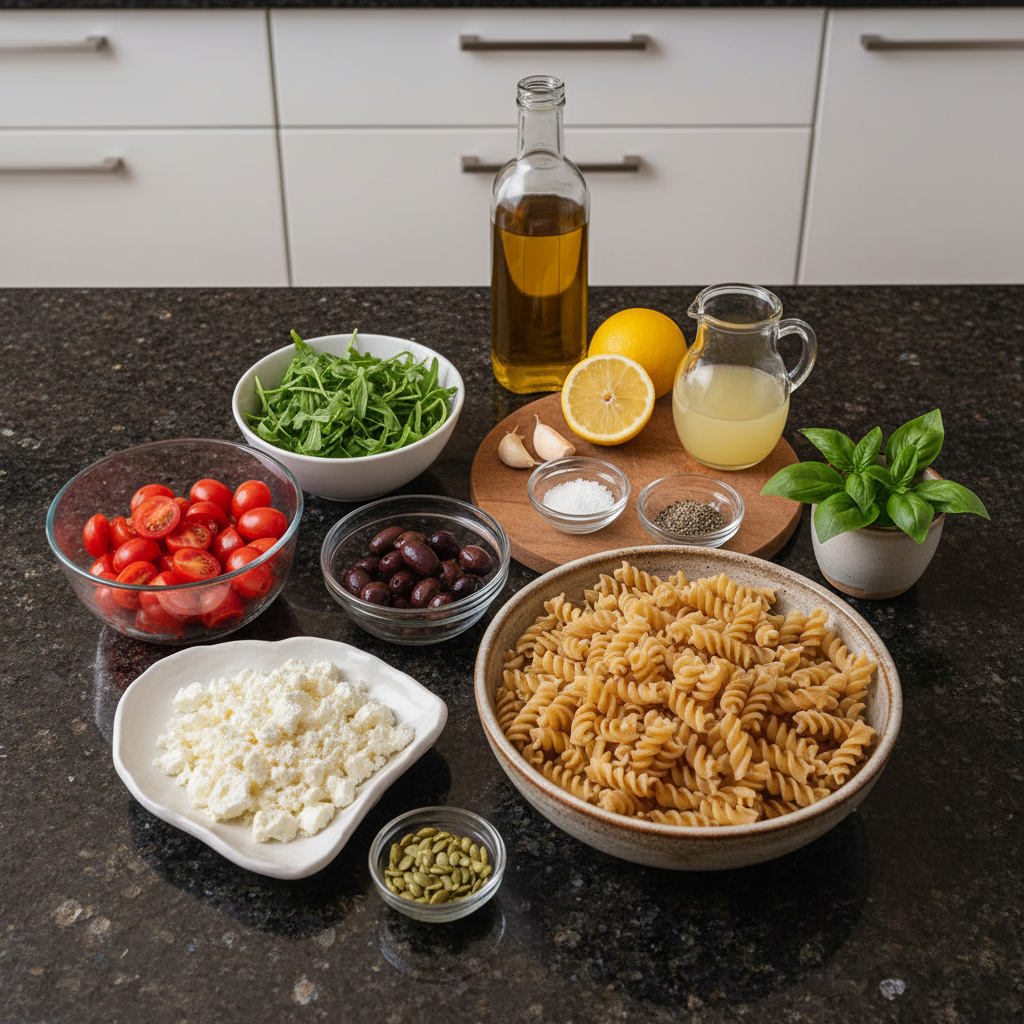
- 1 pound whole grain pasta (fusilli, rotini, penne or farfalle)
- 1 pint cherry tomatoes, halved or quartered
- 3 handfuls baby arugula or spinach
- Optional cheese: ½ cup or more crumbled feta cheese, little mozzarella balls or grated Parmesan
- Optional additions: ½ cup thinly sliced Kalamata olives and/or 1 can (15 ounces) chickpeas, rinsed and drained (or 1 ½ cups cooked chickpeas)
- Freshly ground black pepper
- ½ cup pepitas (hulled pumpkin seeds)*
- ½ cup packed fresh basil
- ½ cup packed fresh flat-leaf parsley or additional basil
- ¼ cup lemon juice (about 2 lemons)
- 1 clove garlic, roughly chopped
- ½ teaspoon fine salt
- ⅓ cup extra-virgin olive oil
Ingredient Notes & Substitutions
Pasta: I like using fusilli, rotini, penne, or farfalle for this salad because their shapes hold the pesto beautifully. Feel free to use your favorite! Whole grain pasta adds a nutty flavor and extra fiber. For a gluten-free option, use your preferred gluten-free pasta.
Pesto: While I highly recommend making your own pesto for the freshest flavor, store-bought pesto can be a convenient alternative. You’ll need about ¾ to 1 cup. If you don’t have pepitas, pine nuts, walnuts, or almonds are great substitutes. Toast them lightly for the best flavor.
Cheese: Feta, mozzarella, and Parmesan all add a delicious salty and creamy element to this salad. Use high-quality cheese for the best taste. For a dairy-free option, try a plant-based cheese alternative.
Vegetables: Feel free to add other vegetables to this salad, such as bell peppers, cucumbers, or sun-dried tomatoes. Get creative and use what you have on hand!
How to Make Pesto Pasta Salad
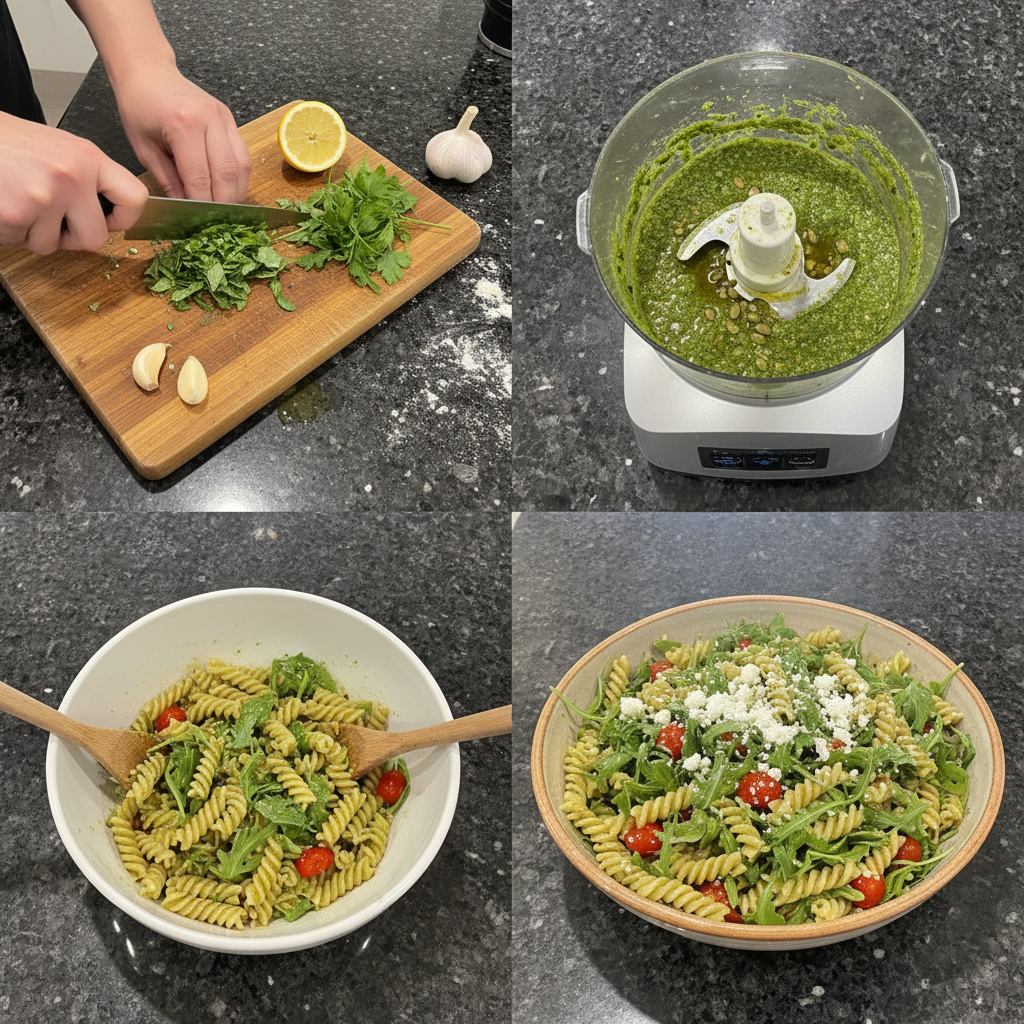
Let’s get cooking! This pesto pasta salad comes together in just a few simple steps.
Cook the Pasta
First, bring a large pot of salted water to a boil for the pasta. Once boiling, add the pasta and cook until al dente according to the package directions. It’s important not to overcook the pasta, as it will become mushy in the salad.
Before draining the pasta, reserve about ½ cup of pasta cooking water. This starchy water can be used to thin out the pesto if needed. Drain the pasta and immediately rinse it under cool water to prevent the noodles from sticking together. Transfer the rinsed pasta to a large serving bowl.
Prepare the Pesto
While the pasta is cooking, let’s make the pesto. In a small skillet, toast the pepitas over medium heat, stirring often. Toast them until they are fragrant and making little popping noises, about 4 to 5 minutes. This toasting process really brings out their nutty flavor.
Pour half of the toasted pepitas into a bowl for later; these will be used as a garnish. Pour the remaining pepitas into a food processor. Add the basil, parsley, lemon juice, garlic, and salt.
Process the mixture while slowly drizzling in the olive oil, stopping to scrape down the sides as necessary. Continue processing until the pepitas have broken down and you have a pretty smooth sauce. The aroma at this stage is simply amazing!
If you’re curious about the nutritional value of basil, you can find more information here.
Assemble the Pasta Salad
Now for the best part! Pour all of the pesto over the cooked pasta and toss until the pasta is lightly and evenly coated. If the pesto seems too thick, add a tiny splash of the reserved pasta cooking water to thin it out.
Add the cherry tomatoes, arugula (or spinach), the remaining toasted pepitas, and any optional add-ins you’re using, such as cheese, olives, and/or chickpeas.
Toss everything together again to combine. Season to taste with freshly ground black pepper. If the pasta needs more flavor, add salt, to taste, or a splash of lemon juice. If the flavors are too bold, let it rest for a few minutes, and add a little splash of olive oil if necessary to tone down the rest. This pesto pasta salad will keep well, covered and refrigerated, for up to 4 days.
Pasta Salad Perfection: Choosing the Right Pasta
The type of pasta you use can make a big difference in your pasta salad!
Pasta Shapes: I find that fusilli, rotini, penne, and farfalle are the best pasta shapes for pasta salad. Their ridges and unique textures help them hold onto the pesto sauce beautifully. Plus, they’re just fun to eat!
Cooking Pasta Al Dente: It’s crucial to cook your pasta al dente, which means “to the tooth” in Italian. This ensures that the pasta is firm and slightly chewy, preventing it from becoming mushy in the salad. Nobody likes a mushy pasta salad!
Whole Grain vs. Refined: Using whole grain pasta adds a boost of fiber and a slightly nutty flavor to your pesto pasta salad. However, refined pasta works just as well if you prefer its taste and texture.
Gluten-Free Options: If you’re gluten-free, there are many great quality gluten-free pasta options available these days. Look for brands that use a blend of rice flour, corn flour, and other gluten-free flours for the best texture.
Pesto Power: Keeping Your Pesto Green and Fresh
Pesto is the heart of this pasta salad, so let’s make sure it’s perfect!
Oxidation Prevention: Pesto can sometimes turn brown or oxidize due to exposure to air. To prevent this, add lemon juice to the pesto, drizzle a thin layer of olive oil over the top, and store it in an airtight container.
Homemade vs. Store-Bought: Homemade pesto is always best in my opinion, as it allows you to control the ingredients and flavors. However, if you’re short on time, store-bought pesto is a perfectly acceptable alternative. Look for brands that use high-quality ingredients and have a bright green color. I recommend using about ¾ to 1 cup of store-bought pesto for this recipe.
Flavor Balancing: Taste your pesto and adjust the flavors as needed. If it’s too thick, add a little more olive oil. If it needs more brightness, add a squeeze of lemon juice. And of course, don’t forget to season with salt to taste.
If you want to learn more about how olive oil is made, you can check out this article: how olive oil is made.
Lemon Zest Reinforcement: Remember, the lemon zest is what truly sets this pesto pasta salad apart. Don’t skip it! It adds a wonderful brightness and complexity to the flavor.
Pro Tips & Troubleshooting
Here are a few extra tips to help you make the best pesto pasta salad ever!
Pro Tips
Rinsing Pasta: Always rinse your pasta under cool water after cooking to stop the cooking process and prevent the noodles from sticking together. This is key to a great pasta salad texture.
Tasting and Adjusting: Taste the pasta salad throughout the process and adjust the seasoning as needed. Don’t be afraid to add more salt, pepper, or lemon juice to suit your taste.
Lemon Zest Tip: Zest the lemon directly into the food processor when making the pesto for the most intense lemon flavor.
Pasta Water: Remember to reserve that pasta water! It’s a lifesaver for thinning out the pesto if it’s too thick.
Pepitas Toasting: Toast the pepitas in a dry skillet over medium heat, stirring frequently, until they are fragrant and lightly golden brown, about 4-5 minutes. Watch them carefully, as they can burn easily.
Common Mistakes to Avoid
Overcooking Pasta: Overcooked pasta will result in a mushy salad. Cook the pasta al dente for the best texture.
Using Too Much Pesto: Start with less pesto and add more as needed. You can always add more, but you can’t take it away!
Not Cooling Pasta: Cooling the pasta is important to prevent the vegetables from wilting and the pesto from becoming oily.
Skipping the Lemon Zest: Don’t skip the lemon zest! It’s what makes this pasta salad so special.
Serving & Storage
Here’s how to serve and store your delicious pesto pasta salad.
Serving Ideas
This pesto pasta salad is delicious on its own, but it also pairs well with grilled chicken, fish, or seafood. It’s perfect for picnics, potlucks, and summer barbecues. I love to garnish it with extra pepitas, Parmesan cheese, or fresh basil for a pop of color and flavor. A refreshing glass of lemonade or iced tea is the perfect drink to serve alongside this salad.
Storage and Make-Ahead
Store leftover pasta salad in an airtight container in the refrigerator for up to 4 days. To make the salad ahead of time, you can cook the pasta and make the pesto separately, then combine them just before serving. This will help prevent the pasta from absorbing too much of the pesto and becoming mushy. To keep the pasta salad moist during storage, add a little extra olive oil or pesto before refrigerating.
Conclusion
This zesty pesto pasta salad is a guaranteed crowd-pleaser. The combination of fresh basil pesto, juicy cherry tomatoes, and the bright zing of lemon zest creates a flavor explosion that’s simply irresistible. Even beginner cooks can easily master this recipe, and I encourage you to give it a try! Feel free to experiment with different pasta shapes, cheeses, or vegetables to create your own unique version. Share this recipe with your friends and family – they’ll thank you for it!
FAQ
Here are some frequently asked questions about pesto pasta salad:
What kind of pasta is best for pesto pasta salad? Fusilli, rotini, penne, and farfalle are all excellent choices. Their shapes and ridges hold the pesto sauce well.
How long does pesto pasta salad last in the refrigerator? Pesto pasta salad will last for up to 4 days in the refrigerator, stored in an airtight container.
Can I use store-bought pesto, and how much should I use? Yes, you can use store-bought pesto. I recommend using about ¾ to 1 cup for this recipe.
What are some good vegetarian add-ins to enhance the flavor and texture? Kalamata olives, sun-dried tomatoes, bell peppers, cucumbers, artichoke hearts, and roasted vegetables are all delicious vegetarian add-ins. For a summer twist, try adding grilled halloumi like in this Greek pasta salad recipe.
How can I prevent the pesto from browning or oxidizing? Add lemon juice to the pesto, drizzle a thin layer of olive oil over the top, and store it in an airtight container in the refrigerator.
How do I make pesto pasta salad vegan and gluten-free? Use gluten-free pasta and a vegan pesto (or make your own using nutritional yeast instead of Parmesan cheese). You can also substitute the cheese with a vegan alternative or omit it altogether.
How do I keep pasta salad from drying out? Before storing, toss the pasta salad with a little extra olive oil or pesto to keep it moist. You can also add a splash of lemon juice to brighten the flavors and add moisture.
Zesty Pesto Pasta Salad: Quick & Easy Recipe
Ingredients
Method
- Bring a large pot of salted water to a boil for the pasta. Add the pasta and cook until al dente according to the package directions.
- Reserve about ½ cup of pasta cooking water before draining. Drain the pasta and immediately rinse it under cool water to prevent sticking. Transfer the rinsed pasta to a large serving bowl.
- While the pasta is cooking, toast the pepitas in a small skillet over medium heat, stirring often for about 4 to 5 minutes, until fragrant and making popping noises. Pour half of the toasted pepitas into a bowl for later garnish. Pour the remaining pepitas into a food processor. Add the basil, parsley, lemon juice, garlic, and salt.
- Process the mixture while slowly drizzling in the olive oil, stopping to scrape down the sides as necessary. Continue processing until the pepitas have broken down and you have a smooth sauce.
- Pour all of the pesto over the cooked pasta and toss until the pasta is lightly and evenly coated. If the pesto seems too thick, add a tiny splash of the reserved pasta cooking water to thin it out.
- Add the cherry tomatoes, arugula (or spinach), the remaining toasted pepitas, and any optional add-ins you're using, such as cheese, olives, and/or chickpeas.
- Toss everything together again to combine. Season to taste with freshly ground black pepper. Add salt, to taste, or a splash of lemon juice if needed. Let it rest for a few minutes if the flavors are too bold, and add a little splash of olive oil if necessary to tone down the rest. This pesto pasta salad will keep well, covered and refrigerated, for up to 4 days.
Notes