Imagine perfectly flaky, tender salmon infused with bright lemon and savory garlic, all cooked on a single sheet pan. This Sheet Pan Lemon Garlic Salmon recipe delivers that restaurant-quality experience in your own kitchen in under 30 minutes. It’s a quick, healthy, and incredibly delicious weeknight dinner that everyone will love. Forget complicated recipes and endless cleanup; this is your new go-to salmon preparation.
Why You’ll Love This Sheet Pan Lemon Garlic Salmon Recipe
This recipe isn’t just another way to cook salmon; it’s a game-changer. The secret? A simple dry brine that elevates the flavor and texture to new heights.
Quick and Easy Cleanup: Thanks to the sheet pan and foil pack method, cleanup is a breeze. Spend less time scrubbing and more time enjoying your meal.
Healthy and Delicious: Salmon is packed with omega-3 fatty acids and protein, making this a nutritious and satisfying meal. You can learn more about the benefits of omega-3 fatty acids on the Harvard School of Public Health website.
Family-Friendly Flavor: The combination of lemon, garlic, and honey creates a flavor profile that appeals to both kids and adults.
The Dry Brine Advantage: The dry brine draws out moisture, then reabsorbs it along with salt and honey. This process deeply seasons the salmon and helps it retain moisture during cooking, preventing that white albumin from appearing and resulting in a more succulent, flavorful fillet.
Ingredients Needed
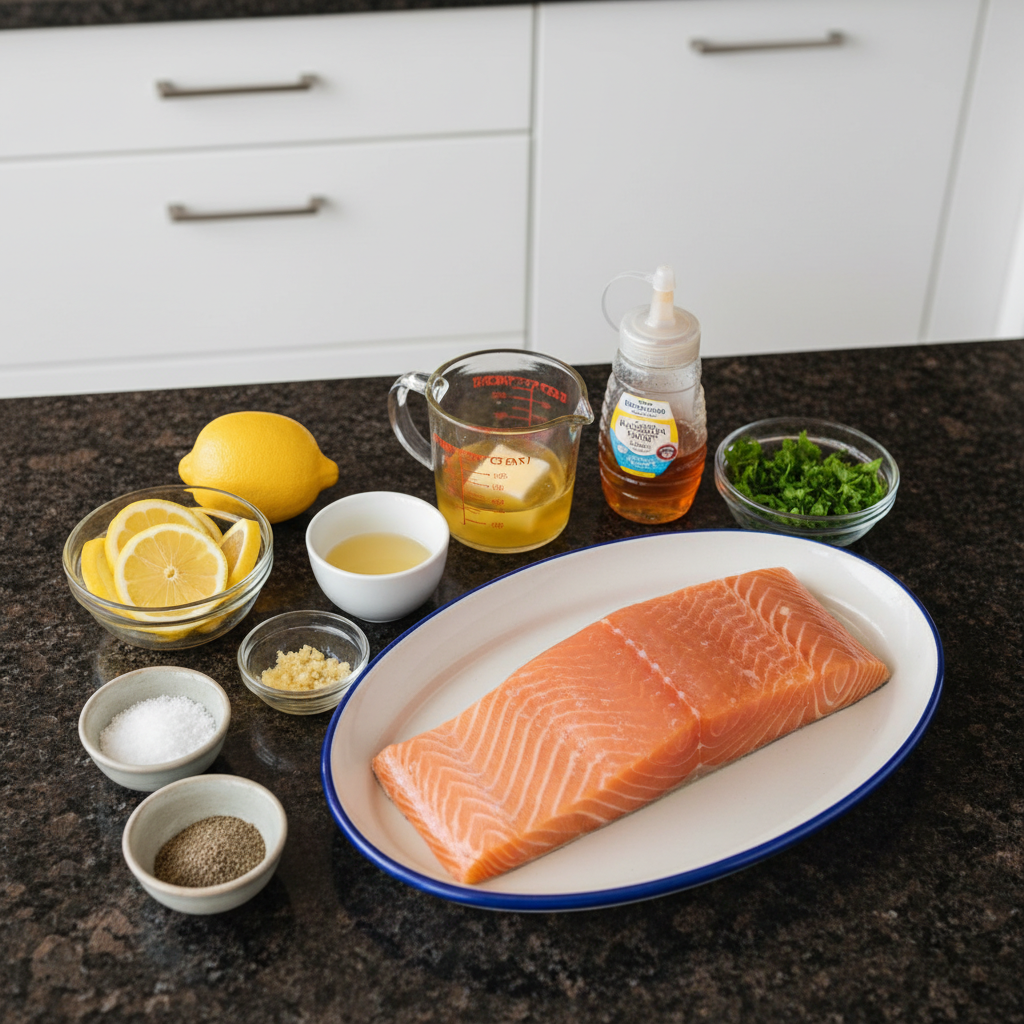
- about 1.5 to 1.75 pounds skin-on salmon fillet
- 1 lemon (sliced into thin rounds)
- 1/2 cup unsalted butter (melted)
- 3 tablespoons lemon juice (from about 1 lemon)
- 2 to 3 tablespoons honey
- 5 cloves garlic (finely pressed or minced; or to taste)
- 1 teaspoon kosher salt (or to taste)
- 1/2 teaspoon freshly ground black pepper (or to taste)
- 2 teaspoons finely chopped fresh parsley (optional for garnishing)
Ingredient Notes & Substitutions
Salmon Types: Atlantic salmon is a popular choice due to its rich flavor and higher fat content. Sockeye salmon offers a more intense flavor and vibrant color. King salmon is the most luxurious, boasting the highest fat content. Adjust cooking times slightly based on the salmon’s thickness and fat content.
Butter: I prefer unsalted butter to control the saltiness of the dish. You can substitute with olive oil for a dairy-free option.
Honey: Maple syrup or agave nectar can be used as substitutes for honey, offering similar sweetness and viscosity.
Lemon: Fresh lemon juice is essential for the best, brightest flavor. Bottled juice lacks the same zest.
Garlic: Freshly minced garlic provides the most pungent aroma and flavor. If using garlic powder, start with 1/2 teaspoon and adjust to taste.
Dietary Swaps: This recipe is naturally gluten-free and pescatarian. To make it dairy-free, substitute olive oil for butter.
How to Make Sheet Pan Lemon Garlic Salmon
Dry Brining the Salmon
In a small bowl, combine the kosher salt and 1 tablespoon of honey. Rub this mixture evenly over the salmon fillet. Place the salmon on a plate, cover it loosely with plastic wrap, and refrigerate for 30 minutes. This dry brining step is key to a flavorful and moist result. After 30 minutes, pat the salmon dry with paper towels.
Prepping the Salmon
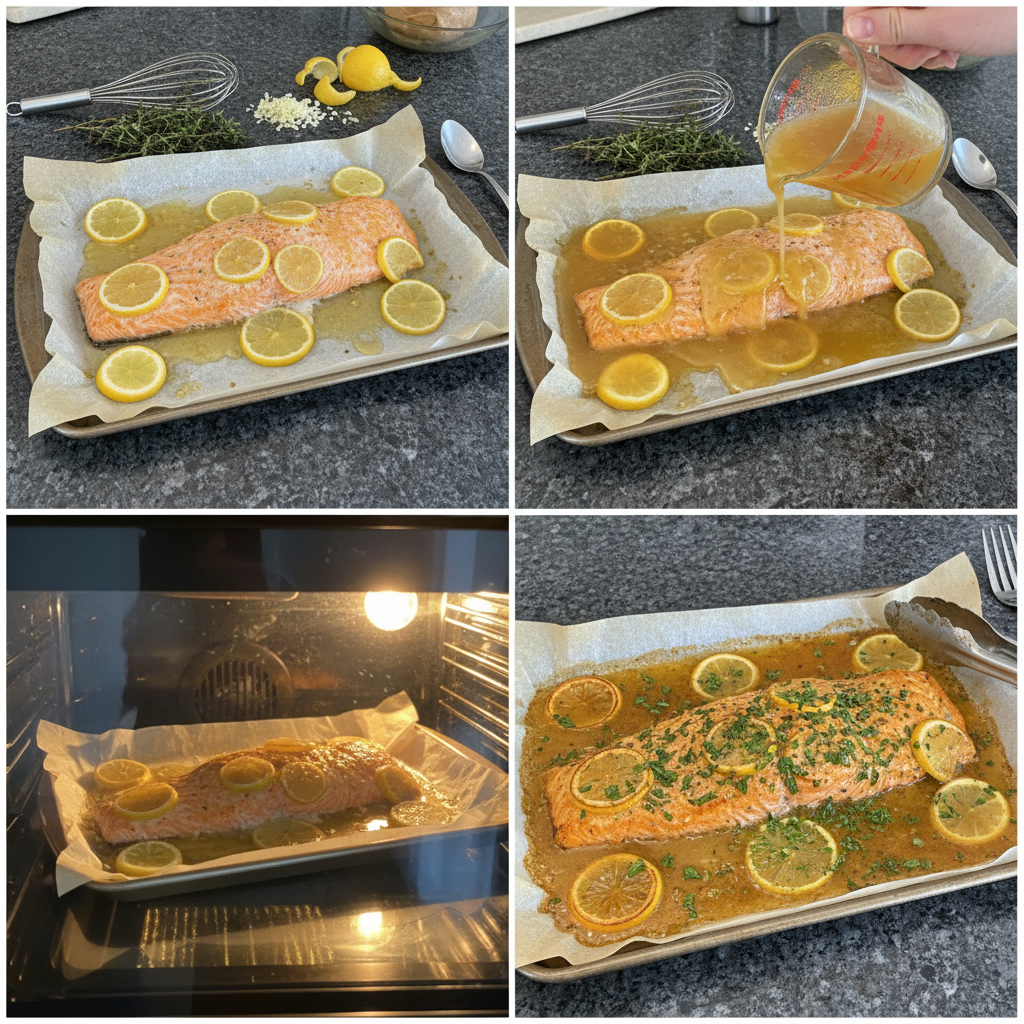
Preheat oven to 375F. Place the salmon on a sheet of foil (with the longer side parallel with the longer side of the sheet pan) with the skin-side down. Raise the edges of the foil up about 2 inches to create a basin that will hold the buttery mixture.
Adding Lemon Slices
Nestle lemon slices underneath the salmon, spacing them evenly around the fillet. This will infuse the salmon with a subtle citrus flavor.
Making the Lemon Garlic Butter Sauce
To a microwave-safe glass measuring cup or bowl, add the melted butter and heat on high power to melt, about 1 minute. Stir in the lemon juice, honey, and garlic.
Saucing and Seasoning
Pour or spoon about three-quarters of the buttery mixture over the salmon; reserve the remainder of the sauce. Evenly season salmon with freshly ground black pepper.
Sealing the Foil Pack
Seal up the foil tightly. You’ll likely need another sheet of foil on top to create a secure seal. Crimp or pinch the top and bottom pieces of foil together to make it as air-tight as possible, though it doesn’t have to be perfect. If you have time, set aside to marinate for about 10 to 15 minutes to enhance the flavor even further.
Baking
Place the foil pack on a baking sheet and bake for about 17 minutes.
Broiling
Remove the baking sheet from the oven and carefully remove the top piece of foil or open up the packet so the salmon is exposed, but keep the edges raised to contain the buttery mixture. Set oven to Hi broil.
Finishing Touches
Spoon the reserved buttery mixture over the salmon, if desired. Use your judgment; if there’s already lots of juice, you don’t need to add it because you don’t want it to start leaking. If you have extra buttery mixture, it’s great served over the finished dish. Broil salmon for about 5 to 10 minutes, or until salmon is as golden as desired. Keep a close eye on it to prevent burning.
Serving
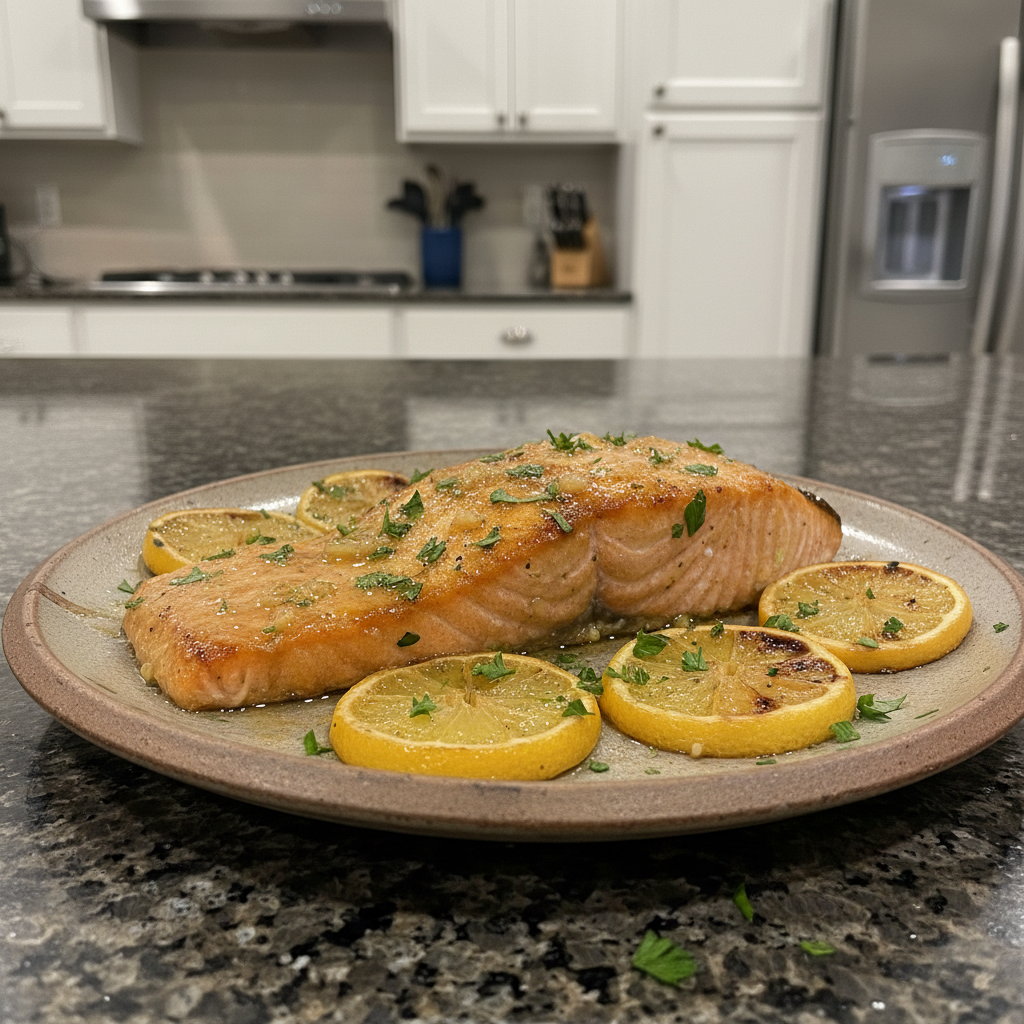
Optionally garnish the salmon with fresh parsley and serve immediately. Enjoy the burst of flavors!
Perfectly Cooked Salmon: Internal Temperature Guide
Using a meat thermometer is the most reliable way to ensure your salmon is cooked to perfection. The internal temperature dictates the doneness and texture of the fish.
Here’s a guide to internal temperatures for salmon:
- Rare: 120-125°F (49-52°C)
- Medium-Rare: 125-130°F (52-54°C)
- Medium: 130-140°F (54-60°C)
- Well-Done: 145°F (63°C) and above
The FDA recommends an internal temperature of 145°F (63°C) for cooked salmon. You can see more about the recommended safe minimum internal temperatures on the FDA website. However, keep in mind the carryover cooking phenomenon. The salmon will continue to cook for a few minutes after you remove it from the oven, so it’s best to take it out when it’s a few degrees below your desired temperature.
If you don’t have a thermometer, check for doneness by gently flaking the salmon with a fork. It should separate easily and be opaque throughout.
Pro Tips & Troubleshooting
Pro Tips
- Dry brine the salmon for at least 30 minutes for the best results. This enhances the flavor and helps the salmon retain moisture.
- Choose a salmon fillet that is relatively uniform in thickness for even cooking.
- Don’t overcrowd the sheet pan if adding vegetables. This can steam the vegetables instead of roasting them.
- Use a reliable meat thermometer to ensure the salmon is cooked to the desired doneness.
- If you have extra buttery mixture, it’s great served over the finished dish.
Common Mistakes to Avoid
- Overbaking the salmon can cause it to become dry. Watch the cooking time carefully.
- Not sealing the foil pack well can cause steam to escape, affecting the cooking time and moisture.
- Burning the salmon under the broiler. Keep a close eye on the salmon while broiling.
- Using too much honey can make the salmon overly sweet.
Serving & Storage
Serving Ideas
- Serve with mashed potatoes or roasted potatoes.
Looking for a side dish? You might also like this delicious creamy potato soup recipe.
- Serve over rice or quinoa.
- Pair with a side of roasted vegetables like asparagus, broccoli, or green beans.
- Serve with a side salad.
- Garnish with fresh parsley and lemon wedges.
Storage and Make-Ahead
Fridge: Store leftover salmon in an airtight container in the refrigerator for up to 3-4 days.
Freezer: Freezing is not recommended as it affects the texture of the salmon.
Reheating: Reheat gently in the oven or microwave to prevent drying out. Add a splash of water or broth when reheating to maintain moisture.
Conclusion
This Sheet Pan Lemon Garlic Salmon recipe is a winner because it’s easy, healthy, and bursting with flavor, and the dry brine trick truly takes it to the next level. Even if you’re new to cooking salmon, this recipe is straightforward and forgiving. Feel free to experiment with different herbs, vegetables, or sweeteners to make it your own. Share this recipe with your friends and family and enjoy a delicious, stress-free meal!
If you enjoy easy recipes, you might also like this 5-ingredient crockpot chicken recipe.
FAQ
How do I prevent my salmon from drying out? Dry brining and avoiding overcooking are key. Use a meat thermometer to ensure it reaches the proper internal temperature.
What temperature should the salmon be cooked to? The recommended internal temperature is 145°F (63°C).
Can I use frozen salmon? Yes, but thaw it completely before cooking. Pat it dry to remove excess moisture.
What are some good side dishes to serve with this salmon? Roasted vegetables, rice, quinoa, or macaroni salad all pair well.
How long can I store leftover salmon? Store leftover salmon in the refrigerator for up to 3-4 days.
What is the best way to reheat leftover salmon? Reheat gently in the oven or microwave with a splash of water to prevent drying.
Can I use other types of fish? Yes, but cooking times may vary. Thicker fillets like cod or halibut will need longer cooking.
Easy Sheet Pan Lemon Garlic Salmon Recipe
Ingredients
Equipment
Method
- In a small bowl, combine the kosher salt and 1 tablespoon of honey. Rub this mixture evenly over the salmon fillet. Place the salmon on a plate, cover it loosely with plastic wrap, and refrigerate for 30 minutes. After 30 minutes, pat the salmon dry with paper towels.
- Preheat oven to 375F. Place the salmon on a sheet of foil (with the longer side parallel with the longer side of the sheet pan) with the skin-side down. Raise the edges of the foil up about 2 inches to create a basin that will hold the buttery mixture.
- Nestle lemon slices underneath the salmon, spacing them evenly around the fillet.
- To a microwave-safe glass measuring cup or bowl, add the melted butter and heat on high power to melt, about 1 minute. Stir in the lemon juice, honey, and garlic.
- Pour or spoon about three-quarters of the buttery mixture over the salmon; reserve the remainder of the sauce. Evenly season salmon with freshly ground black pepper.
- Seal up the foil tightly. You'll likely need another sheet of foil on top to create a secure seal. Crimp or pinch the top and bottom pieces of foil together to make it as air-tight as possible, though it doesn't have to be perfect. If you have time, set aside to marinate for about 10 to 15 minutes to enhance the flavor even further.
- Place the foil pack on a baking sheet and bake for about 17 minutes.
- Remove the baking sheet from the oven and carefully remove the top piece of foil or open up the packet so the salmon is exposed, but keep the edges raised to contain the buttery mixture. Set oven to Hi broil.
- Spoon the reserved buttery mixture over the salmon, if desired. Use your judgment; if there’s already lots of juice, you don’t need to add it because you don’t want it to start leaking. If you have extra buttery mixture, it’s great served over the finished dish. Broil salmon for about 5 to 10 minutes, or until salmon is as golden as desired. Keep a close eye on it to prevent burning.
- Optionally garnish the salmon with fresh parsley and serve immediately. Enjoy the burst of flavors!
Notes