Have you ever imagined the vibrant flavors of Japan dancing with the creamy decadence of Italy? My kitchen experiments led me to a delightful discovery: Matcha Tiramisu. This isn’t just another dessert; it’s a fusion of cultures, blending the earthy notes of matcha with the classic richness of tiramisu. Get ready to indulge in layers of creamy mascarpone, matcha-soaked ladyfingers, and a surprising hint of citrus. This detailed recipe will guide you through each step, ensuring your own Matcha Tiramisu is a masterpiece.
Why You’ll Love This Zesty Matcha Tiramisu Recipe
This Matcha Tiramisu recipe elevates the traditional dessert with a unique twist. The infusion of citrus zest creates a flavor profile that’s both familiar and exciting.
Unique Twist: The addition of citrus zest, whether it’s yuzu or lemon, to the mascarpone cream is what sets this recipe apart. It brightens the matcha flavor and adds a layer of complexity that you won’t find in traditional tiramisu recipes.
Balances Flavors: The citrus cuts through the richness of the mascarpone and balances the slight bitterness of the matcha, creating a harmonious and refreshing dessert.
Taste and Texture: Expect a creamy, bittersweet experience with a delightful citrusy lift. The textures range from the soft ladyfingers to the smooth mascarpone cream, making each bite a pleasure.
No-Bake: This recipe is incredibly easy to make since it requires no baking at all.
Impressive Dessert: Matcha Tiramisu is the perfect dessert for gatherings and special occasions. It’s unique, flavorful, and sure to impress your guests.
Make-Ahead: You can prepare this tiramisu in advance, making it a convenient option for busy schedules.
Ingredients Needed
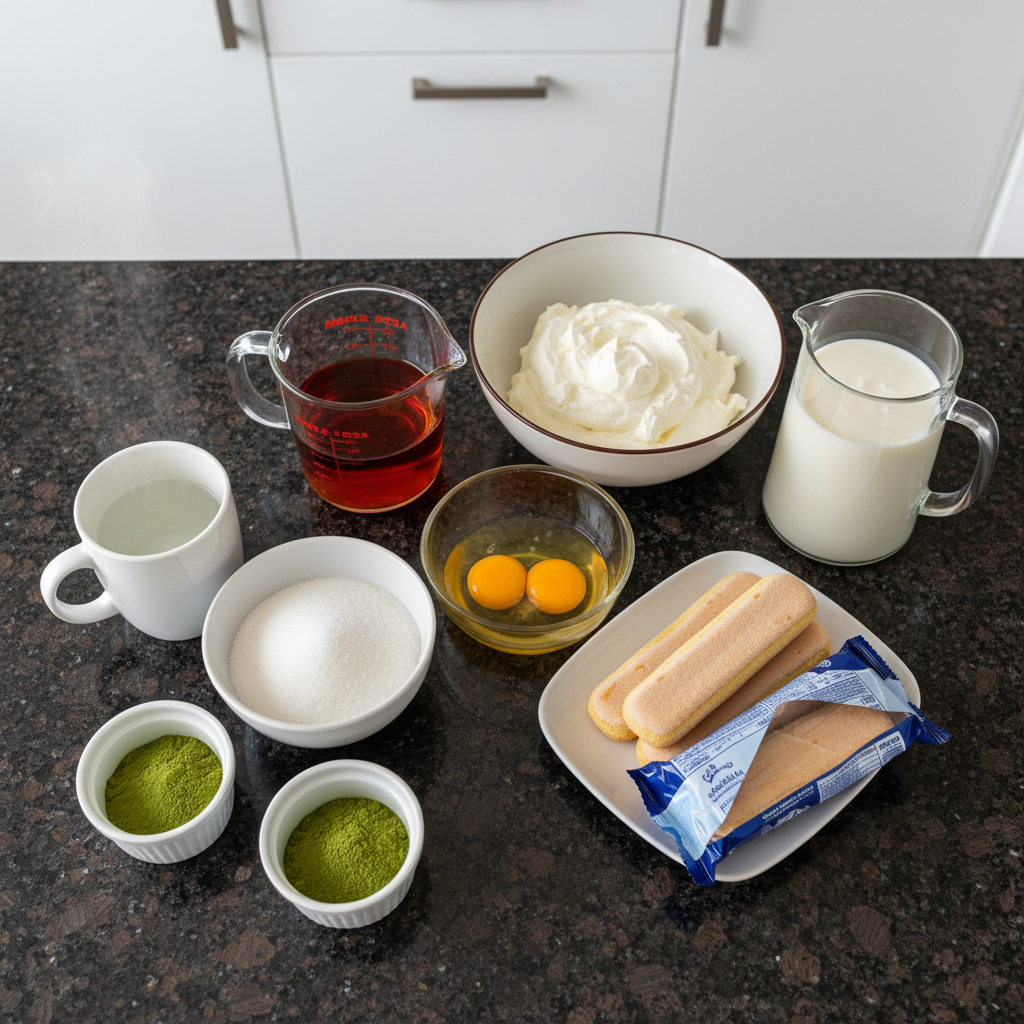
- 3 large egg yolks ((one egg yolk is about 19 g; at room temperature))
- ⅓ cup sugar ((divided))
- 2 Tbsp marsala wine ((highly recommend; missing a kick without it; can substitute with dark rum or brandy))
- 8 oz mascarpone cheese ((at room temperature) )
- 1½ cups heavy (whipping) cream ((chilled))
- ½ cup water ((heated to 175ºF/80ºC))
- 1½ Tbsp matcha (ceremoial or culinary grade) ((9 g))
- 24 ladyfingers ((divided, for 2 layers; you will need 36 cookies for 3 layers; read the post))
- 2 Tbsp matcha (ceremoial or culinary grade) ((for dusting))
Ingredient Notes & Substitutions
Here are a few notes on the ingredients, including substitutions if needed.
Matcha: Ceremonial grade matcha is best for dusting and provides a vibrant green color and smoother flavor, while culinary grade is great for the soaking liquid. Consider brands like Ippodo Tea Co. or Rishi Tea, widely available in the US. You can find more information about the production and uses of matcha on Wikipedia. Store your matcha in an airtight container in a cool, dark place to maintain freshness.
Mascarpone: Room temperature mascarpone is crucial for a smooth, lump-free cream. If needed, you can substitute with cream cheese, but be aware that it will alter the flavor profile.
Ladyfingers: Ladyfingers are ideal for soaking up the matcha mixture. While traditionally used, you could experiment with other cookies, but the texture will differ.
Marsala wine: For a non-alcoholic version, substitute with strong brewed coffee or even grape juice. The Marsala wine adds a depth of flavor.
Dairy-Free Adaptations: You can use full-fat coconut cream, chilled, for the whipped cream component. There are also dairy-free mascarpone options available in some specialty stores.
How to Make Matcha Tiramisu
Please note that this is a chilled dessert and requires at least 4 hours of chilling time, preferably overnight. Follow these steps for a perfect Matcha Tiramisu.
Prepare the Equipment
Gather all the ingredients and equipment before starting. You will need a medium saucepan, a medium heatproof mixing bowl to set over the saucepan, and two large bowls. Fill one of the large bowls with water and ice, ensuring the mixing bowl fits inside for cooling the egg mixture. Also, keep an instant-read thermometer nearby for the double boiler process.
Create the Double Boiler
Set up a double boiler. First, add 2 inches of water to the saucepan. Next, set the mixing bowl on top and check that the bottom of the bowl does not touch the water. Set aside the mixing bowl to use for the egg mixture. Bring the water to a bare simmer over medium heat, then reduce the heat to low.
Cook the Egg Yolks
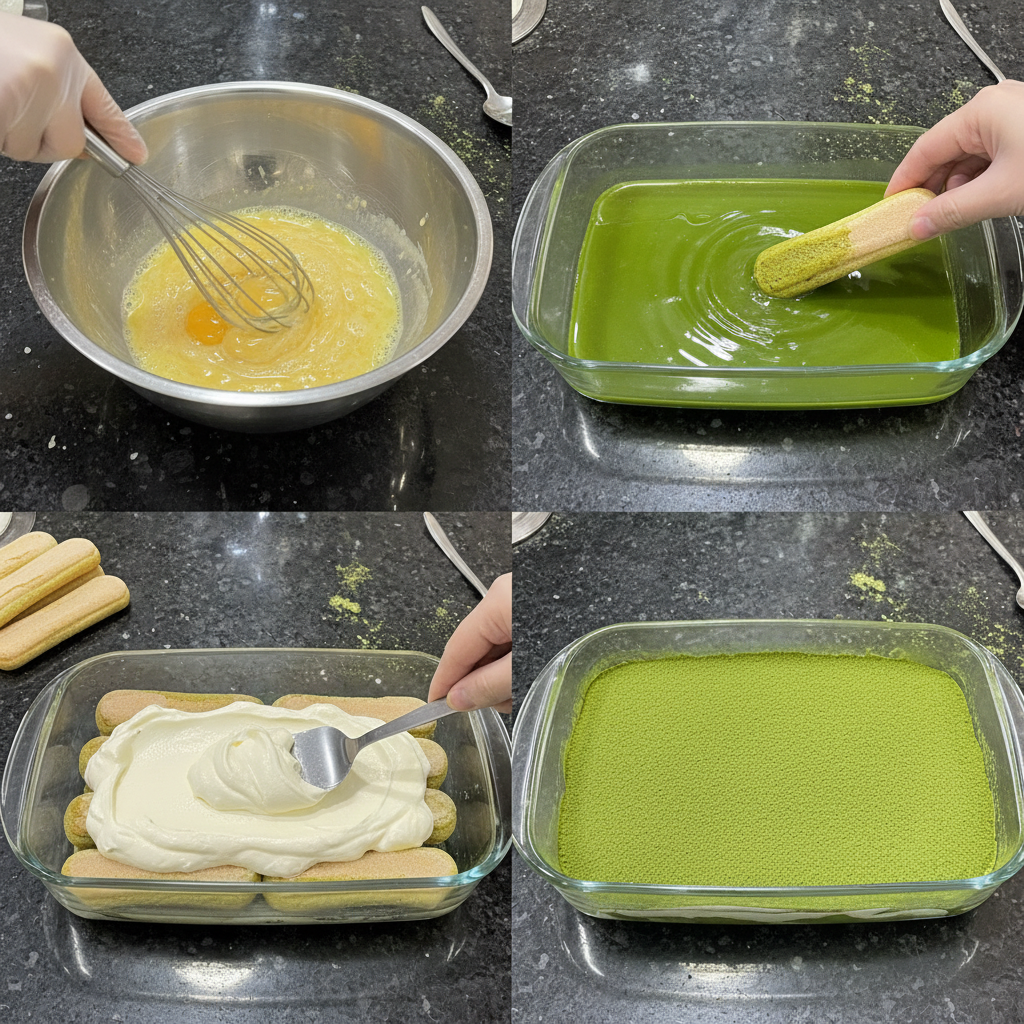
In the medium heatproof mixing bowl, add 3 large egg yolks, 2 Tbsp marsala wine, and 3 Tbsp of the ⅓ cup sugar. Start whisking it with a handheld electric mixer.
Set the bowl over the saucepan of barely simmering water and continue to beat the egg yolks. Over the next 10 minutes or so, you‘ll gently cook this egg mixture until it registers 160ºF (71ºC), when it‘s safe to consume. Keep your instant-read thermometer handy to check the temperature. Tip: At around 160ºF, your eggs may turn into scrambled eggs; therefore, I highly recommend both an electric mixer and an instant-read thermometer for this process.
Continue to cook the egg mixture, beating it constantly. The egg mixture will increase in volume and become lighter in texture. It will also turn a pale yellow color. I use Speed 3 of a 5-speed hand mixer throughout this process. Continue to check the temperature.
Cool the Egg Mixture
As soon as the egg mixture reaches 160ºF (71ºC), immediately remove the mixing bowl from the saucepan. Set the bowl in the ice bath to quickly stop the cooking. Let it cool for 1 minute.
Soften the Mascarpone
Meanwhile, put 8 oz mascarpone cheese in another large bowl and soften it with a silicone spatula.
Combine Egg and Mascarpone
Add the cooled egg mixture into the bowl with the mascarpone. Note: The egg mixture may get cooked a bit on the sides of the bowl from the double boiler. Do not scrape off or use this cooked egg in your mascarpone mixture. Gently fold the egg mixture into the mascarpone until just smooth. Tip: The egg mixture will become grainy if overmixed.
Whip the Cream
Now, make the whipped cream: In another bowl, beat 1½ cups heavy (whipping) cream until foamy; you can reuse the bowl from the ice bath, but make sure it‘s completely dry. Then, gradually add the rest of the sugar. Beat together until medium peaks form. The cream should hold its shape well but is still soft and hasn’t started to become grainy. When you lift out the whisk, peaks will form but they will bend over at the end.
Incorporate Whipped Cream
Now, gently fold the whipped cream mixture into the mascarpone mixture. Fold the mascarpone cream until well combined.
Prepare the Matcha Mixture
In a small bowl, combine ½ cup water (heated to 175ºF/80ºC) and 1½ Tbsp matcha (ceremoial or culinary grade). Whisk together until there are no lumps. Transfer this matcha mixture to a flat-bottomed container big enough for a ladyfinger cookie to lay flat. The mixture should be a vibrant green.
Soak the Ladyfingers
Gather 24 ladyfingers. One at a time, quickly dip a ladyfinger into the matcha mixture until soaked but not soggy; use a pair of tongs to flip it over to soak the other side. Then, place it on the bottom of an 8 x 8-inch (20 x 20 cm) baking dish. Repeat until you‘ve arranged 2 rows of 6 ladyfingers each.
Layer the Tiramisu
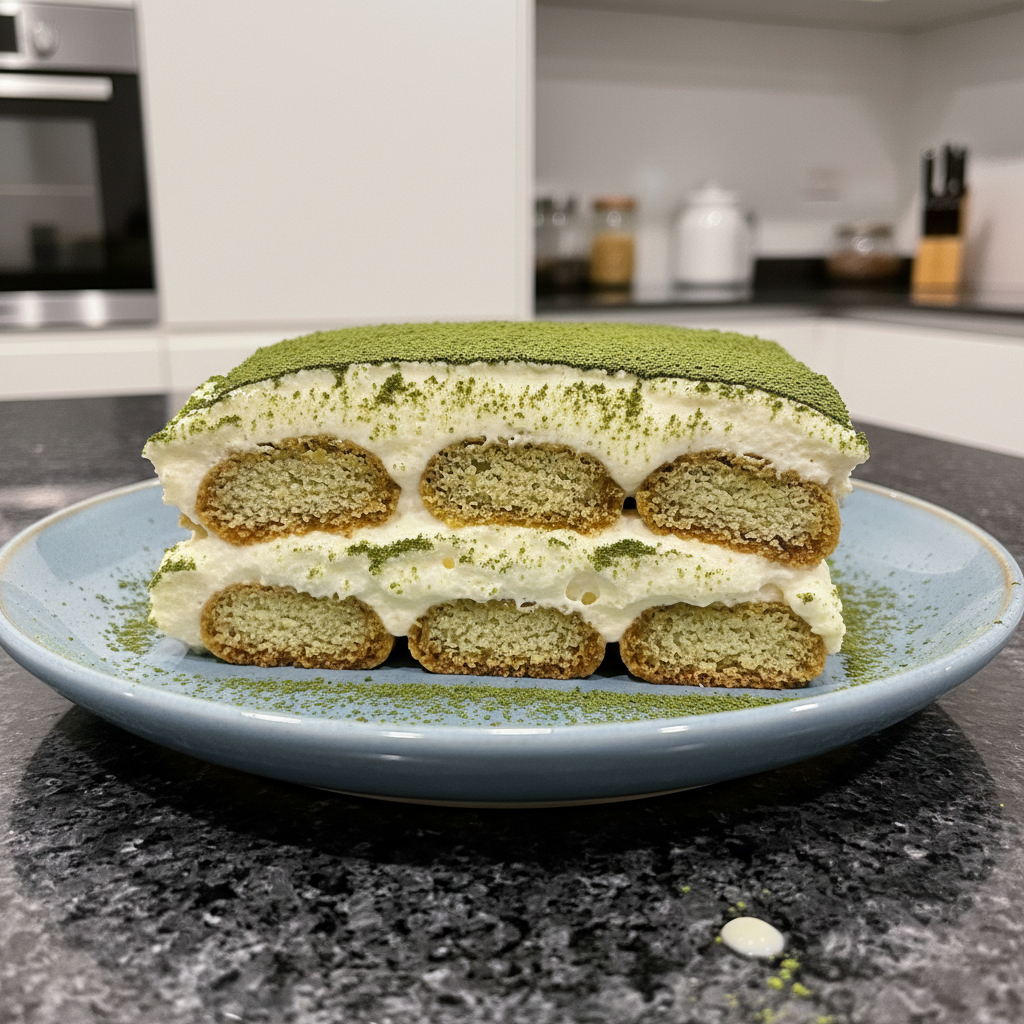
Spread half of the mascarpone cream over the ladyfingers in an even layer. Smooth out the surface using the silicone spatula or a silicone pastry scraper. Create a second layer of cookies, dipping the remaining ladyfingers in the matcha mixture and placing them in 2 neat rows on top of the mascarpone cream layer.
Chill
Top with the remaining cream and smooth out the top. Cover with a sheet of plastic wrap placed directly on the surface of the cream to prevent a skin from forming. Refrigerate for at least 4 hours, preferably overnight.
Dust and Serve
Remove your chilled Matcha Tiramisu from the refrigerator and unwrap the plastic. Immediately before serving, dust 2 Tbsp matcha (ceremoial or culinary grade) on top of the tiramisu using a fine-mesh sieve. Enjoy!
You can keep the leftovers in an airtight container and store in the refrigerator for up to 3 days.
Matcha Grades Explained
Understanding the different grades of matcha is key to achieving the best flavor and color in your Matcha Tiramisu.
Ceremonial grade matcha is the highest quality, made from the youngest tea leaves. It boasts a vibrant green color and a smooth, slightly sweet flavor, making it ideal for enjoying on its own or for dusting on top of desserts. Speaking of other delicious desserts, have you tried these strawberry shortcake cookies? Culinary grade matcha, on the other hand, is made from older leaves and has a more robust, slightly bitter flavor. It’s perfect for baking and cooking, where its bolder taste can shine through without being overshadowed by other ingredients.
For this tiramisu, ceremonial grade is best for dusting, providing that beautiful green finish. Culinary grade works great within the matcha soaking liquid.
Troubleshooting Common Tiramisu Problems
Even with the best recipes, things can sometimes go awry. Here’s how to troubleshoot some common tiramisu issues.
Soggy Ladyfingers: Prevent this by giving the ladyfingers a quick dip in the matcha mixture. They should be moist but not saturated. A quick dip and flip is all you need.
Curdled Cream: Overmixing is often the culprit. Use a gentle folding technique when combining the whipped cream and mascarpone mixture to maintain a smooth texture.
Grainy Texture: This usually happens when the egg yolks are overcooked. Use an instant-read thermometer to ensure they reach 160°F (71°C) but don’t exceed it. Also, avoid overmixing the egg mixture into the mascarpone.
Pro Tips & Troubleshooting
Pro Tips
- Use high-quality matcha for the best flavor and color.
- Don’t oversoak the ladyfingers to prevent a soggy tiramisu.
- Use an electric mixer when cooking egg yolks to prevent scrambled eggs.
- Chill the tiramisu for at least 4 hours, or preferably overnight, for the best texture.
- Dust with matcha powder right before serving to prevent moisture absorption.
- Gently fold the egg mixture into the mascarpone; overmixing will make it grainy.
Common Mistakes to Avoid
- Using low-quality matcha can result in a dull flavor.
- Overmixing the egg mixture with mascarpone leads to a grainy texture.
- Not using enough matcha can result in a less pronounced flavor.
- Soaking ladyfingers for too long makes them soggy.
- Skipping the chilling time will result in a runny tiramisu.
Serving & Storage
Serving Ideas
Serve this Matcha Tiramisu chilled, straight from the refrigerator. You can also rim the edges of the dish with thinly sliced strawberries or serve it in individual glass containers to showcase the layers. Pair it with a cup of green tea or sake for an authentic experience. Dust with extra matcha powder just before serving for a vibrant presentation. Looking for another drink pairing? Try this kale citrus smoothie for a refreshing complement.
Storage and Make-Ahead
Store leftover tiramisu in an airtight container in the refrigerator for up to 3 days. The tiramisu can be made 1-2 days in advance and stored in the refrigerator. Freezing is not recommended as it can alter the texture of the mascarpone cream. If you’re interested in the science behind food storage and safety, the USDA provides detailed guidelines.
Conclusion
This Matcha Tiramisu offers a unique and delightful flavor combination of matcha, creamy mascarpone, and a hint of citrus. It’s incredibly easy to make, requiring no baking, and is perfect for impressing guests or enjoying a special treat. If you enjoyed this fusion dessert, you might also enjoy this vegetarian pizza recipe, which also puts a fun twist on a classic. I encourage you to try this recipe and share your creations. Explore other Japanese-Italian fusion recipes on my blog for more culinary adventures!
FAQ
Here are some frequently asked questions about making Matcha Tiramisu.
What grade of matcha should I use for this recipe?
For dusting the top, use ceremonial grade matcha for its vibrant color and smooth flavor. Culinary grade matcha is suitable for the soaking liquid.
How can I prevent the ladyfingers from becoming soggy?
Quickly dip the ladyfingers into the matcha mixture, ensuring they are moist but not oversaturated. A brief dip on each side is sufficient.
What can I substitute for Marsala wine?
You can use strong brewed coffee or grape juice as a non-alcoholic alternative.
How long does the tiramisu need to chill for the best texture?
A minimum chilling time of 4 hours is recommended, but preferably overnight for the best flavor and texture.
What are common problems and how can I troubleshoot them?
Common problems include soggy ladyfingers (quick dip), curdled cream (gentle folding), and grainy texture (temperature control and avoid overmixing).
Can this recipe be made ahead of time?
Yes, it can be made 1-2 days in advance and stored in the refrigerator. Need another make-ahead recipe? These gingerbread cheesecake bars are perfect.
“`
Zesty Matcha Tiramisu
Ingredients
Equipment
Method
- Gather all the ingredients and equipment before starting. You will need a medium saucepan, a medium heatproof mixing bowl to set over the saucepan, and two large bowls. Fill one of the large bowls with water and ice, ensuring the mixing bowl fits inside for cooling the egg mixture. Also, keep an instant-read thermometer nearby for the double boiler process.
- Set up a double boiler. First, add 2 inches of water to the saucepan. Next, set the mixing bowl on top and check that the bottom of the bowl does not touch the water. Set aside the mixing bowl to use for the egg mixture. Bring the water to a bare simmer over medium heat, then reduce the heat to low.
- In the medium heatproof mixing bowl, add 3 large egg yolks, 2 Tbsp marsala wine, and 3 Tbsp of the ⅓ cup sugar. Start whisking it with a handheld electric mixer.
- Set the bowl over the saucepan of barely simmering water and continue to beat the egg yolks. Over the next 10 minutes or so, you‘ll gently cook this egg mixture until it registers 160ºF (71ºC), when it‘s safe to consume. Keep your instant-read thermometer handy to check the temperature. Tip: At around 160ºF, your eggs may turn into scrambled eggs; therefore, I highly recommend both an electric mixer and an instant-read thermometer for this process.
- Continue to cook the egg mixture, beating it constantly. The egg mixture will increase in volume and become lighter in texture. It will also turn a pale yellow color. I use Speed 3 of a 5-speed hand mixer throughout this process. Continue to check the temperature.
- As soon as the egg mixture reaches 160ºF (71ºC), immediately remove the mixing bowl from the saucepan. Set the bowl in the ice bath to quickly stop the cooking. Let it cool for 1 minute.
- Meanwhile, put 8 oz mascarpone cheese in another large bowl and soften it with a silicone spatula.
- Add the cooled egg mixture into the bowl with the mascarpone. Note: The egg mixture may get cooked a bit on the sides of the bowl from the double boiler. Do not scrape off or use this cooked egg in your mascarpone mixture. Gently fold the egg mixture into the mascarpone until just smooth. Tip: The egg mixture will become grainy if overmixed.
- Now, make the whipped cream: In another bowl, beat 1½ cups heavy (whipping) cream until foamy; you can reuse the bowl from the ice bath, but make sure it‘s completely dry. Then, gradually add the rest of the sugar. Beat together until medium peaks form. The cream should hold its shape well but is still soft and hasn’t started to become grainy. When you lift out the whisk, peaks will form but they will bend over at the end.
- Now, gently fold the whipped cream mixture into the mascarpone mixture. Fold the mascarpone cream until well combined.
- In a small bowl, combine ½ cup water (heated to 175ºF/80ºC) and 1½ Tbsp matcha (ceremoial or culinary grade). Whisk together until there are no lumps. Transfer this matcha mixture to a flat-bottomed container big enough for a ladyfinger cookie to lay flat. The mixture should be a vibrant green.
- Gather 24 ladyfingers. One at a time, quickly dip a ladyfinger into the matcha mixture until soaked but not soggy; use a pair of tongs to flip it over to soak the other side. Then, place it on the bottom of an 8 x 8-inch (20 x 20 cm) baking dish. Repeat until you‘ve arranged 2 rows of 6 ladyfingers each.
- Spread half of the mascarpone cream over the ladyfingers in an even layer. Smooth out the surface using the silicone spatula or a silicone pastry scraper. Create a second layer of cookies, dipping the remaining ladyfingers in the matcha mixture and placing them in 2 neat rows on top of the mascarpone cream layer.
- Top with the remaining cream and smooth out the top. Cover with a sheet of plastic wrap placed directly on the surface of the cream to prevent a skin from forming. Refrigerate for at least 4 hours, preferably overnight.
- Remove your chilled Matcha Tiramisu from the refrigerator and unwrap the plastic. Immediately before serving, dust 2 Tbsp matcha (ceremoial or culinary grade) on top of the tiramisu using a fine-mesh sieve. Enjoy!
- You can keep the leftovers in an airtight container and store in the refrigerator for up to 3 days.
Notes

Lia Monet is a food blogger, recipe developer, and the founder of EasyAsMeals, a food blog focused on easy recipes, quick dinners, and everyday home cooking. She creates tested, family-friendly recipes using simple ingredients to help busy families cook affordable and delicious meals at home.