Ready to take your pesto game to the next level? This isn’t your ordinary recipe; it’s a vibrant, flavorful vegan basil pesto that will elevate your meals. The secret? Lacto-fermented garlic. This simple addition not only enhances the pesto’s flavor with a tangy, umami depth, but it also helps to preserve it for longer. Get ready to learn how to make a pesto that’s both delicious and practical!
Why You’ll Love This Vegan Basil Pesto Recipe
This vegan basil pesto recipe is a game-changer, and here’s why:
Unique Flavor Twist: The use of lacto-fermented garlic transforms the pesto. Instead of the sharp bite of raw garlic, you get a complex, tangy, and umami-rich flavor that’s simply irresistible. The lacto-fermentation process mellows the garlic and unlocks hidden depths of flavor. For more information on the fermentation process, you can check out this article on the health benefits of fermented foods.
Extended Shelf Life: Lacto-fermentation naturally preserves the pesto. The lactic acid produced during fermentation inhibits the growth of spoilage bacteria, meaning your pesto stays fresher for longer.
Quick and Easy: This recipe comes together in minutes using a food processor or blender. It’s perfect for busy weeknights and meal prepping.
Dietary-Friendly: This recipe is naturally vegan, gluten-free, and dairy-free, making it a great option for those with dietary restrictions or preferences.
Ingredients Needed

- 2 cups packed fresh basil (large stems removed)
- 3 Tbsp pine nuts or walnuts (if nut-free, try sunflower seeds!)
- 3 large cloves garlic (peeled)
- 2 Tbsp lemon juice
- 3-4 Tbsp nutritional yeast
- 1/4 tsp sea salt (plus more to taste)
- 2-3 Tbsp extra virgin olive oil
- 3-6 Tbsp water (plus more as needed)
Ingredient Notes & Substitutions
Let’s dive a little deeper into the ingredients. Here are some notes and substitutions to help you customize this vegan basil pesto to your liking:
Basil: Genovese basil is widely considered the best type for pesto due to its fragrant aroma and slightly sweet flavor. However, any fresh basil will work. Avoid basil with dark spots or blemishes. You can learn more about different basil varieties on Britannica’s basil page.
Nuts: Pine nuts are traditional, but walnuts, sunflower seeds, or even hemp seeds are excellent substitutes. Walnuts add a slightly earthy flavor, while sunflower seeds offer a milder, nut-free alternative. Toasting the nuts beforehand enhances their flavor and adds a bit of complexity.
Nutritional Yeast: This ingredient provides a cheesy, savory flavor. Look for brands like Bragg or Bob’s Red Mill in the US. Nutritional yeast is also a good source of B12, which is often lacking in vegan diets. If you’re looking for other healthy recipes, you might enjoy this homemade protein powder recipe.
Olive Oil: Extra virgin olive oil (EVOO) is recommended for its rich flavor. For an oil-free version, substitute vegetable broth or water. Keep in mind that this will change the texture of the pesto, making it less creamy.
Salt: Sea salt is my preference, but you can use any type of salt you have on hand. Adjust the amount to taste.
Fermented Garlic: You can either purchase pre-fermented garlic or ferment your own. The flavor is milder and more complex than raw garlic. If using raw garlic, start with less and adjust to taste.

How to Make Vegan Basil Pesto
Here’s how to make this delicious vegan basil pesto:
Step 1: Combine Ingredients
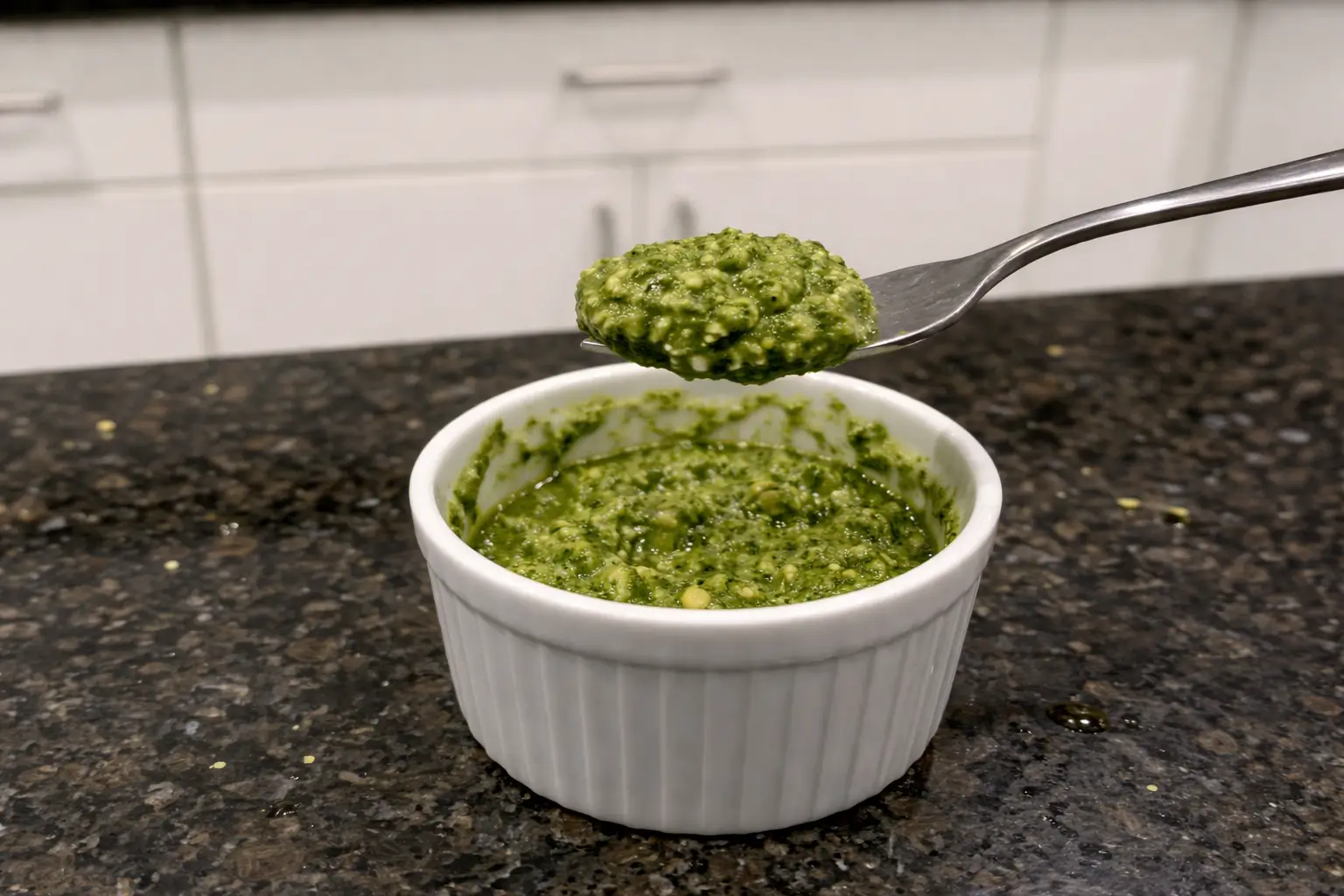
To a food processor or small blender, add the basil, nuts, fermented garlic, lemon juice, nutritional yeast, and sea salt. Blend on high until a coarse paste forms. The mixture should be a vibrant green color, and the aroma of fresh basil and tangy garlic will already be enticing.
Step 2: Add Liquids
Gradually add the olive oil, streaming it in while the machine is running, if possible. Scrape down the sides as needed to ensure everything is evenly incorporated. Then, add water one tablespoon at a time until the pesto reaches your desired consistency – a thick but pourable sauce. It’s crucial to add the water gradually to prevent a watery pesto.
Step 3: Taste and Adjust
Taste and adjust the flavor as needed. Add more nutritional yeast for a cheesier flavor, salt for overall flavor, nuts for nuttiness, fermented garlic for bite/zing, or lemon juice for acidity. At this stage, the pesto should smell incredibly fresh and inviting.
Step 4: Use and Store
Your vegan basil pesto is now ready to use! It’s perfect for adding to sauces, dressings, breads, and more. My favorite recent way to enjoy it is straight on zucchini or carrot noodles for a beautiful, healthy side dish. Store any leftovers properly (see storage instructions below).
Troubleshooting Common Pesto Problems
Sometimes, things don’t go exactly as planned. Here are some solutions to common pesto problems:
Too Bitter? This can be due to bruised basil leaves or low-quality olive oil. Use fresh, vibrant basil and good quality extra virgin olive oil.
Not Smooth Enough? Use a high-powered food processor or blender and blend for a longer time. Adding more olive oil or water can also help.
Too Garlicky? Fermented garlic is less intense, but if it’s still too much, use less. Roasting the garlic before adding it can also mellow the flavor.
Lacking Flavor? Add more nutritional yeast for cheesiness, lemon juice for brightness, or salt to enhance the overall flavor.
Pro Tips & Troubleshooting
Pro Tips
- Toast the pine nuts or walnuts for a deeper, nuttier flavor.
- Use a high-quality extra virgin olive oil for the best flavor.
- Add ice cubes or chill your food processor bowl to keep the basil from browning during processing.
- Taste as you go and adjust the seasonings to your liking.
- For a smoother pesto, soak the nuts in water for 30 minutes before blending.
- If basil leaves are juicy, you might not need to add any water.
Common Mistakes to Avoid
- Adding too much water, which can result in a watery pesto.
- Using old or bruised basil, which can make the pesto taste bitter.
- Over-processing the pesto, which can make it too smooth and pasty.
- Not tasting and adjusting the seasonings.
- Using raw garlic, and missing out on the umami flavor and preservation benefit of fermented garlic.
Serving & Storage
Serving Ideas
- Toss with pasta for a quick and easy meal.
- Spread on sandwiches or wraps.
- Use as a dip for vegetables or crackers.
- Drizzle over grilled vegetables or meats (if not strictly vegan).
- Stir into soups or stews for added flavor.
- Add to zucchini or carrot noodles for a healthy side dish.
- Serve over butter beans and cavolo nero kale.
- Serve with tomato and fresh mozzarella (not vegan, but the pesto is still dairy-free on its own).
Storage and Make-Ahead
Store leftover pesto in an airtight container in the refrigerator for up to 5 days. To prevent browning, cover the pesto with a thin layer of olive oil before refrigerating.
For longer storage, freeze the pesto in ice cube trays or small containers for up to 3 months. Thaw in the refrigerator before using. And while you’re thinking about freezer-friendly options, consider exploring this guide on easy frozen chicken crockpot recipes for more convenient meal ideas.
Conclusion
This vegan basil pesto with fermented garlic is more than just a recipe; it’s a flavor adventure! The tangy, umami-rich flavor of the fermented garlic, combined with the freshness of basil and the creaminess of nutritional yeast, creates a pesto that’s truly special. Plus, the lacto-fermentation process gives it a longer shelf life, so you can enjoy it for longer. Feel free to experiment with different nuts, herbs, and serving ideas to make it your own. Don’t forget to share this recipe with your friends and explore other delicious vegan recipes on my blog!
FAQ
Here are some frequently asked questions about making vegan basil pesto:
What can I substitute for pine nuts in vegan basil pesto?
Walnuts, sunflower seeds, or hemp seeds are great alternatives. Walnuts offer an earthy flavor, while sunflower and hemp seeds provide a milder, nut-free option. The texture will be slightly different depending on the substitute you choose.
How long does vegan basil pesto last, and what’s the best way to store it?
In the refrigerator, it will last up to 5 days. For longer storage, freeze it in ice cube trays for up to 3 months. Store it in an airtight container, and consider adding a layer of olive oil on top to prevent browning. Looking for another great way to use basil? You might also enjoy this bright and flavorful classic Caprese salad recipe.
Is nutritional yeast essential for vegan basil pesto, and what flavor does it add?
No, but it contributes a cheesy, savory flavor that enhances the overall taste. It’s a great vegan substitute for parmesan cheese. The flavor is often described as nutty, cheesy, and umami. You can learn more about the nutritional value of this vegan staple from this Healthline article.
Can I make vegan basil pesto without oil, and how would that affect the texture?
Yes, you can substitute vegetable broth or water for the olive oil. However, the texture will be less creamy and more watery. You may need to use more nutritional yeast to compensate for the lack of richness.
What are some creative ways to use vegan basil pesto beyond pasta?
Spread it on sandwiches or wraps, use it as a dip for vegetables, drizzle it over grilled vegetables, or stir it into soups and stews for an extra boost of flavor.
How can I adjust the flavor if I find the pesto too garlicky or too lemony?
Use less fermented garlic or lemon juice. Add more basil or nutritional yeast to balance the flavors. Taste as you go and adjust accordingly.
Can I freeze vegan basil pesto?
Absolutely! Portion it out into ice cube trays for easy single-serving uses. Once frozen, transfer the pesto cubes to a freezer bag for longer storage. To complete your vegan meal prep, don’t forget a vibrant smoothie. Check out this recipe for a vibrant kale mango smoothie with a zing!
Vegan Basil Pesto Recipe: Tangy Twist with Fermented Garlic
Ingredients
Equipment
Method
- To a food processor or small blender, add the basil, nuts, fermented garlic, lemon juice, nutritional yeast, and sea salt. Blend on high until a coarse paste forms.
- Gradually add the olive oil, streaming it in while the machine is running, if possible. Scrape down the sides as needed to ensure everything is evenly incorporated. Then, add water one tablespoon at a time until the pesto reaches your desired consistency – a thick but pourable sauce. It’s crucial to add the water gradually to prevent a watery pesto.
- Taste and adjust the flavor as needed. Add more nutritional yeast for a cheesier flavor, salt for overall flavor, nuts for nuttiness, fermented garlic for bite/zing, or lemon juice for acidity. At this stage, the pesto should smell incredibly fresh and inviting.
- Your vegan basil pesto is now ready to use! It’s perfect for adding to sauces, dressings, breads, and more. My favorite recent way to enjoy it is straight on zucchini or carrot noodles for a beautiful, healthy side dish. Store any leftovers properly (see storage instructions below).
Notes

Lia Monet is a food blogger, recipe developer, and the founder of EasyAsMeals, a food blog focused on easy recipes, quick dinners, and everyday home cooking. She creates tested, family-friendly recipes using simple ingredients to help busy families cook affordable and delicious meals at home.