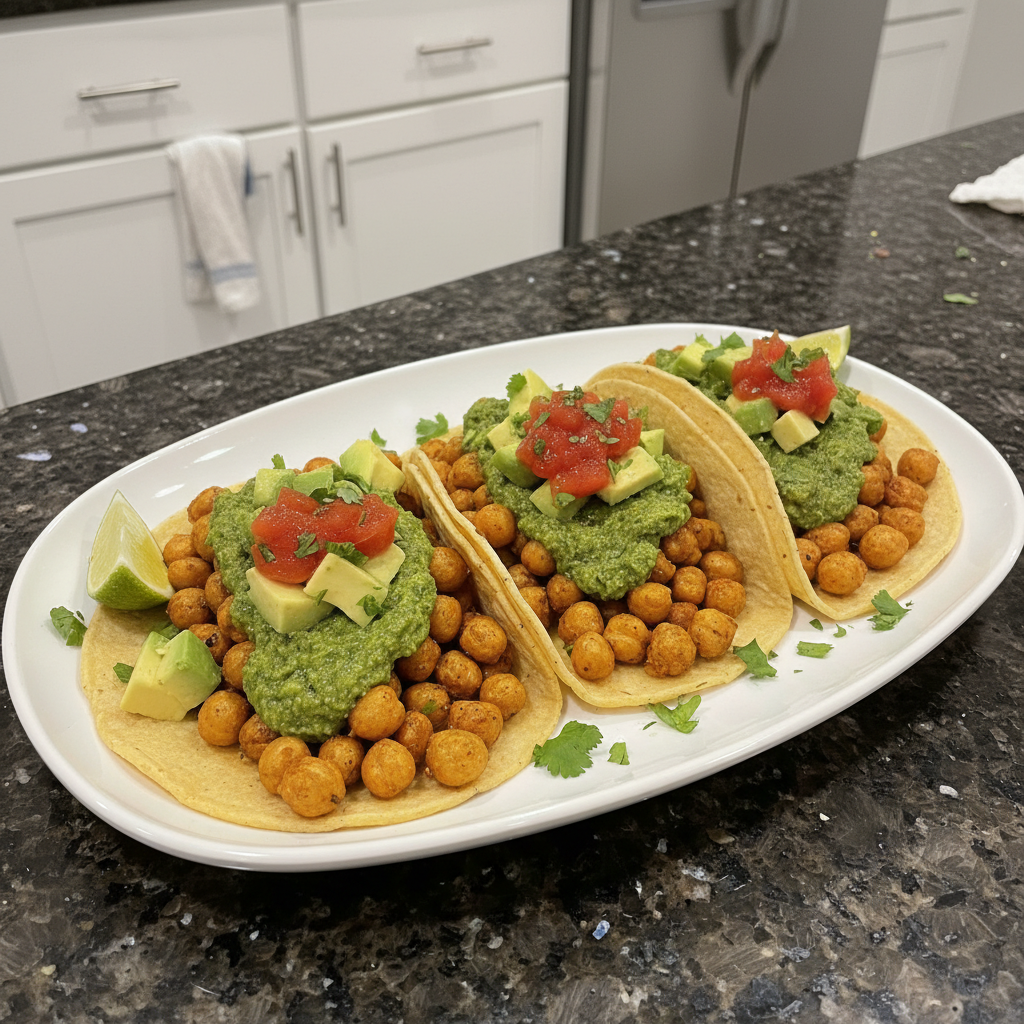
Craving a comforting, flavorful meal but short on time? I’ve got you covered! This Potato Curry recipe is the perfect solution for a delicious, home-cooked dinner, even on the busiest weeknights. It’s incredibly simple to make, packed with aromatic spices, and ready in just 30 minutes. This article provides a detailed recipe, along with helpful tips and variations that are great for beginners.
Why You’ll Love This Potato Curry Recipe
This isn’t just any potato curry recipe; it has a secret ingredient that elevates it to the next level. Here’s why you’ll keep coming back to it:
The Secret Twist: The addition of a touch of tomato paste unlocks a richer, more complex flavor in this curry. This unexpected ingredient adds depth and a subtle sweetness that perfectly complements the spices.
Umami Boost: Tomato paste adds umami and a concentrated tomato flavor, enhancing the overall depth of the curry. It also contributes lycopene, a powerful antioxidant with many health benefits. You can read more about the health benefits of lycopene on the Harvard School of Public Health’s website. The small addition of tomato paste enhances the color beautifully, bringing it closer to restaurant quality.
Quick and Easy: This recipe is ready in just 30 minutes, making it perfect for busy weeknights. It’s a budget-friendly, family-friendly, and easily adaptable for meal prep.
Ingredients Needed
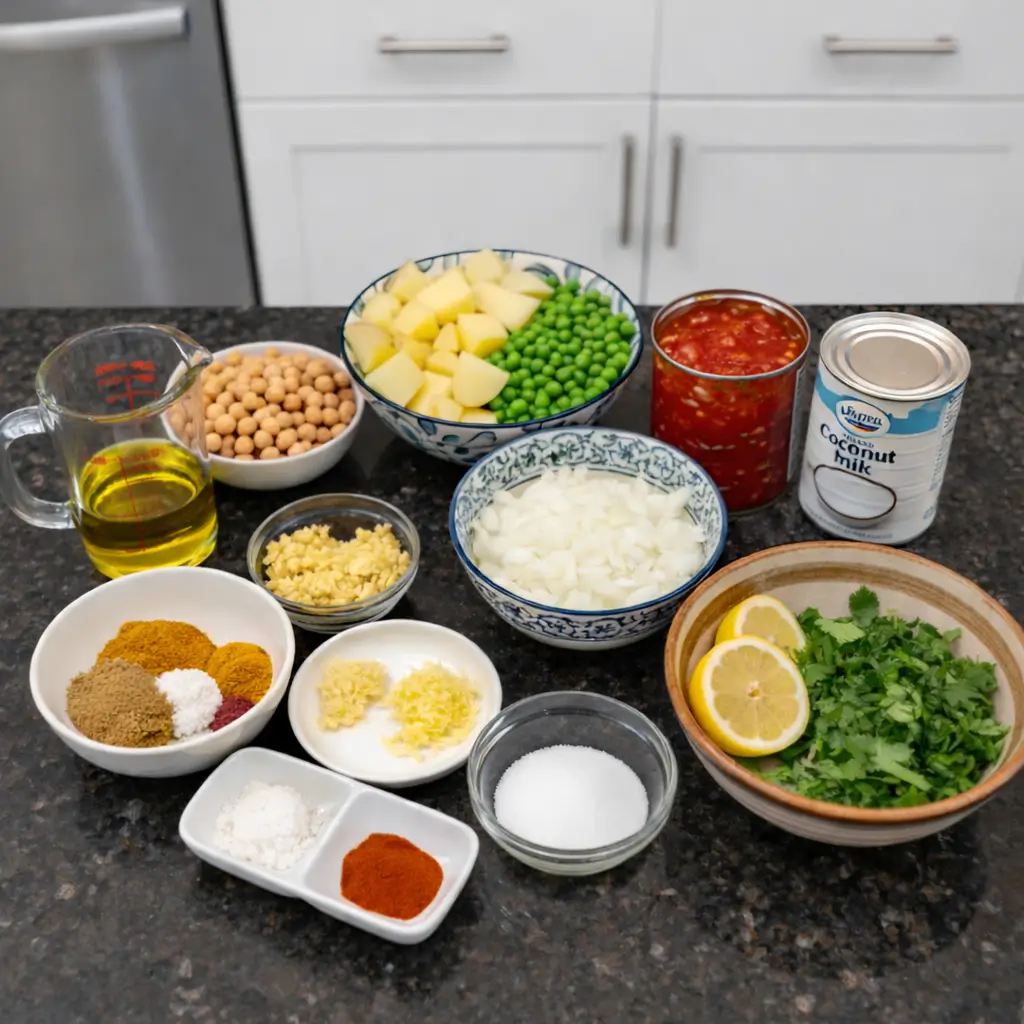
- 2 tablespoons extra virgin olive oil
- 1 medium yellow onion
- 3 cloves minced garlic (about 1 tablespoon)
- 1 tablespoon minced fresh ginger
- 1 tablespoon curry powder
- 2 teaspoons garam masala
- 2 teaspoons ground cumin
- 1 teaspoon ground turmeric
- 1/4 teaspoon kosher salt (plus additional to taste)
- ¼ teaspoon cayenne pepper (plus additional to taste)
- 2 pounds Yukon gold potatoes (peeled and ¾-inch diced (about 4 potatoes))
- 1 14-ounce can reduced sodium chickpeas (rinsed and drained)
- 1 14-ounce can diced tomatoes in their juices
- 1 14-ounce can light coconut milk*
- 1 teaspoon granulated sugar (optional; I find it better balances the flavor, though you can wait to add it if you prefer)
- 1 tablespoon freshly squeezed lemon juice
- 1 cup frozen peas (no need to thaw)
- Chopped fresh cilantro (for serving)
- Prepared brown rice (cauliflower rice, or naan, for serving)
Ingredient Notes & Substitutions
Here are a few notes and substitution ideas to help you customize the recipe to your liking:
Potato Varieties: I prefer using Yukon Gold potatoes for this curry because they are waxy and hold their shape well during cooking. Red potatoes are also a good option. I don’t recommend russet potatoes, as they can become too starchy and fall apart.
Curry Powder: Curry powder is a blend of spices, and the heat level can vary depending on the brand. Adjust the amount of cayenne pepper to your preference. You can always add more, but you can’t take it away!
Coconut Milk: Light coconut milk is used in this recipe to keep it lighter, but full-fat coconut milk will result in a richer, creamier curry. You can even use coconut cream for an extra decadent version.
Chickpeas: Chickpeas are a classic choice for this curry, but you can substitute other beans like kidney beans or cannellini beans if you prefer. Be sure to rinse and drain canned chickpeas to reduce the sodium content. They contain vitamin B, vitamin C, potassium, fiber, and manganese.
Vegan & Gluten-Free: This recipe is naturally vegan and gluten-free, making it suitable for a variety of dietary needs. For another delicious vegan option, consider this vegan mac and cheese recipe!

How to Make Potato Curry
Follow these simple steps to create a flavorful and satisfying potato curry in your own kitchen:
Step 1: Sauté Aromatics
In a Dutch oven or similar large pot over medium heat, heat the oil until shimmering but not smoking. Once it is hot, add the onion and cook for 4 minutes, until beginning to soften and turn translucent. Reduce the heat as needed so the onion doesn’t turn brown. The onions should sizzle gently in the oil, softening beautifully.
Add the garlic and ginger. Sauté just until fragrant, about 30 seconds. Be careful not to brown the garlic and ginger, as this can make them taste bitter.
Step 2: Bloom the Spices
Add the curry powder, garam masala, cumin, turmeric, salt, and cayenne. Stir and cook until the spices are very fragrant, about 1 minute. Toasting the spices in the hot oil helps to release their aromas and enhance their flavor.
Add the potatoes. Stir to coat with the spices.
Stir in the chickpeas, coating them with the spices.
Step 3: Simmer and Develop Flavors
Stir in the tomatoes and coconut milk. Increase the heat to medium high. Once the liquid starts to bubble, reduce the heat to medium and let simmer steadily but gently for 15 minutes, or until the potatoes are tender when pierced with a fork. Stir every few minutes to prevent the curry from sticking. The gentle simmer allows the potatoes to absorb all those wonderful flavors.
Step 4: Finish with Freshness
Stir in the sugar and lemon juice. Then, stir in the peas. Let simmer 1 minute to warm through. The lemon juice adds a bright, fresh note to the curry, while the peas add a pop of color.
Sprinkle generously with chopped cilantro. Serve hot with prepared rice or naan and an extra sprinkle of cilantro. The cilantro adds a final burst of flavor and freshness.
Mastering Curry Powders: A Flavor Guide
Curry powder isn’t a single spice, but a blend of many, each contributing to its unique flavor profile.
Regional Variations: You’ll find many types of curry powders, from mild to hot. Madras curry powder is known for its intense flavor and heat. Knowing your curry powder will help you adjust the flavors of your curry.
Spice Breakdown: Common spices in curry powder include turmeric, coriander, cumin, ginger, and chili powder. Turmeric lends its signature yellow color and earthy flavor, while coriander and cumin add warmth and depth.
DIY Curry Powder: Feel adventurous? You can make your own curry powder blend. There are many recipes and guides available online to customize your own curry powder.
Pro Tips & Troubleshooting
Pro Tips
- Use waxy potatoes: Waxy potatoes like Yukon Gold hold their shape better during cooking, preventing the curry from becoming mushy.
- Adjust the spice level: Taste the curry and add more cayenne pepper or chili flakes to increase the heat.
- Simmer gently: Simmer the curry over medium-low heat to prevent scorching and allow the flavors to meld.
- Don’t overcook the potatoes: Keep an eye on the potatoes and test them for doneness with a fork. Overcooked potatoes will become mushy.
Common Mistakes to Avoid
- Forgetting to stir: Forgetting to stir can cause the curry to stick and burn on the bottom of the pot.
- Using old spices: Use fresh spices for the best flavor. Old spices lose their potency and can result in a bland curry.
- Adding too much salt: Taste the curry before adding more salt. It’s easier to add salt than to take it away!
- Not adjusting the spice level: Customize the spice level to your preference.
Serving & Storage
Serving Ideas
- Rice: Serve with brown rice, basmati rice, or cauliflower rice.
- Naan: Serve with warm naan bread for dipping.
- Garnishes: Garnish with fresh cilantro, a dollop of plain yogurt (if not vegan), or a sprinkle of red pepper flakes.
- Lemon Wedges: Serve with lemon wedges for extra brightness.
Storage and Make-Ahead
- Fridge: Store leftover curry in an airtight container in the refrigerator for up to 3-4 days.
- Freezer: Freeze the curry for longer storage (up to 2-3 months). Use freezer-safe containers or bags.
- Reheating: Reheat the curry on the stovetop or in the microwave. Add a splash of water or broth if needed.
Conclusion
This potato curry recipe is a testament to how simple ingredients and a clever twist can create an incredibly flavorful and satisfying meal. The touch of tomato paste adds a depth of flavor you won’t believe. It’s an easy recipe that is quick to make.
If you’re a beginner cook, don’t worry! This recipe is incredibly straightforward and adaptable to your preferences. Feel free to experiment with different vegetables, spice levels, and serving ideas. If you want to explore more about curry origins and variations, Wikipedia offers a comprehensive overview. If you are looking for another easy recipe, try this creamy potato soup recipe.
Go ahead and print this recipe or share it with your friends. Enjoy!
FAQ
Here are some frequently asked questions about making potato curry:
What kind of potatoes are best for potato curry?
Waxy potatoes like Yukon Gold or red potatoes are best because they hold their shape during cooking. Russet potatoes tend to become too mushy.
How do I make potato curry thicker?
Simmer the curry uncovered for a longer period to reduce the liquid. You can also mash a few of the potatoes to thicken the sauce.
Can I add other vegetables to potato curry?
Absolutely! Cauliflower, spinach, bell peppers, and peas are all great additions. Add them during the last 10-15 minutes of cooking. Speaking of spinach, have you tried this easy spinach banana smoothie?
How do I store and reheat potato curry?
Store leftover curry in an airtight container in the refrigerator for up to 3-4 days. Reheat on the stovetop or in the microwave.
What can I serve with potato curry?
Potato curry is delicious served with brown rice, basmati rice, or naan bread. You can also garnish it with fresh cilantro or a dollop of plain yogurt (if not vegan).
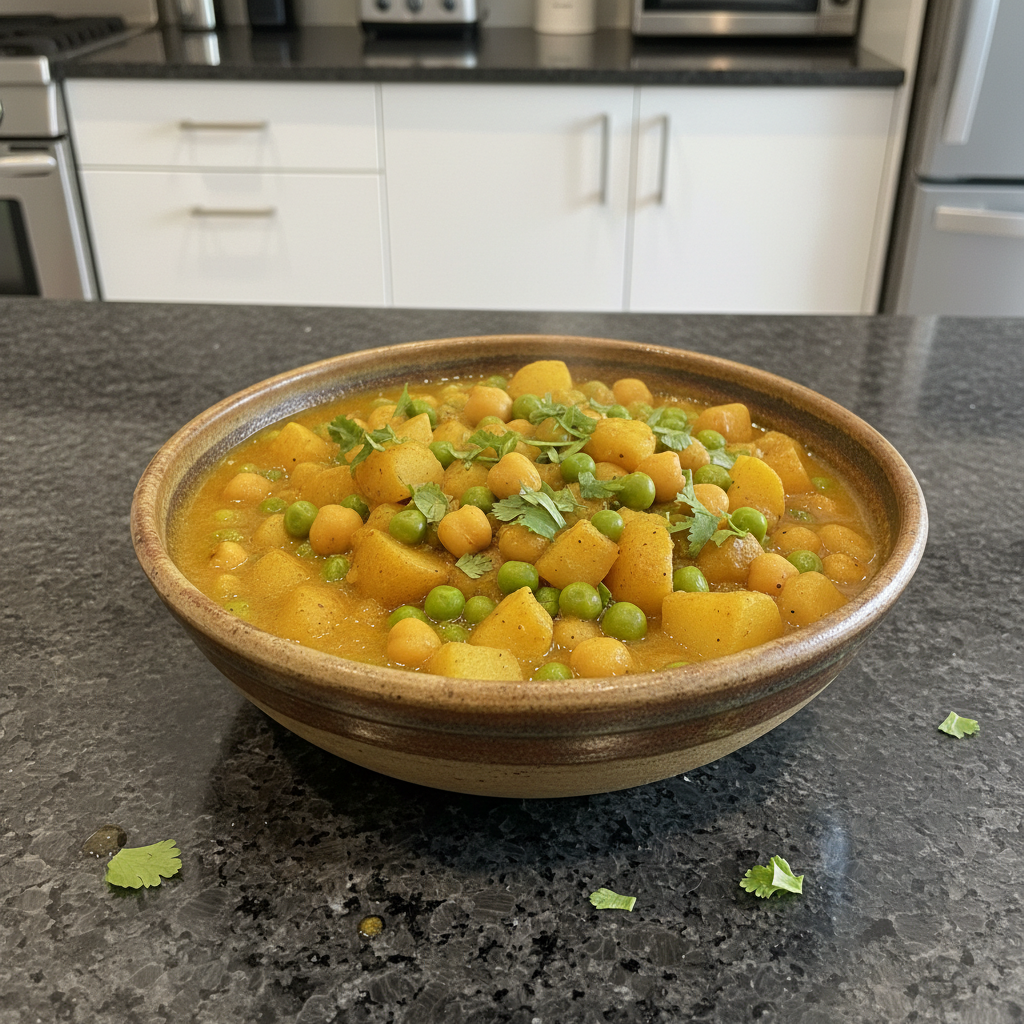
Easy & Flavorful Potato Curry Recipe (Ready in 30!)
Ingredients
Equipment
Method
- In a Dutch oven or similar large pot over medium heat, heat the oil until shimmering but not smoking.
- Add the onion and cook for 4 minutes, until beginning to soften and turn translucent. Reduce the heat as needed so the onion doesn’t turn brown.
- Add the garlic and ginger. Sauté just until fragrant, about 30 seconds. Be careful not to brown the garlic and ginger, as this can make them taste bitter.
- Add the curry powder, garam masala, cumin, turmeric, salt, and cayenne. Stir and cook until the spices are very fragrant, about 1 minute.
- Add the potatoes. Stir to coat with the spices.
- Stir in the chickpeas, coating them with the spices.
- Stir in the tomatoes and coconut milk. Increase the heat to medium high. Once the liquid starts to bubble, reduce the heat to medium and let simmer steadily but gently for 15 minutes, or until the potatoes are tender when pierced with a fork. Stir every few minutes to prevent the curry from sticking.
- Stir in the sugar and lemon juice. Then, stir in the peas. Let simmer 1 minute to warm through.
- Sprinkle generously with chopped cilantro. Serve hot with prepared rice or naan and an extra sprinkle of cilantro.
Notes

Lia Monet is a food blogger, recipe developer, and the founder of EasyAsMeals, a food blog focused on easy recipes, quick dinners, and everyday home cooking. She creates tested, family-friendly recipes using simple ingredients to help busy families cook affordable and delicious meals at home.