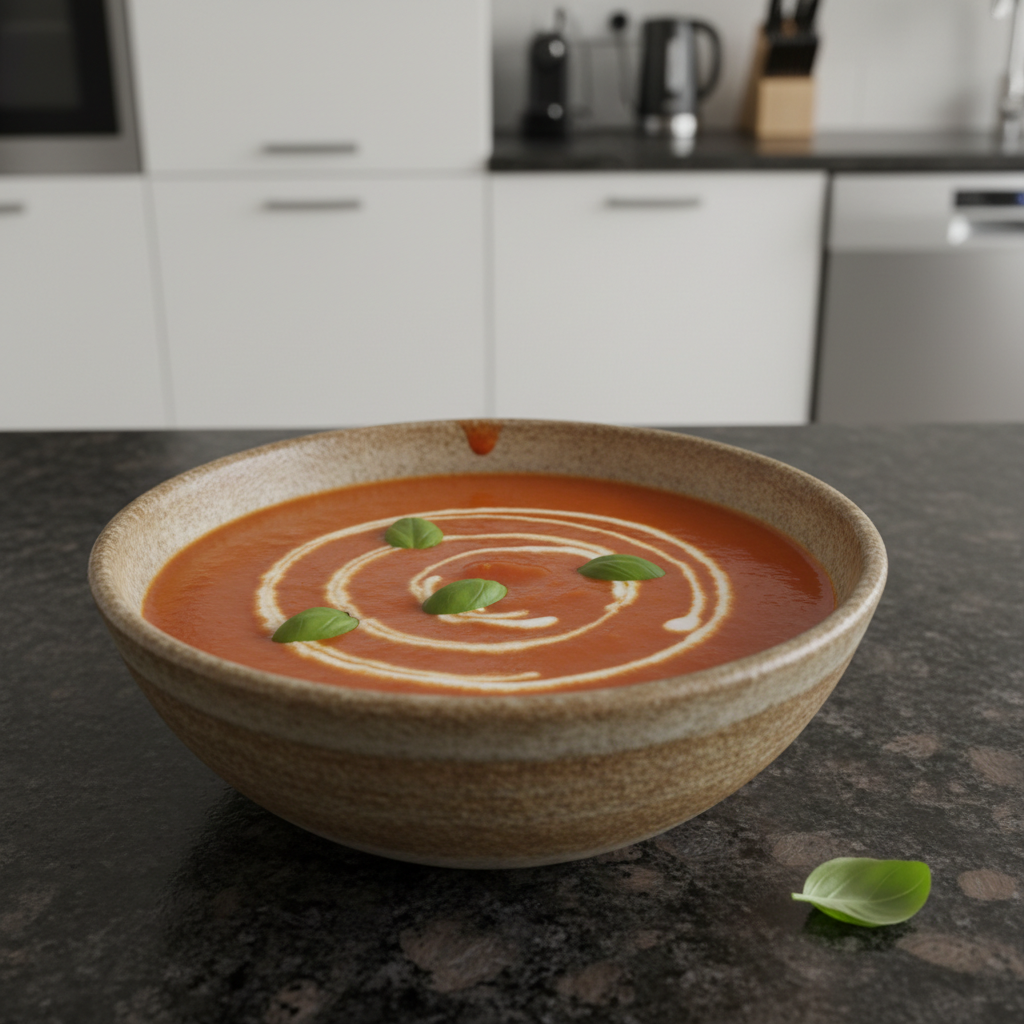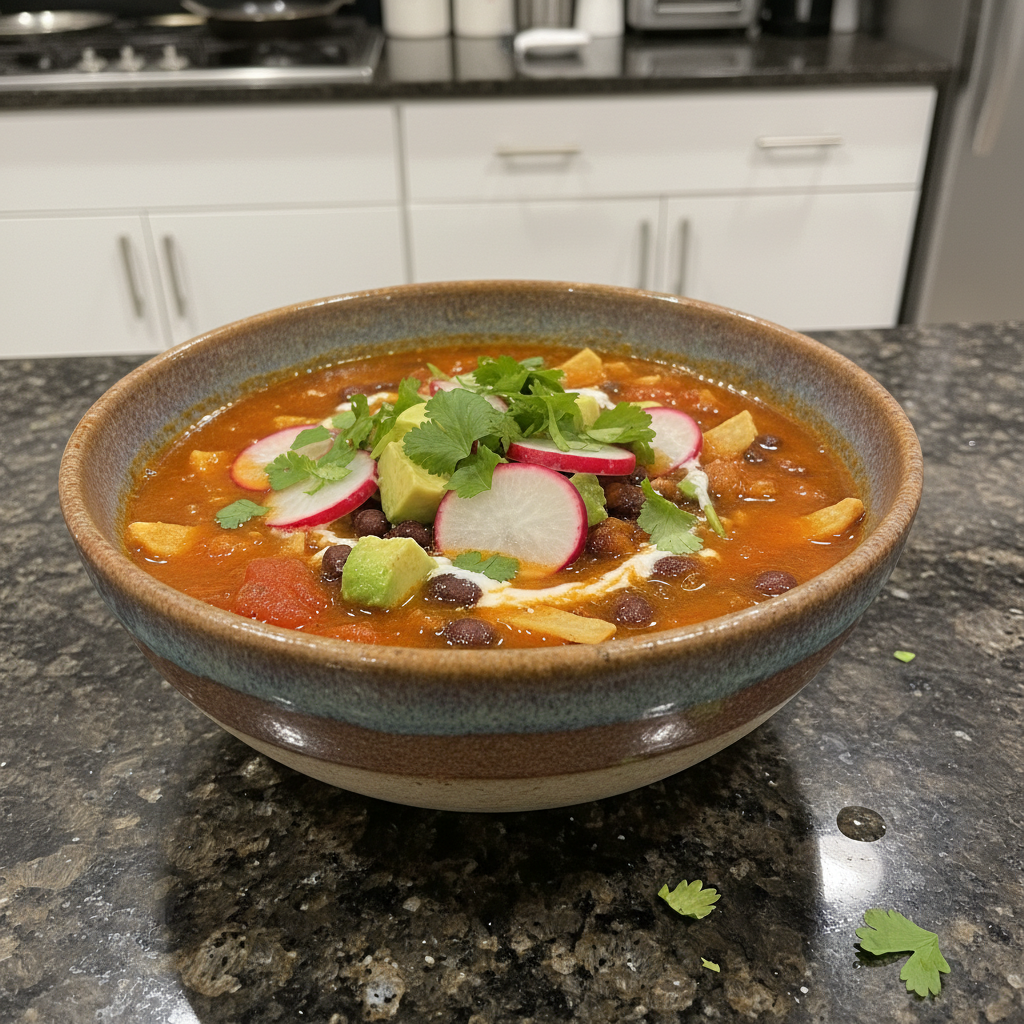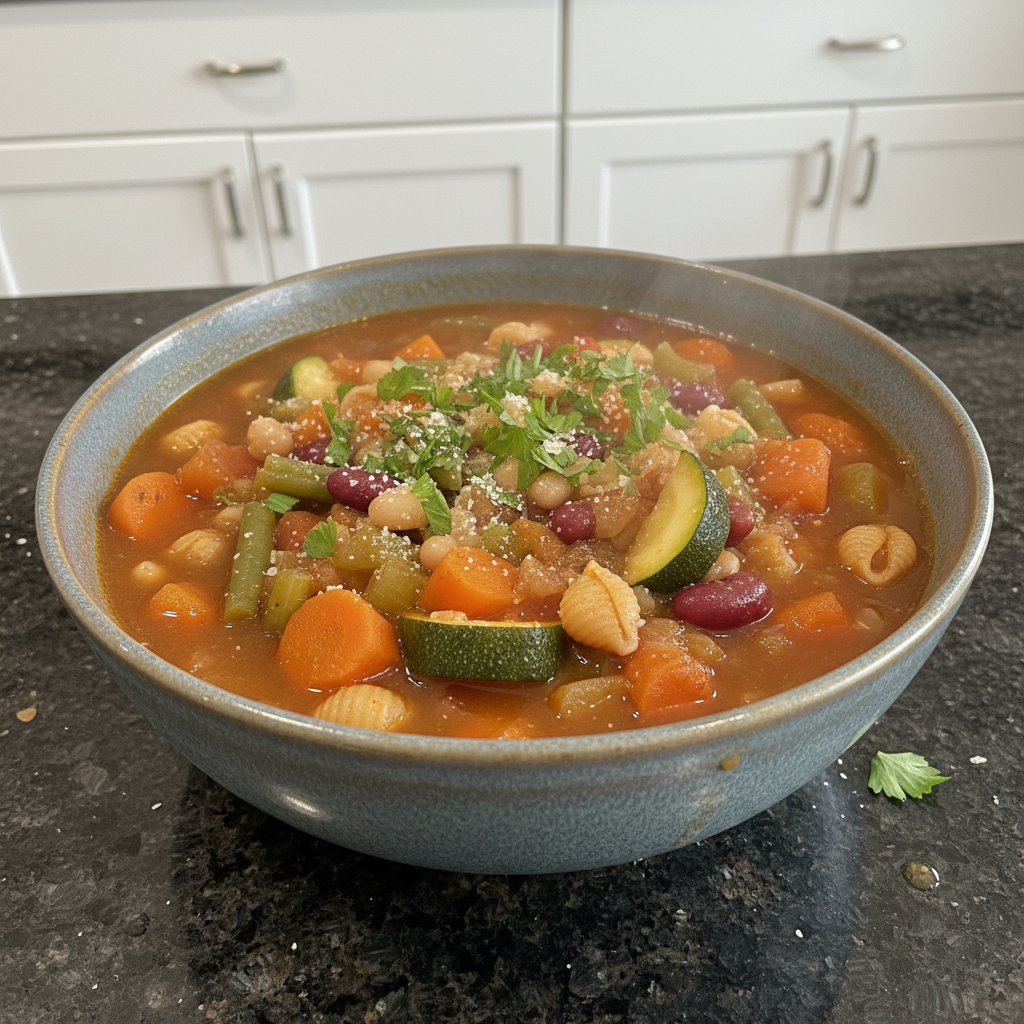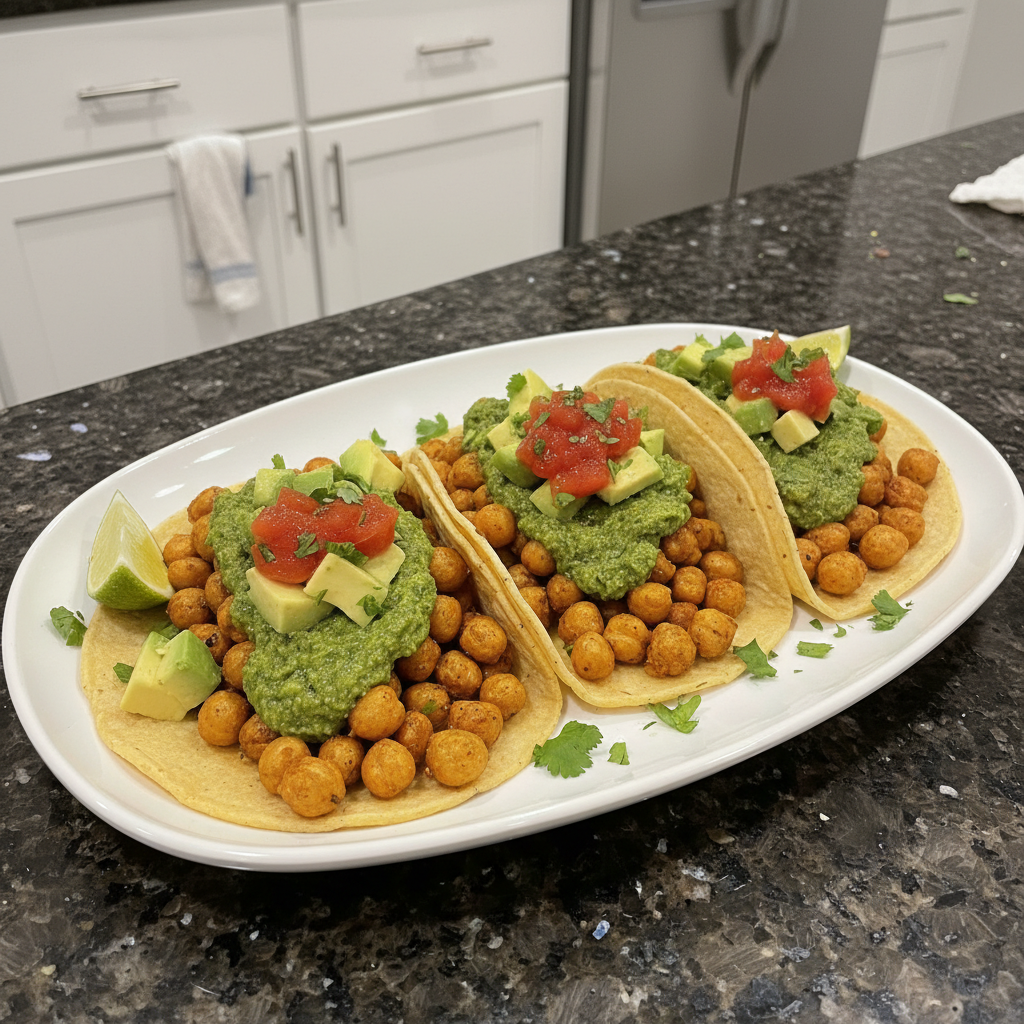
Nothing beats a comforting bowl of tomato soup on a chilly day. The warm, tangy flavor is a classic for a reason. But what if I told you there’s a way to make it even *better*? This is the best tomato soup recipe I’ve ever created, and the secret is simple: roasting the vegetables. Get ready to transform ordinary tomato soup into a restaurant-quality dish with a depth of flavor you won’t believe.
Why You’ll Love This Recipe
This isn’t your average tomato soup. Roasting the vegetables brings out a sweetness and complexity that elevates it to a whole new level. Here’s why you’ll be hooked:
The Roasting Secret: By roasting the onions, garlic, and even the tomatoes, we unlock a deeper, sweeter, and more complex umami flavor. It’s the key to making this soup truly special.
Maillard Magic: Roasting initiates the Maillard reaction. This caramelizes the natural sugars in the vegetables, developing those rich, savory flavors that make this soup so irresistible. You can read more about the science of the Maillard reaction and how it affects flavor.
Ultimate Comfort: This recipe is incredibly comforting and satisfying. It’s the perfect meal for a cozy night in, and it’s sure to warm you from the inside out.
Easy and Accessible: Despite its incredible flavor, this tomato soup recipe is surprisingly easy to make. It uses readily available ingredients, and you can even make it ahead of time.
Ingredients Needed
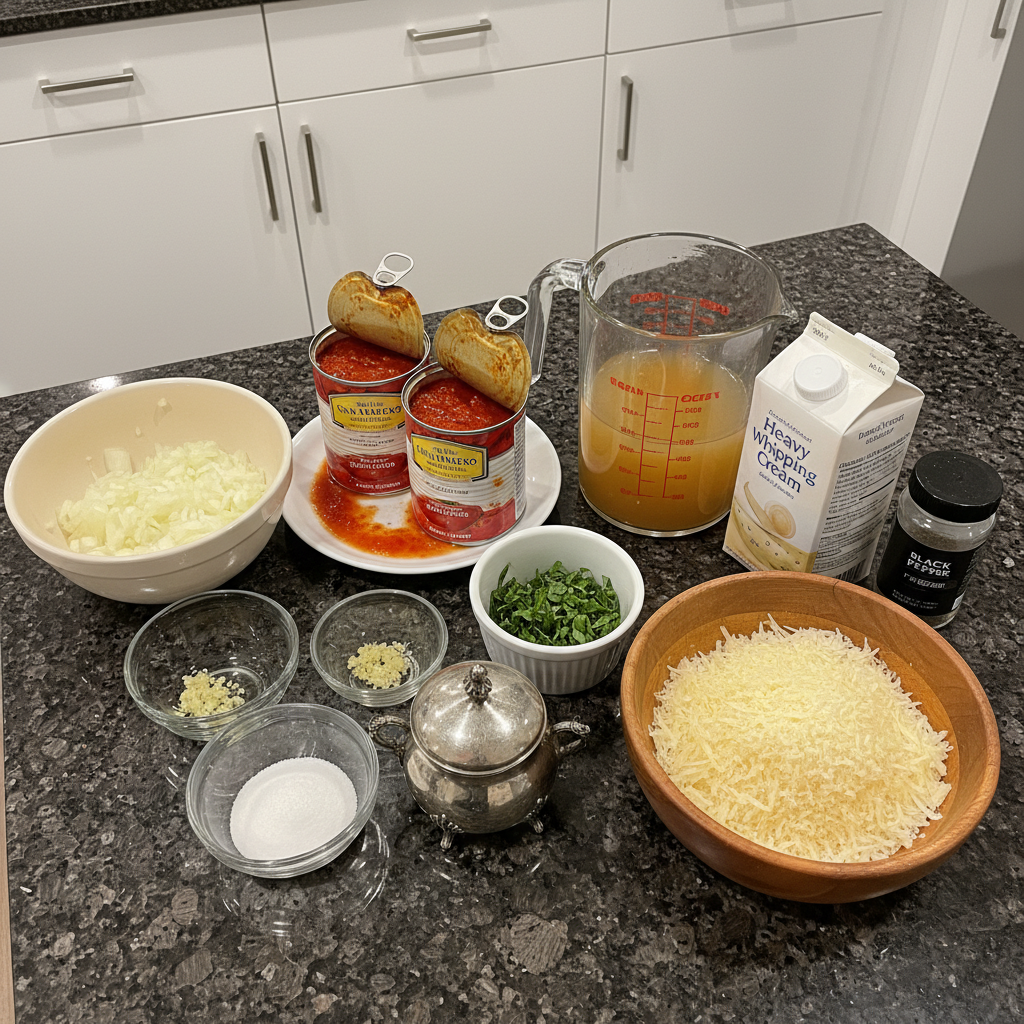
- 4 Tbsp unsalted butter
- 2 yellow onions ((3 cups finely chopped) )
- 3 garlic cloves ((1 Tbsp minced))
- 56 oz crushed tomatoes ((two, 28-oz cans) with their juice, preferably San Marzano)
- 2 cups chicken stock
- 1/4 cup chopped fresh basil (plus more to serve)
- 1 Tbsp sugar (or added to taste)
- 1/2 tsp black pepper (or to taste)
- 1/2 cup heavy whipping cream (or to taste to combat acidity)
- 1/3 cup parmesan cheese (freshly grated, plus more to serve)
Ingredient Notes & Substitutions
Here are some notes and substitutions to help you customize this recipe to your liking:
Tomatoes: Using good-quality crushed tomatoes is essential for the best flavor. San Marzano tomatoes are my preferred choice because of their lower acidity and sweeter flavor. If you can’t find them, look for other high-quality canned tomato brands available in the US.
Stock: Chicken stock adds a lovely richness to the soup. For a vegetarian option, you can easily substitute vegetable broth. Keep in mind that vegetable broth will have a slightly lighter flavor.
Cream: Heavy cream contributes to the soup’s richness and helps balance the acidity. For a lighter option, you can use milk, but the soup won’t be as creamy. For a vegan alternative, full-fat coconut milk or cashew cream work beautifully.
Parmesan: Freshly grated parmesan cheese provides the best flavor. If you’re following a vegan diet, nutritional yeast makes a great substitute.
Basil: Fresh basil is always my first choice, but if you only have dried basil on hand, you can use about 1 Tbsp. Add it with the tomatoes to allow it to soften and infuse its flavor into the soup.
How to Make Tomato Soup
Follow these simple steps to create the most flavorful tomato soup recipe you’ve ever tasted!
Step 1: Sauté the Aromatics
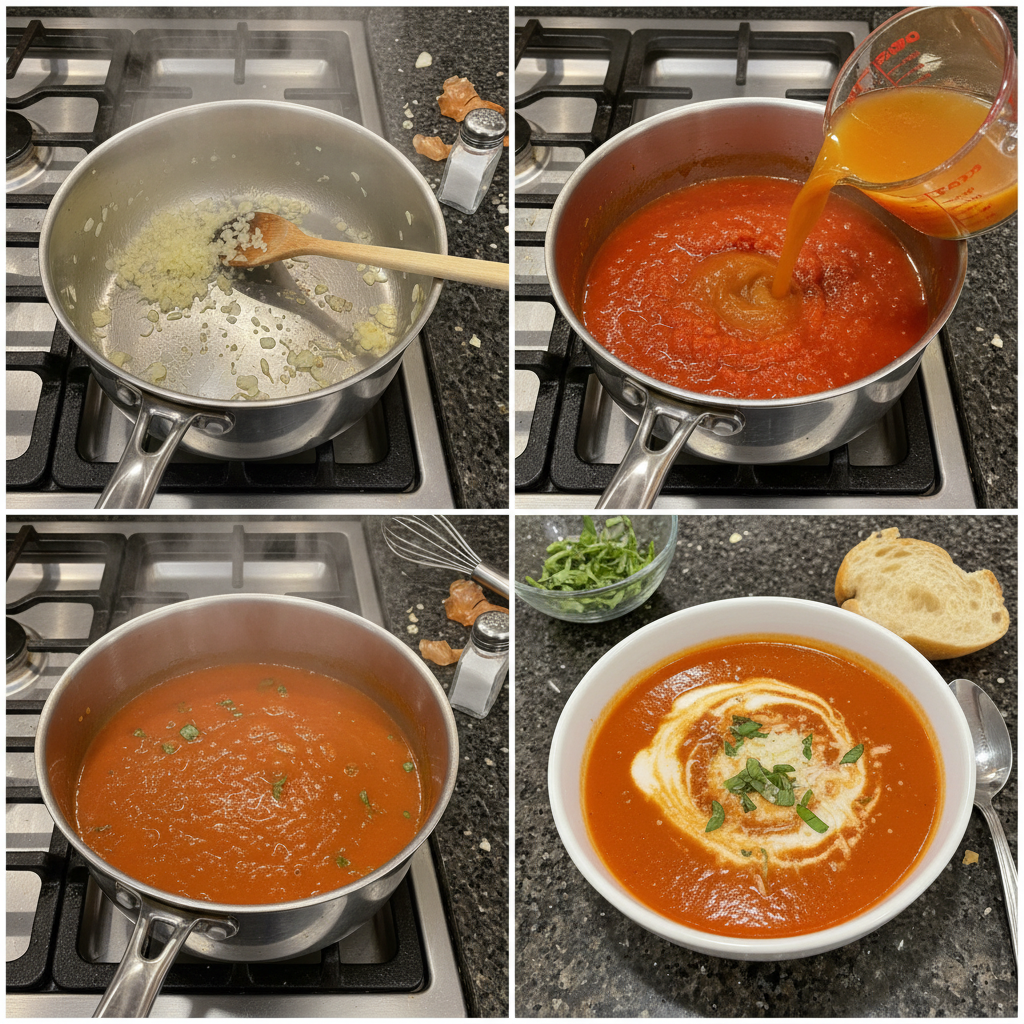
Heat a nonreactive pot or enameled dutch oven over medium heat. Add the butter, then add the chopped onions. Sauté for 10-12 minutes, stirring occasionally, until softened and golden. The sweet aroma of the onions caramelizing will fill your kitchen! Add the minced garlic and sauté for 1 minute until fragrant – you’ll smell that wonderful pungent aroma of garlic as it cooks.
Step 2: Simmer for Flavor
Add the crushed tomatoes with their juice, chicken stock, chopped basil, sugar (or add sugar to taste), and black pepper. Stir everything together and bring to a boil. Then, reduce the heat, partially cover the pot with a lid, and simmer for 10 minutes. As the soup simmers, the flavors will meld together, creating a delicious aroma.
Step 3: Blend to Perfection
At this point, you can choose to leave your soup with a chunky consistency, or you can blend it for a creamier texture. If you like a blended soup, use an immersion blender to blend the soup directly in the pot to your desired consistency. Alternatively, you can carefully transfer the soup to a regular blender in batches and blend until smooth. (Expert tip: When using a regular blender with hot liquids, pulse a few times initially to prevent splattering). Return the blended soup to the pot over medium heat.
Step 4: Add Cream and Cheese
Add 1/2 cup of heavy cream and 1/3 cup of freshly grated parmesan cheese to the soup. Return it to a simmer and season to taste with salt and pepper. Expert tip: Taste and adjust the seasoning as needed. If the soup is too acidic, add a little more cream or sugar.
Step 5: Serve and Enjoy
Ladle the soup into warm bowls and top with more parmesan cheese and chopped fresh basil. For a perfect pairing, serve immediately with grilled cheese sandwiches or crusty bread.
How to Make Tomato Soup From Fresh Tomatoes
While this recipe uses canned tomatoes for convenience, you can absolutely make delicious tomato soup from fresh tomatoes. Here’s how:
The best tomato varieties for soup include Roma, San Marzano, or even a mix of different types for a more complex flavor. To prepare fresh tomatoes, start by blanching them in boiling water for about 30-60 seconds, then transfer them to an ice bath. This makes it easy to peel off the skin. Next, chop the peeled tomatoes into smaller pieces.
When using fresh tomatoes, you may need to adjust the cooking time. Simmer the soup for a longer period, about 20-30 minutes, to allow the flavors to fully develop and the tomatoes to break down. For an even deeper flavor, consider roasting the fresh tomatoes alongside the onions and garlic before adding them to the pot.
Pro Tips & Troubleshooting
Pro Tips
- Roast the tomatoes: For an even deeper flavor, roast the tomatoes alongside the onions and garlic. Toss them with olive oil, salt, and pepper, and roast at 400°F (200°C) for about 20-25 minutes, or until softened and slightly caramelized.
- Use a non-reactive pot: This is important to avoid a metallic taste in your soup. Avoid using aluminum, cast iron, or copper pots, as they can react with the acidity of the tomatoes. More information on which cookware is non-reactive can be found at the Cook’s Illustrated website.
- Thin it out: If the soup is too thick, add more chicken stock or water to thin it out to your desired consistency.
- Taste as you go: Adjust the seasoning (salt, pepper, sugar) as needed throughout the cooking process.
- Homemade stock: For a richer flavor, use homemade chicken stock instead of store-bought.
- Spice it up: Add a pinch of red pepper flakes for a touch of heat.
Common Mistakes to Avoid
- Low-quality tomatoes: Using low-quality canned tomatoes will significantly impact the final flavor. Choose good-quality, preferably San Marzano tomatoes.
- Skipping the sauté: Don’t skip the sautéing step for the onions and garlic. This step is crucial for developing the base flavor of the soup.
- Over-blending: Over-blending the soup can make it gummy. Blend until just smooth.
- Under-seasoning: Not seasoning properly. Salt and pepper are essential for bringing out the flavors.
- Too much sugar: Using too much sugar can make the soup taste artificial. Add it gradually, tasting as you go.
Serving & Storage
Serving Ideas
- Pair with grilled cheese sandwiches – dipping is highly encouraged!
- Top with shredded parmesan cheese and fresh basil.
- Serve with croutons or crusty bread for dipping.
- Add a swirl of pesto or a dollop of sour cream or plain yogurt.
- Serve with a side salad for a light lunch.
Storage and Make-Ahead
Refrigerator: Store leftover soup in an airtight container in the refrigerator for up to 3-4 days.
Freezer: Freeze the soup in freezer-safe containers for up to 2-3 months. For best results, cool the soup completely before freezing. Leave some headspace in the container, as the soup will expand when frozen. This helps prevent the container from cracking.
Reheating: Reheat gently on the stovetop or in the microwave until heated through. If the soup was frozen, thaw it overnight in the refrigerator before reheating. If reheating from frozen, do so on low heat on the stovetop to prevent burning.
Conclusion
This tomato soup recipe is a game-changer. Roasting the vegetables takes the flavor to another level, creating a soup that’s exceptionally flavorful and comforting. Even if you’re new to cooking, this recipe is easy to make and sure to impress. Don’t be afraid to experiment with different toppings, serving suggestions, or variations to make it your own. Now, go ahead and print this recipe or share it with your friends – they’ll thank you for it!
FAQ
Here are some frequently asked questions about making tomato soup:
What are some tips for making tomato soup creamier?
Use heavy cream or full-fat coconut milk (for vegan). Blend the soup thoroughly. Add a small amount of butter or olive oil.
Can I use dried herbs instead of fresh?
Yes, but fresh herbs provide a brighter flavor. If using dried basil, use about 1 Tbsp and add it when you add the tomatoes.
How do I prevent my tomato soup from being too acidic?
Roasting the vegetables helps to reduce acidity. You might also consider pairing it with something like a classic Caesar salad. Add a pinch of sugar or a splash of heavy cream. Avoid using aluminum or cast iron pots.
Can tomato soup be frozen and how do I reheat it?
Yes, tomato soup freezes well. Cool completely before freezing in freezer-safe containers. Thaw overnight in the refrigerator before reheating gently on the stovetop.
What are the best toppings to serve with tomato soup?
Parmesan cheese, fresh basil, croutons, pesto, sour cream, or a drizzle of olive oil.
How can I make this recipe vegan?
Use vegetable broth instead of chicken stock. Substitute coconut milk or cashew cream for heavy cream and nutritional yeast for parmesan cheese.
What types of tomatoes are best for tomato soup?
San Marzano tomatoes are preferred for their sweetness and low acidity. Roma tomatoes are also a good choice. You can also use a mix of different tomato varieties.
How long does tomato soup last in the fridge?
Tomato soup will last for 3-4 days in the refrigerator if stored properly in an airtight container.
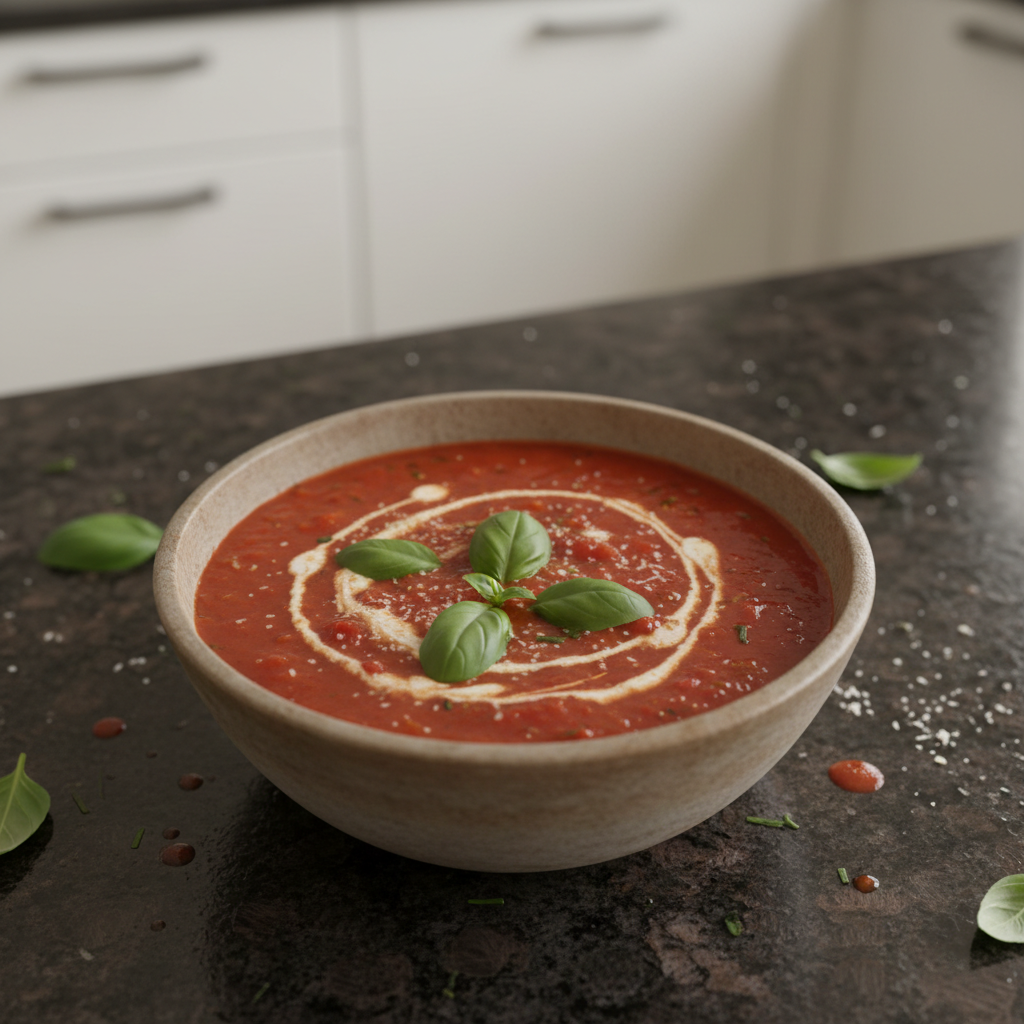
Best Tomato Soup Recipe: Roasting for Rich Flavor
Ingredients
Method
- Heat a nonreactive pot or enameled dutch oven over medium heat. Add the butter, then add the chopped onions. Sauté for 10-12 minutes, stirring occasionally, until softened and golden. The sweet aroma of the onions caramelizing will fill your kitchen! Add the minced garlic and sauté for 1 minute until fragrant – you'll smell that wonderful pungent aroma of garlic as it cooks.
- Add the crushed tomatoes with their juice, chicken stock, chopped basil, sugar (or add sugar to taste), and black pepper. Stir everything together and bring to a boil. Then, reduce the heat, partially cover the pot with a lid, and simmer for 10 minutes. As the soup simmers, the flavors will meld together, creating a delicious aroma.
- At this point, you can choose to leave your soup with a chunky consistency, or you can blend it for a creamier texture. If you like a blended soup, use an immersion blender to blend the soup directly in the pot to your desired consistency. Alternatively, you can carefully transfer the soup to a regular blender in batches and blend until smooth. (Expert tip: When using a regular blender with hot liquids, pulse a few times initially to prevent splattering). Return the blended soup to the pot over medium heat.
- Add 1/2 cup of heavy cream and 1/3 cup of freshly grated parmesan cheese to the soup. Return it to a simmer and season to taste with salt and pepper. Expert tip: Taste and adjust the seasoning as needed. If the soup is too acidic, add a little more cream or sugar.
- Ladle the soup into warm bowls and top with more parmesan cheese and chopped fresh basil. For a perfect pairing, serve immediately with grilled cheese sandwiches or crusty bread.
Notes

Lia Monet is a food blogger, recipe developer, and the founder of EasyAsMeals, a food blog focused on easy recipes, quick dinners, and everyday home cooking. She creates tested, family-friendly recipes using simple ingredients to help busy families cook affordable and delicious meals at home.