The aroma of perfectly roasted butternut squash, with its subtly sweet and nutty fragrance, is one of the best parts of fall. This vibrant, healthy vegetable is incredibly versatile as a side dish, a base for soups, or even a star in salads. If you are looking for an easy, flavorful, and healthy side dish, look no further! This roasted butternut squash recipe provides tips for achieving perfect results whether you prefer roasting it in halves or as delicious caramelized cubes. Let’s get started!
Why You’ll Love This Roasted Butternut Squash Recipe
This recipe for roasted butternut squash isn’t just easy; it’s packed with flavor and has a few secrets that will make it your go-to method.
Unique Flavor Twist: I add a touch of nutmeg and cinnamon to enhance the squash’s natural sweetness. For squash halves, a sprig of rosemary placed inside the cavity elevates the flavor even more!
Why It Works: The warmth of nutmeg and cinnamon beautifully complements the squash, creating a comforting depth. The subtle infusion of rosemary adds an herbaceous note that takes it to another level. Using freshly grated nutmeg for the cubes really brings out the volatile oils and elevates the spice profile.
Easy and Healthy: Roasting brings out the best in butternut squash, and this recipe is incredibly simple. It’s a healthy side that fits seamlessly into any meal.
Diet-Friendly: Naturally vegan, vegetarian, and gluten-free, this recipe is adaptable to various dietary needs. It’s a great source of antioxidants, vitamin A, and fiber.
Meal Prep Hero: Roasted butternut squash is fantastic for meal prepping. Roast a big batch and use it throughout the week in different dishes.
Ingredients Needed
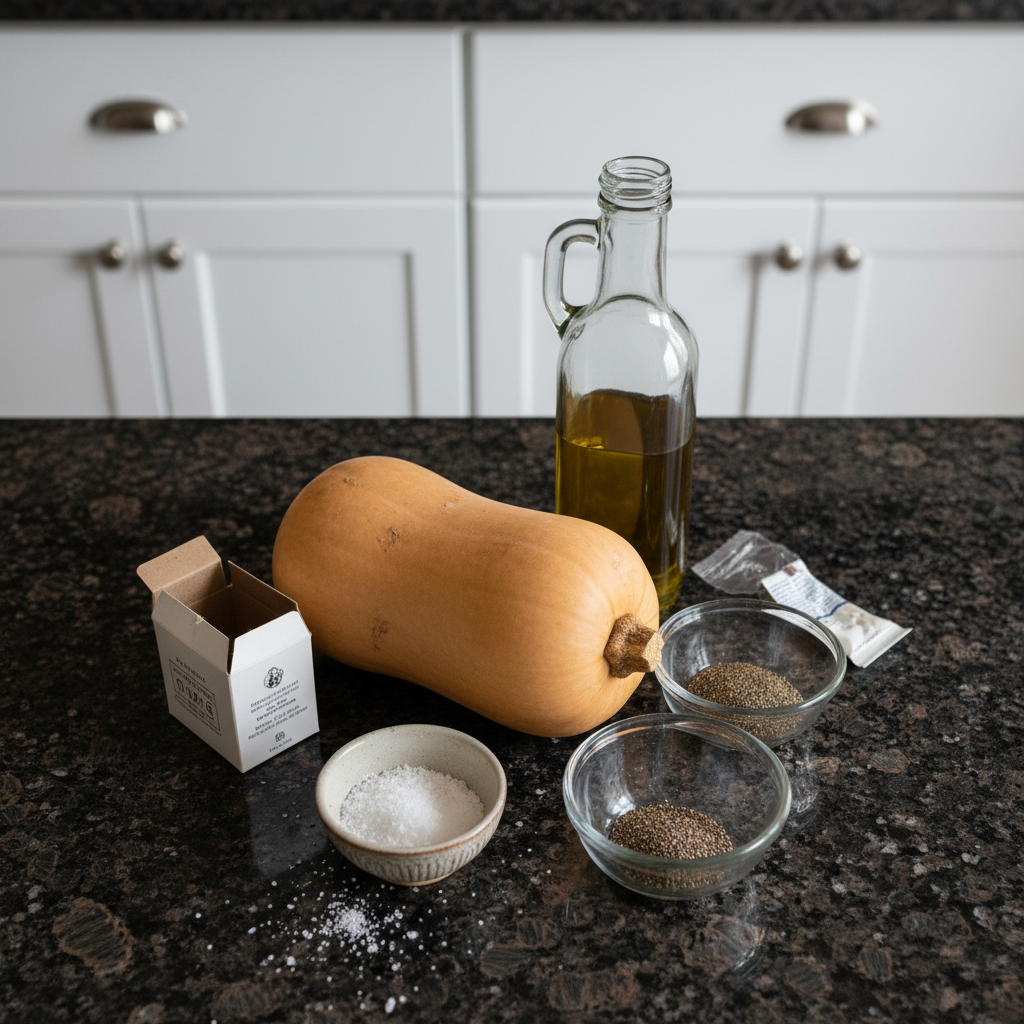
- 1 whole butternut squash (any size, unless it’s for a soup recipe – see notes!)
- 1-2 tablespoons extra virgin olive oil
- 1/2 teaspoon salt
- 1/4 – 1/2 teaspoon pepper
Ingredient Notes & Substitutions
Butternut Squash Size: The size of your squash matters! A smaller squash is perfect as a side dish for 2-4 people, while a larger one is better suited for a soup or a big batch for meal prep.
Olive Oil: Using good quality extra virgin olive oil really enhances the flavor of the roasted butternut squash. Its fruity notes add a lovely complexity. If you prefer a milder flavor, you can use avocado oil or another neutral oil. For tips on selecting the best olive oil for roasting to enhance flavor, do your research!
Dietary Adaptations: This recipe is naturally vegan, vegetarian, and gluten-free! For a low-carb version, you can experiment with adding a low-carb sweetener.
How to Make Roasted Butternut Squash
Step 1: Preheat and Prep
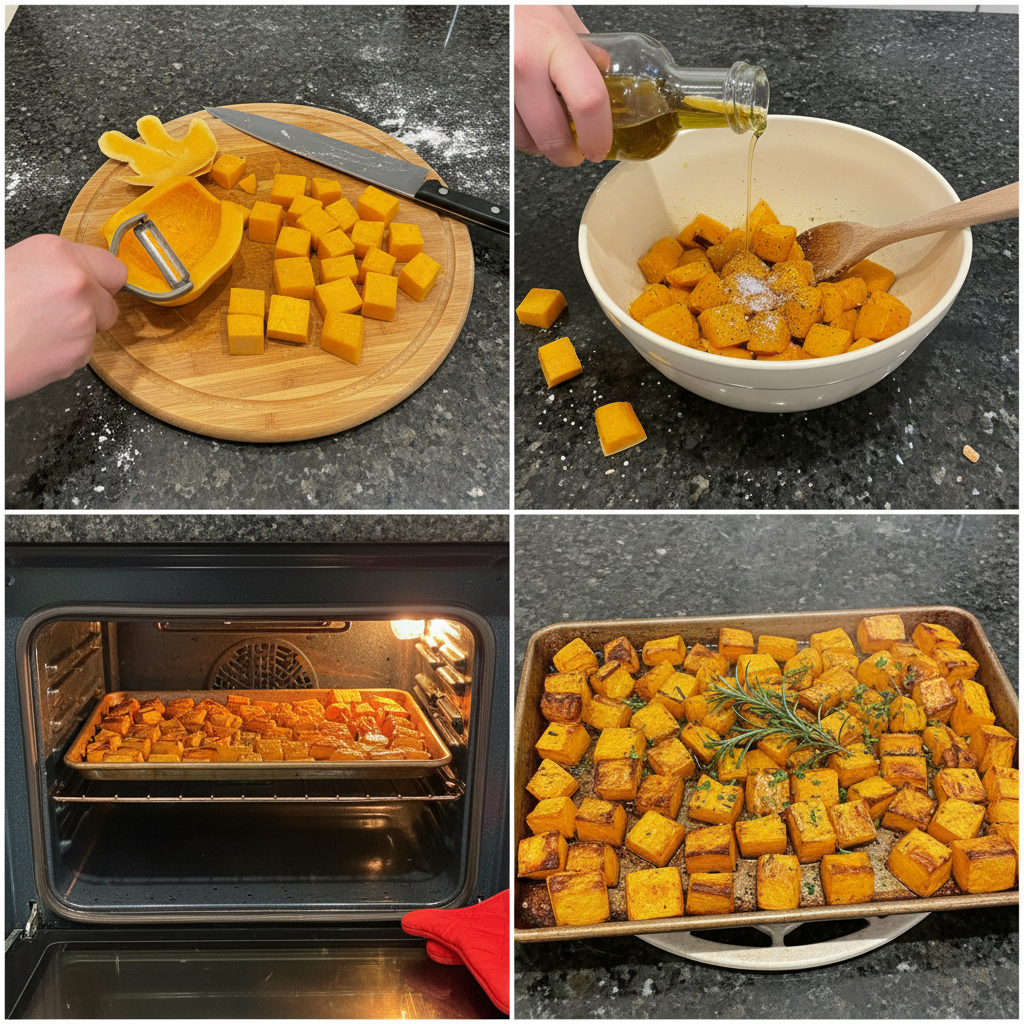
Preheat your oven to 400°F (200°C). Even heat distribution is key for perfect caramelization. You can line a baking sheet with parchment paper or a silicone baking mat for easy cleanup and to prevent sticking.
Now, let’s tackle the squash! If you’re roasting the squash in halves, first cut off both ends, creating a flat, stable base. Then, carefully cut the squash in half lengthwise. Use a spoon to scoop out the seeds. For cubes, peel the squash first using a sharp vegetable peeler. Then, repeat the process of cutting it in half, de-seeding it, and cutting the halves into roughly 1-inch cubes. Safety first – use a stable cutting board and a sharp knife!
Step 2: Season and Arrange
For halves, arrange them squash side up on the baking sheet and brush or drizzle with olive oil, then sprinkle with salt and pepper. For cubes, place them in a bowl and toss with olive oil, salt, pepper, and a pinch of freshly grated nutmeg (if you like!).
Spread the cubes in an even layer on the baking sheet, ensuring they aren’t overcrowded. This allows them to roast properly and develop those beautiful caramelized edges. Giving them space is crucial!
Step 3: Roasting
Roast the squash halves at 400°F (200°C) for 45-50 minutes, or until the squash is slightly browned on the edges and can be easily pierced with a fork. For squash cubes, roast them for 25 minutes, optionally flipping or gently stirring at 20 minutes to get browning on all sides. The cubes are done when they are cooked through and starting to brown.
Step 4: Serving
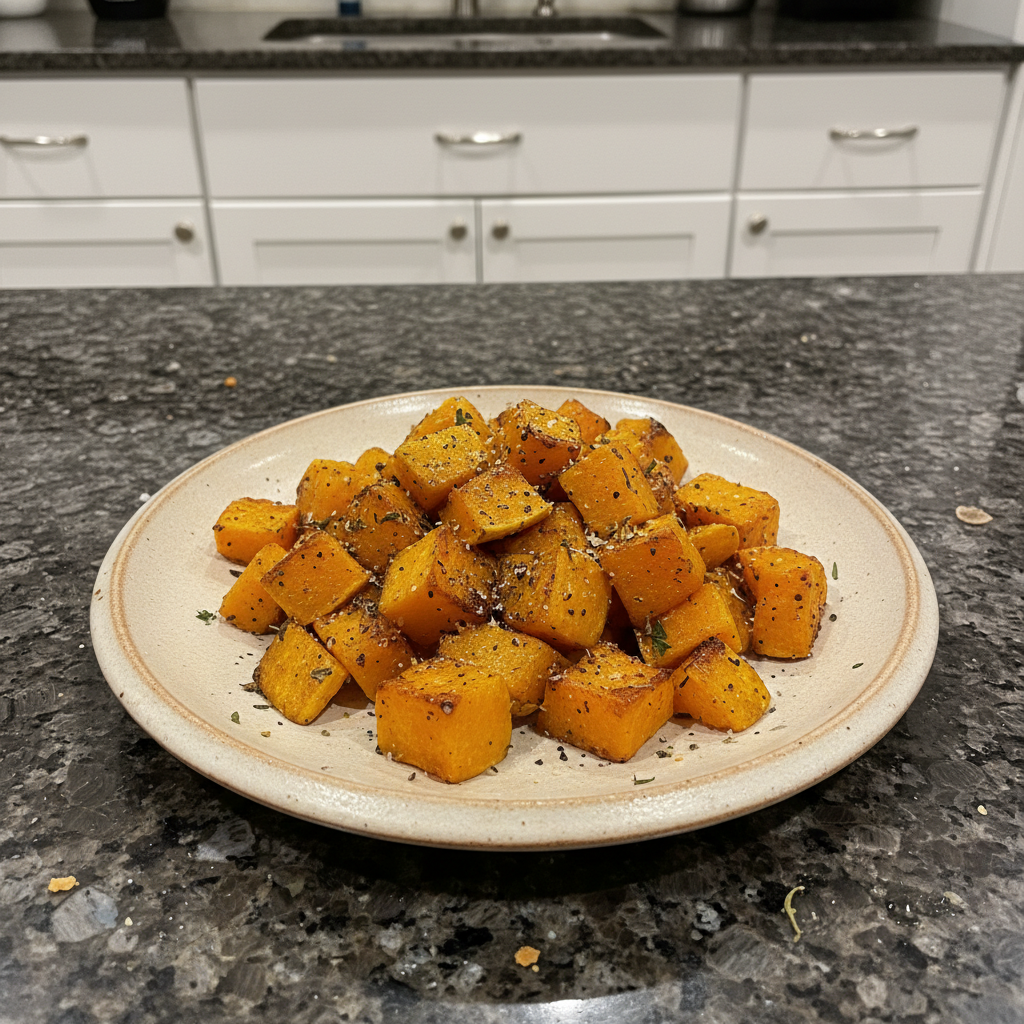
Your roasted butternut squash is ready! The sweet aroma and tender texture are irresistible. Serve it as a side dish, add it to salads, mash it, or blend it into a comforting soup. The options are endless!
Roasting Butternut Squash: Common Issues and Solutions
Sometimes, even with the best intentions, things don’t go as planned. Here’s how to troubleshoot common issues with roasted butternut squash:
Squash is too mushy: Overcrowding the pan can cause the squash to steam instead of roast, resulting in a mushy texture. Also, too much moisture can be the culprit. Make sure to space out the squash and consider using the convection setting on your oven to help remove excess moisture.
Squash isn’t browning enough: If your oven temperature is too low, or if you’re using old olive oil, the squash might not caramelize properly. Also, ensure there’s enough space on the pan. For better caramelization, try baking the squash directly on the pan (without parchment paper) and increasing the temperature slightly.
Pro Tips & Troubleshooting
Pro Tips
- Use fresh nutmeg for the best flavor (for cubes).
- Add a sprig of rosemary inside the cavity of squash halves for a subtle herby flavor.
- Don’t overcrowd the pan. Use two baking sheets if necessary.
- Roast at a high temperature (400°F) for optimal caramelization.
- Check for doneness by piercing with a fork – it should be easily pierced.
- Use a vegetable peeler to peel the squash before cutting it into cubes.
- Toss the cubes halfway through roasting for even browning.
Common Mistakes to Avoid
- Not using enough olive oil – the squash needs to be coated for proper roasting.
- Overcrowding the pan – this steams the squash instead of roasting it.
- Not preheating the oven properly.
- Cutting the squash unevenly (for cubes) – this leads to uneven cooking.
- Overcooking the squash – it becomes mushy.
Serving & Storage
Serving Ideas
- Serve as a side dish with roasted chicken or pork.
- Add to salads with other roasted vegetables and grains like quinoa or farro.
- Make mashed butternut squash with butter and cream (or plant-based alternatives like coconut milk or olive oil).
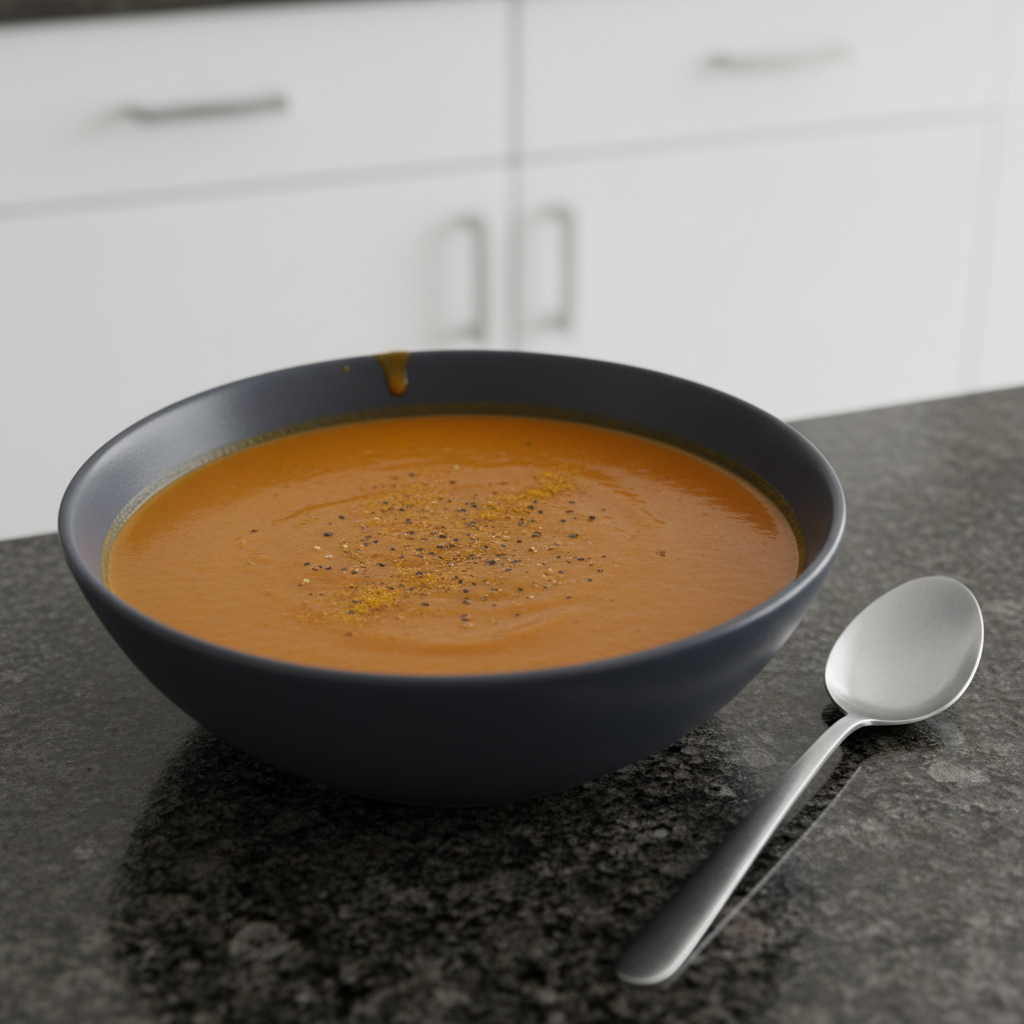
- Blend into a creamy butternut squash soup with a touch of ginger.
- Add to grain bowls with other toppings like chickpeas, feta cheese, and a tahini dressing.
Looking for a way to use the roasted butternut squash? You could make this 7 layer salad recipe, just substitute the squash for one of the layers.
Storage and Make-Ahead
Fridge: Leftover roasted butternut squash can be stored in an airtight container in the refrigerator for 3-4 days.
Freezer: Yes, you can freeze roasted butternut squash! Allow it to cool completely, then spread it out in a single layer on a baking sheet lined with parchment paper. Freeze for a couple of hours, then transfer the frozen squash to a freezer bag or container. This prevents the pieces from sticking together. It can be stored in the freezer for up to 2-3 months. To thaw, transfer it to the refrigerator overnight or reheat it directly from frozen in the oven or microwave.
Make-Ahead: You can prep the squash in advance by cutting and peeling it, then storing it in the fridge in an airtight container until ready to roast. I recommend using it within 1-2 days for optimal freshness.
Conclusion
This recipe makes preparing roasted butternut squash simple, flavorful, and incredibly versatile. The touch of nutmeg and cinnamon elevates the natural sweetness of the squash, creating a side dish that’s both comforting and delicious. Don’t be afraid to experiment with different seasonings and herbs to make it your own.
I encourage you to try this recipe and adapt it to your own tastes. Share it with your friends and explore other soup recipes on my site!
FAQ
What are the best ways to use roasted butternut squash?
Roasted butternut squash is incredibly versatile! You can serve it as a simple side dish, add it to salads for a touch of sweetness, blend it into creamy soups, or even use it as a filling for ravioli. Check out the serving ideas section for more inspiration.
How can I freeze roasted butternut squash for later use?
To freeze roasted butternut squash, let it cool completely, spread it in a single layer on a baking sheet, and freeze until solid. Then, transfer it to a freezer bag or container. It can be stored in the freezer for up to 2-3 months. Thaw it overnight in the refrigerator or reheat it directly from frozen.
What’s the easiest way to peel and cut a butternut squash?
The easiest way to peel and cut a butternut squash is to use a sharp vegetable peeler to remove the skin. Then, cut off both ends and stand the squash upright. Cut it in half lengthwise, scoop out the seeds, and then cut it into cubes. If the squash is too hard to cut, you can microwave it for a few minutes to soften it slightly. For more information on how to select a good squash, you can read this article.
How long should I roast butternut squash halves versus cubes?
Butternut squash halves typically take 45-50 minutes to roast at 400°F (200°C), while cubes take around 25 minutes. Check for doneness by piercing with a fork – it should be easily pierced when it’s ready.
How do I get butternut squash to caramelize nicely in the oven?
To get butternut squash to caramelize nicely, roast it at a high temperature (400°F or 200°C), make sure the pieces aren’t overcrowded on the pan, and consider flipping or stirring them halfway through roasting. This ensures even browning and caramelization. Check out the pro tips section for more info!
What are some creative seasoning ideas for roasted butternut squash?
While this recipe uses nutmeg and cinnamon, there are many other ways to season roasted butternut squash! Try adding maple syrup and sage, cumin and cayenne, or even harissa paste for a spicy kick. Experiment with different herbs and spices to find your favorite combination. For a unique flavor profile, try adding a dollop of arugula pesto after roasting.
What temperature should I roast butternut squash?
I recommend roasting butternut squash at 400°F (200°C). This high temperature allows the squash to caramelize properly, bringing out its natural sweetness and creating a delicious, slightly crispy exterior. For more information on roasting temperatures and food safety, the USDA provides helpful guidelines.
Perfect Roasted Butternut Squash: Simple & Flavorful
Ingredients
Equipment
Method
- Preheat your oven to 400°F (200°C). Line a baking sheet with parchment paper or a silicone baking mat.
- To roast in halves, cut off both ends of the squash, creating a flat, stable base. Then, carefully cut the squash in half lengthwise. Use a spoon to scoop out the seeds.
- For cubes, peel the squash first using a sharp vegetable peeler. Then, repeat the process of cutting it in half, de-seeding it, and cutting the halves into roughly 1-inch cubes.
- For halves, arrange them squash side up on the baking sheet and brush or drizzle with olive oil, then sprinkle with salt and pepper.
- For cubes, place them in a bowl and toss with olive oil, salt, pepper, and a pinch of freshly grated nutmeg (if you like!).
- Spread the cubes in an even layer on the baking sheet, ensuring they aren't overcrowded.
- Roast the squash halves at 400°F (200°C) for 45-50 minutes, or until the squash is slightly browned on the edges and can be easily pierced with a fork.
- For squash cubes, roast them for 25 minutes, optionally flipping or gently stirring at 20 minutes to get browning on all sides. The cubes are done when they are cooked through and starting to brown.
- Serve your roasted butternut squash as a side dish, add it to salads, mash it, or blend it into a comforting soup.
Notes

Lia Monet is a food blogger, recipe developer, and the founder of EasyAsMeals, a food blog focused on easy recipes, quick dinners, and everyday home cooking. She creates tested, family-friendly recipes using simple ingredients to help busy families cook affordable and delicious meals at home.