Imagine a steaming bowl of ramen, the broth rich and savory, the noodles perfectly chewy, and an array of colorful toppings adding pops of flavor and texture. The aroma alone is enough to make your mouth water! Vegetarian options are becoming increasingly popular, and this recipe brings that experience into your home kitchen.
This Vegetarian Ramen recipe is your ticket to restaurant-quality ramen in just 30 minutes, without any meat. This step-by-step guide will teach you how to create a truly delicious and satisfying bowl of ramen.
Why You’ll Love This Vegetarian Ramen Recipe Recipe
This isn’t just another noodle soup; it’s an experience. Here’s why you’ll keep coming back to this vegetarian ramen recipe:
Unique Umami Boost: The secret ingredient is kombu (dried kelp). Simmering it in the broth creates a depth of flavor you won’t believe is vegetarian.
Savory Flavor: Kombu provides natural glutamates, enhancing the savory flavor without meat or MSG. The flavor is clean and delicious, never “fishy,” especially when you remove the kombu before serving. You can read more about the science of glutamates and umami on the National Institutes of Health website.
Comfort in a Bowl: Ramen is the ultimate comfort food. This recipe is perfect for warming up on a cold day and satisfying your cravings.
Quick and Easy: Ready in just 30 minutes, this recipe is perfect for busy weeknight dinners. Plus, it’s easily customizable to fit your dietary needs and preferences.
Ingredients Needed
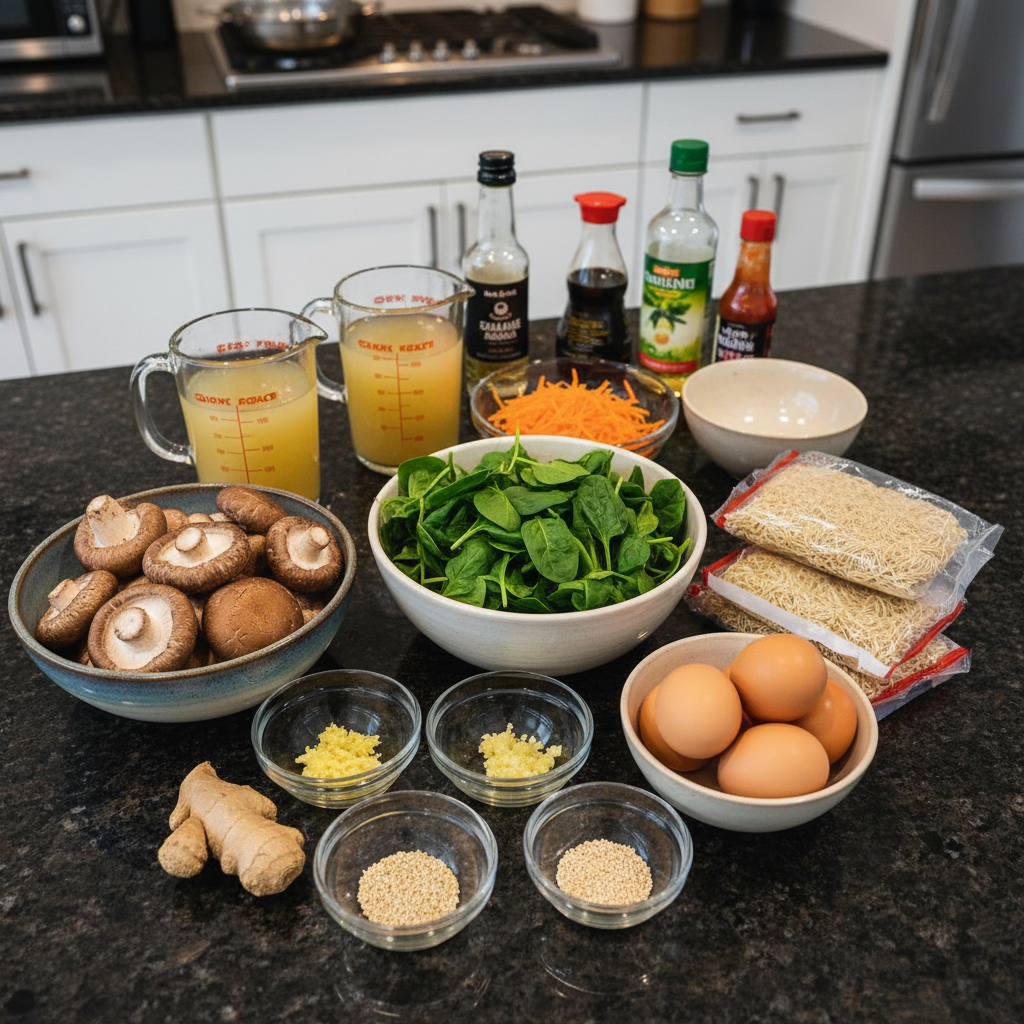
- 1 tablespoon sesame oil
- 3 teaspoons ginger, grated
- 4 teaspoons garlic, minced
- 3 tablespoons soy sauce
- 2 tablespoons mirin or rice wine vinegar
- 4 cups vegetable stock (or chicken stock)
- 1/2 cup fresh shiitake mushrooms
- 2 eggs (or soy sauce eggs)
- 1 cup baby spinach
- 2 (3 oz) packs dried ramen noodles
- hot sauce, to taste (optional)
- 1/2 cup green onions/scallions, sliced
- 1 cup carrots, shredded
- sesame seeds (optional, for topping)
Ingredient Notes & Substitutions
Here are some tips and substitutions to help you make the perfect bowl of vegetarian ramen:
Vegetable Stock: I prefer using a good quality store-bought vegetable stock for convenience. However, homemade vegetable stock or mushroom broth will add even more depth of flavor.
Soy Sauce: There are several types of soy sauce, including light, dark, and tamari. Tamari is a great gluten-free option. Use what you have on hand and enjoy the unique nuances it will add to your ramen.
Mirin: If you don’t have mirin, rice wine vinegar works as a substitute. Add a pinch of sugar to balance the acidity.
Mushrooms: While I love shiitake mushrooms for their rich flavor, feel free to experiment with other varieties like enoki or oyster mushrooms. Always clean your mushrooms thoroughly before using them.
Eggs: For a special treat, try soy sauce eggs! Alternatively, tofu, tempeh, or edamame can be used as vegan alternatives. Each offers a different texture and protein boost.
Noodles: There are many types of ramen noodles available, from fresh to dried, and wheat to gluten-free. Choose good quality ramen noodles for the best texture and flavor. You can even make your own ramen noodles from scratch if you’re feeling ambitious!
How to Make Vegetarian Ramen
Step 1: Sauté Aromatics
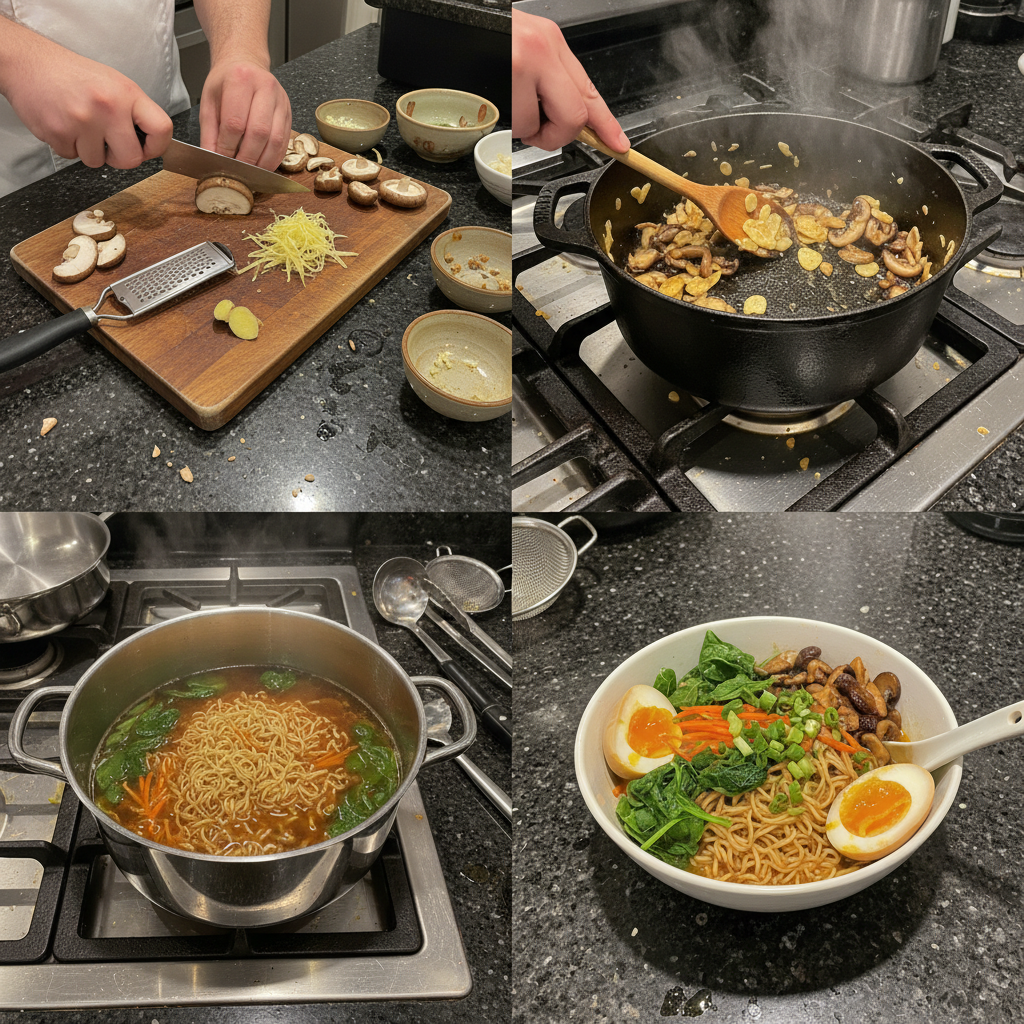
Heat the sesame oil in a large pot over medium heat. Add the minced garlic and grated ginger. Cook for about two minutes, until they become soft and incredibly fragrant, filling your kitchen with a wonderful aroma.
Step 2: Build the Broth
Stir in the soy sauce and mirin, cooking for another minute. This step helps to deepen the flavors. Now, add the vegetable stock and bring to a simmer. For an extra boost of umami, add a sheet of kombu now and remember to remove it before serving.
Step 3: Simmer Mushrooms
Add the fresh shiitake mushrooms to the broth and simmer for 10 minutes. If using dried shiitake, rehydrate them in warm water for about 20 minutes before adding them to the broth. As they simmer, they’ll release their earthy aroma and infuse the broth with their rich flavor.
Step 4: Cook the Eggs
While the broth simmers, bring a small pot of water to a boil. Gently lower the eggs into the boiling water and cook for exactly 7 minutes for a slightly runny yolk, or 8 minutes for a soft yolk. Immediately transfer the eggs to a bowl of ice water to stop the cooking process. After a few minutes, peel the shells off carefully and slice the eggs in half lengthwise. Set aside. For a different twist, try making soy sauce eggs!
Step 5: We can also use other ingredients in this recipe, such as arugula pesto.
Step 5: Wilt the Spinach
Bring another pot of water to a boil. Add the baby spinach and cook for about a minute, until just wilted but still vibrant green. Remove from the pot and run under cold water to stop the cooking process. Drain well and set aside.
Step 6: Cook Noodles
Add the dried ramen noodles to the simmering stock mixture and cook for 2-3 minutes, or according to the package instructions. Be careful not to overcook them; you want them to be al dente.
Step 7: Assemble and Serve
Divide the soup into two large bowls. Top with a halved egg, wilted spinach, shredded carrots, and sliced green onions. Sprinkle with sesame seeds (optional) and a drizzle of chili oil for extra flavor and serve immediately.
Mastering the Soft-Boiled Egg
A perfectly soft-boiled egg is a crucial component of great ramen. Here are a few tips to help you nail it every time:
Water Temperature: Aim for a gentle boil rather than a rolling boil to prevent the eggs from cracking.
Egg Size and Cooking Time: Adjust the cooking time based on the size of your eggs. For large eggs, 7 minutes usually yields a perfectly runny yolk. For extra-large eggs, add an extra 30 seconds.
Altitude Adjustments: If you live at a high altitude, you may need to increase the cooking time by a minute or two, as water boils at a lower temperature.
Perfect Peel: The ice bath is key! It helps to shrink the egg white slightly, making it easier to peel. Gently tap the egg all over to create small cracks, then peel under cold running water.
Pro Tips & Troubleshooting
Pro Tips
- Cook noodles separately to prevent mushiness, especially for leftovers.
- Use fresh aromatics (garlic, ginger) for brighter flavor.
- Make your own vegetable broth for richer flavor by simmering vegetable scraps.
- Add a sheet of kombu to the broth for extra umami (remove before serving).
- Taste and adjust the seasoning of the broth before adding noodles.
- Warm the bowls before serving to keep the ramen hot longer.
Common Mistakes to Avoid
- Overcooking the noodles (they should be al dente).
- Using too much salt (soy sauce already adds saltiness).
- Not removing the kombu after simmering (can become slimy).
- Skipping the ice bath for the eggs (makes them hard to peel).
Serving & Storage
Serving Ideas
- Pair with spring rolls for a complete meal.
- Serve alongside crispy dumplings for added texture.
- Enjoy with a light cucumber salad to balance the richness.
- Add a drizzle of chili oil on top for extra flavor.
- Sprinkle sesame seeds on top for extra flavor and visual appeal.
- Offer a variety of toppings for customization, such as tofu, tempeh, or nori.
Storage and Make-Ahead
- Store broth separately from noodles and toppings.
- Broth can be stored in the fridge for up to 3 days or frozen for longer storage.
- Cooked noodles are best enjoyed fresh, but can be stored in the fridge for up to 24 hours.
- Reheat broth and noodles separately before assembling the ramen.
Conclusion
This vegetarian ramen recipe is a delicious, easy, and customizable way to enjoy a comforting and umami-packed meal. The unique twist of adding kombu elevates the broth to a whole new level of flavor. Even if you’re a beginner cook, you’ll find this recipe simple and satisfying.
Don’t be afraid to experiment with different variations and toppings to personalize your ramen. Share your creations on social media and let us know what you think!
FAQ
Here are some frequently asked questions about ramen:
What are the five ingredients in ramen?
While ramen recipes vary, key ingredients typically include noodles, broth, soy sauce, mirin, and aromatics like ginger and garlic. Our vegetarian ramen recipe also uses shiitake mushrooms, spinach, and eggs for a complete and satisfying meal.
Are ramen noodles vegetarian?
Not all ramen noodles are vegetarian. Some may contain egg or animal-derived ingredients. Check the packaging carefully or opt for vegan ramen noodles made without egg.
How do you season ramen noodles without the packets?
Skip the seasoning packets and create a flavorful broth using soy sauce, mirin, garlic, ginger, and vegetable stock. Our recipe uses kombu to enhance the umami flavor naturally!
How do you add a meaty flavor to vegetarian ramen?
Simmering dried shiitake mushrooms and kombu in the broth will add a rich, umami flavor that mimics the depth of meat-based broths. You can also add a touch of miso paste for extra savoriness.
What to put in vegetarian ramen?
The possibilities are endless! Our recipe includes spinach, carrots, and green onions. Other great options include black bean burger, tempeh, edamame, corn, bean sprouts, and seaweed.
Do you cook vegetables before putting in ramen?
Some vegetables, like spinach, are quickly wilted. Heartier vegetables, like carrots, are often shredded and added raw or lightly sautéed. Mushrooms are simmered in the broth to infuse it with flavor.
For a completely different broth, you can try this recipe using roasted red pepper soup.
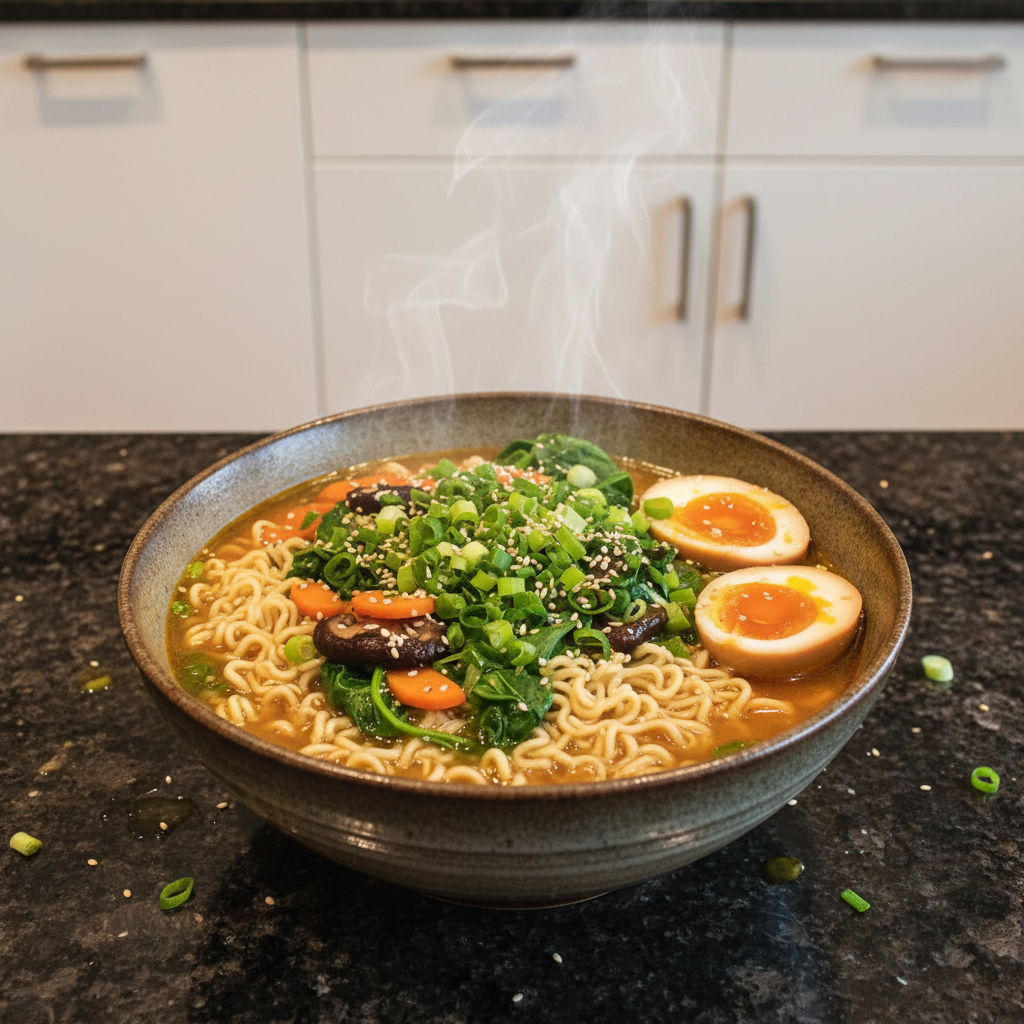
Vegetarian Ramen Recipe: Umami-Packed & Ready in 30 Minutes
Ingredients
Equipment
Method
- Heat the sesame oil in a large pot over medium heat.
- Add the minced garlic and grated ginger.
- Cook for about two minutes, until they become soft and incredibly fragrant.
- Stir in the soy sauce and mirin, cooking for another minute.
- Add the vegetable stock and bring to a simmer.
- For an extra boost of umami, add a sheet of kombu now and remember to remove it before serving.
- Add the fresh shiitake mushrooms to the broth and simmer for 10 minutes.
- If using dried shiitake, rehydrate them in warm water for about 20 minutes before adding them to the broth.
- While the broth simmers, bring a small pot of water to a boil.
- Gently lower the eggs into the boiling water and cook for exactly 7 minutes for a slightly runny yolk, or 8 minutes for a soft yolk.
- Immediately transfer the eggs to a bowl of ice water to stop the cooking process.
- After a few minutes, peel the shells off carefully and slice the eggs in half lengthwise. Set aside.
- Bring another pot of water to a boil.
- Add the baby spinach and cook for about a minute, until just wilted but still vibrant green.
- Remove from the pot and run under cold water to stop the cooking process. Drain well and set aside.
- Add the dried ramen noodles to the simmering stock mixture and cook for 2-3 minutes, or according to the package instructions.
- Be careful not to overcook them; you want them to be al dente.
- Divide the soup into two large bowls.
- Top with a halved egg, wilted spinach, shredded carrots, and sliced green onions.
- Sprinkle with sesame seeds (optional) and a drizzle of chili oil for extra flavor and serve immediately.
Notes

Lia Monet is a food blogger, recipe developer, and the founder of EasyAsMeals, a food blog focused on easy recipes, quick dinners, and everyday home cooking. She creates tested, family-friendly recipes using simple ingredients to help busy families cook affordable and delicious meals at home.