Finding a truly satisfying vegan pizza can be a challenge. Many recipes lack that certain “something” to make them truly crave-worthy. But look no further! This recipe delivers a delicious Classic Vegan Pizza with a simple yet transformative twist that elevates it to gourmet levels. I’ll show you how to make a mouthwatering vegan pizza, complete with a crispy crust and flavorful toppings, all ready in under 30 minutes. Get ready to enjoy the best vegan pizza you’ve ever had!
Why You’ll Love This Classic Vegan Pizza Recipe
This isn’t just another vegan pizza recipe; it’s a game-changer. The secret? A luscious balsamic glaze drizzle that takes it to the next level.
Elevates the pizza to gourmet levels. The balsamic glaze adds a touch of sweetness that perfectly complements the savory vegetables and the tangy pizza sauce. It provides a wonderful complexity of flavor.
Quick & Easy. Ready in under 30 minutes, this recipe is perfect for busy weeknights when you want a delicious and satisfying meal without spending hours in the kitchen.
Customizable. Feel free to adapt this recipe to your favorite veggies and dietary needs. It’s naturally dairy-free and easily made nut-free and gluten-free!
Ingredients Needed

- 1 ball pizza dough (Trader Joe’s, homemade, or store-bought, at room temperature)
- extra-virgin olive oil (for pan)
- 1 tablespoon cornmeal (for pan)
- ½ cup pizza sauce
- 1 cup baby bella mushrooms (thinly sliced)
- 1 green bell pepper (cut into rings)
- 1 cup cherry tomatoes (halved)
- ¼ red onion (thinly sliced)
- ¼ cup black olives (sliced)
- fresh basil (optional)
- oregano (optional)
- vegan parmesan cheese (optional)
Ingredient Notes & Substitutions
Let’s talk ingredients! Here are a few notes and substitutions to help you customize your pizza.
Pizza Dough: You can use store-bought dough (Trader Joe’s is a great option), homemade dough, whole wheat dough for added fiber and nutty flavor, or gluten-free dough. Working with gluten-free dough can be tricky. For best results, handle it gently and don’t overwork it. Different types of vegan pizza dough will have different hydration requirements. For more information, you might find resources on working with gluten-free dough helpful.
Vegan Parmesan Cheese: There are many store-bought options available, or you can easily make a simple version at home using nutritional yeast, cashews, and garlic powder for that cheesy, umami flavor. A simple vegan alternative to cheese is cashew cream.
Pizza Sauce: Store-bought pizza sauce works perfectly fine, but I always encourage making pizza sauce from scratch when you have the time. Fresh ingredients always make a difference.
Olive Oil: I recommend using extra-virgin olive oil for the best flavor.
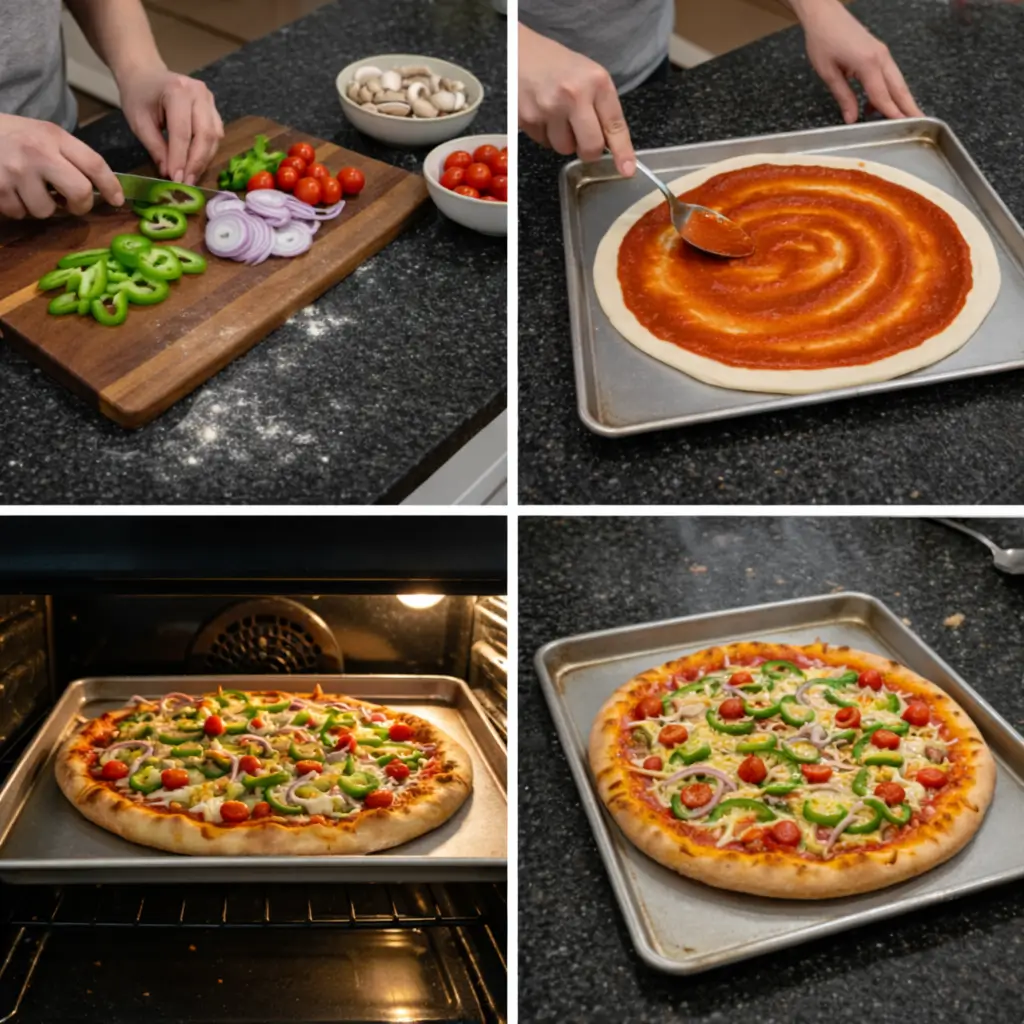
How to Make Classic Vegan Pizza
Step 1: Preheat the Oven
Preheat your oven to 450°F (232°C) with a baking sheet, pizza pan, or cast iron skillet inside. It’s crucial that your baking surface is scorching hot! This is what will give you that coveted crispy bottom crust. Listen for the sizzle when you place the pizza on the hot surface!
Step 2: Roll Out the Dough
On a lightly floured surface, roll out your pizza dough into a large circle, oval, or rectangle. The dough should be elastic and easy to stretch. If you’re using store-bought dough, let it sit at room temperature for at least 30 minutes before rolling it out to make it more pliable.
Step 3: Prepare the Pan
Carefully remove the preheated pizza pan from the oven. Add a generous drizzle of olive oil and a tablespoon of coarse cornmeal to it. This prevents sticking and the cornmeal adds a subtle crunch to the crust.
Step 4: Add Sauce and Toppings
Transfer the dough to the prepared pan and spread pizza sauce evenly over the dough. Arrange the mushrooms, green bell pepper, cherry tomatoes, red onion, and black olives in an even layer over the sauce. You want every bite to be flavorful! Smell the aroma of the sauce as it warms up.
Step 5: Bake the Pizza
Place the pizza in the oven and bake for 10-15 minutes, or until the crust is golden around the edges and the veggies look tender. Make sure the internal temperature is properly cooked for food safety.
Step 6: Finish and Serve
Remove the pizza from the oven and sprinkle with fresh basil, oregano, and vegan parmesan cheese, if desired. Cut into 6 slices and serve immediately. Don’t forget the balsamic glaze drizzle – this is the finishing touch that takes this pizza to the next level! The balsamic glaze adds a beautiful shine and a burst of flavor.
Choosing the Best Vegan Pizza Dough
The foundation of any great pizza is the dough. Here’s a breakdown of your options:
Store-Bought: Convenient and readily available, store-bought dough is a great option for busy weeknights. I often use Trader Joe’s pizza dough.
Homemade: Making dough from scratch allows for complete control over ingredients and flavor.
Whole Wheat: For a healthier option, try whole wheat dough. It adds fiber and a nutty flavor to the crust.
Gluten-Free: Gluten-free dough can be challenging to work with, but with the right recipe and techniques, you can achieve a delicious and crispy crust. One way to make crepes gluten-free is with a psyllium boost in this gluten-free crepes recipe.
The hydration level affects the crust depending on the oven type used. You can read more about dough hydration from pizzamaking.com.
Pro Tips & Troubleshooting
Pro Tips
- For a crispy crust: If you love extra crunch, bake your pizza on a preheated pizza stone, baking sheet or cast iron pan.
- Keep veggies sliced thin so they cook evenly in the short bake time.
- Toss veggies lightly in olive oil and a pinch of salt before layering on for extra flavor.
- Don’t overload the pizza with toppings to prevent a soggy crust.
- Preheat your baking surface for at least 30 minutes.
- Use a pizza peel for easy transfer to the hot baking surface.
- Drizzle balsamic glaze *after* baking to preserve its flavor.
Common Mistakes to Avoid
- Using cold dough: Ensure the dough is at room temperature for easier rolling and a better rise.
- Overcrowding the toppings: Too many toppings can lead to a soggy crust.
- Not preheating the baking surface: This is crucial for a crispy bottom.
- Using too much sauce: Overdoing the sauce can make the pizza soggy.
- Skipping the balsamic glaze: Don’t miss this key element of the unique twist!
Serving & Storage
Serving Ideas
- Pair your pizza with a kale caesar salad.
- Pair your pizza with a side of baked potato wedges.
- Speaking of dips, why not try this creamy vegan ranch dip.
- Garnish with fresh basil leaves for a pop of color and flavor.
- Sprinkle on red pepper flakes for a spicy kick.
Storage and Make-Ahead
- Storing Leftovers: Allow the pizza to cool completely before storing in an airtight container in the refrigerator for up to 3 days.
- Reheating: Reheat in the oven or a skillet for best results. Avoid microwaving to prevent a soggy crust.
- Make-Ahead: The dough can be made ahead of time and stored in the refrigerator for up to 2 days.
Conclusion
This Classic Vegan Pizza recipe is proof that vegan pizza can be incredibly delicious and easy to make. The balsamic glaze drizzle adds a touch of gourmet flair that will impress even the most discerning pizza lovers. Don’t be intimidated if you’re a beginner cook – the steps are simple, and the ingredients are readily available. Try different vegetable combinations and serving suggestions to make it your own. I encourage you to share your creations on social media or explore other vegan pizza recipes on my blog!
FAQ
What does a vegan pizza contain?
A vegan pizza contains a pizza dough base topped with tomato sauce, vegetables, herbs, and vegan cheese alternatives made from plant-based sources.
Does vegan pizza taste like regular pizza?
Yes, vegan pizza can taste very similar to traditional pizza. The key is to use high-quality ingredients, especially a good vegan cheese substitute and flavorful sauce.
How to make a crispy vegan pizza crust?
Use a preheated pizza stone or baking sheet, ensure your oven is hot (450°F or higher), and don’t overload the pizza with toppings. Adding cornmeal to the pan also helps.
What are the best vegetables for vegan pizza?
Some of the best vegetables for vegan pizza include mushrooms, bell peppers, onions, tomatoes, olives, spinach, and artichoke hearts. Roasting the vegetables beforehand can enhance their flavor.
How do I store vegan pizza leftovers?
Allow the pizza to cool completely, then store it in an airtight container in the refrigerator for up to 3 days. Reheat in the oven or a skillet for best results.
Is vegan pizza healthy?
Vegan pizza can be a healthy option, especially when loaded with vegetables. Choose whole-wheat dough and limit the amount of vegan cheese to keep it nutritious. Use homemade sauce to avoid added sugars and preservatives. You can even add a kale smoothie to round it out!
“`
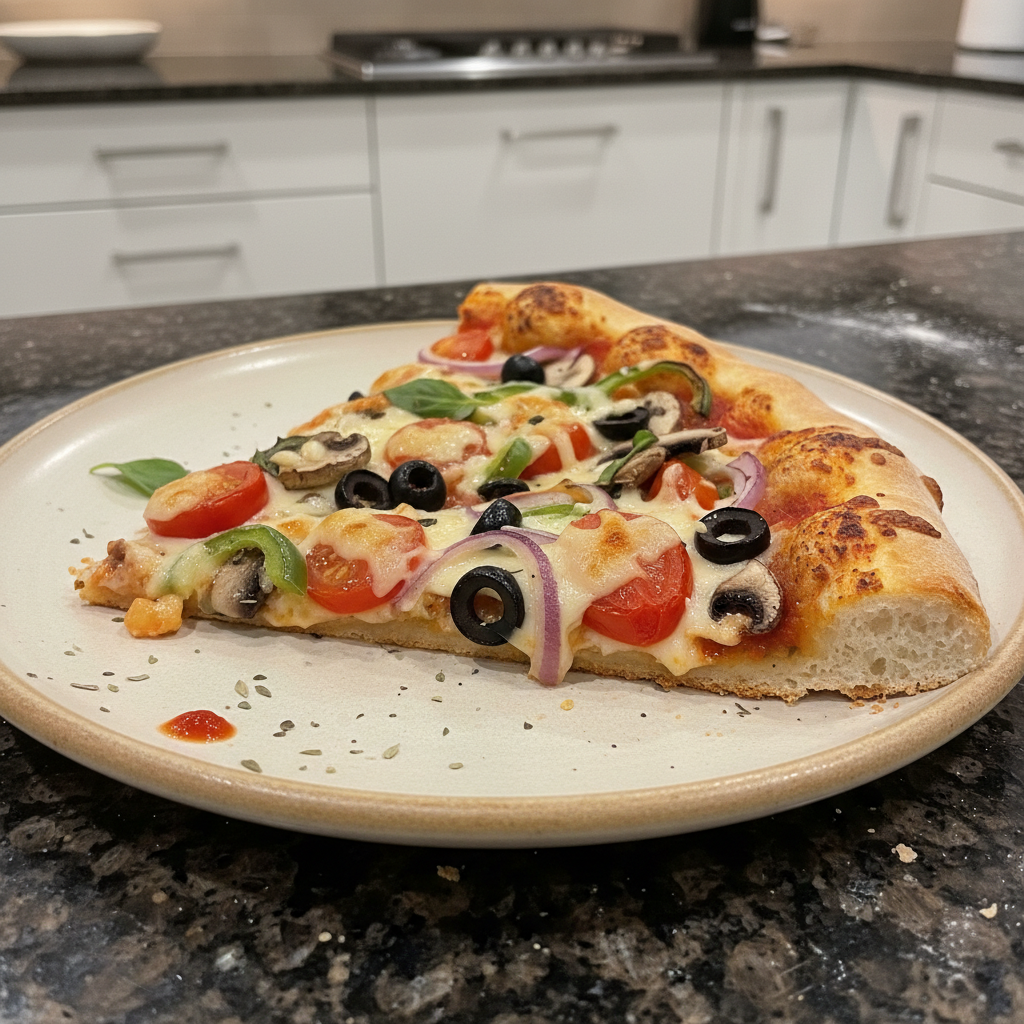
Best Classic Vegan Pizza Recipe (Easy & Delicious)
Ingredients
Equipment
Method
- Preheat your oven to 450°F (232°C) with a baking sheet, pizza pan, or cast iron skillet inside. It’s crucial that your baking surface is scorching hot! This is what will give you that coveted crispy bottom crust. Listen for the sizzle when you place the pizza on the hot surface!
- On a lightly floured surface, roll out your pizza dough into a large circle, oval, or rectangle. The dough should be elastic and easy to stretch. If you’re using store-bought dough, let it sit at room temperature for at least 30 minutes before rolling it out to make it more pliable.
- Carefully remove the preheated pizza pan from the oven. Add a generous drizzle of olive oil and a tablespoon of coarse cornmeal to it. This prevents sticking and the cornmeal adds a subtle crunch to the crust.
- Transfer the dough to the prepared pan and spread pizza sauce evenly over the dough. Arrange the mushrooms, green bell pepper, cherry tomatoes, red onion, and black olives in an even layer over the sauce. You want every bite to be flavorful! Smell the aroma of the sauce as it warms up.
- Place the pizza in the oven and bake for 10-15 minutes, or until the crust is golden around the edges and the veggies look tender. Make sure the internal temperature is properly cooked for food safety.
- Remove the pizza from the oven and sprinkle with fresh basil, oregano, and vegan parmesan cheese, if desired. Cut into 6 slices and serve immediately. Don’t forget the balsamic glaze drizzle – this is the finishing touch that takes this pizza to the next level! The balsamic glaze adds a beautiful shine and a burst of flavor.
Notes

Lia Monet is a food blogger, recipe developer, and the founder of EasyAsMeals, a food blog focused on easy recipes, quick dinners, and everyday home cooking. She creates tested, family-friendly recipes using simple ingredients to help busy families cook affordable and delicious meals at home.