Candied Grapefruit Peel is a sophisticated treat that’s easier to make than you might think. These glistening ribbons of citrus are fantastic on their own or as a gourmet addition to baked goods and cocktails. This Candied Grapefruit Peel recipe offers a unique twist, using a touch of honey to create a superior flavor and delightfully chewy texture. Get ready to learn how to make candied grapefruit peel that’s less bitter, more floral, and perfect for beginners.
Why You’ll Love This Candied Grapefruit Peel Recipe
What sets this recipe apart? It’s the honey! Just a tablespoon or two makes all the difference.
More flavorful: The addition of honey enhances the grapefruit’s naturally floral notes, creating a more complex and enjoyable flavor profile. It cuts through any potential bitterness, leaving you with a truly delicious treat. For more information, you might want to read about the benefits of honey.
Perfectly chewy texture: Honey’s invert sugars help prevent the candied grapefruit peel from becoming rock hard. The result is a softer, more pliable texture that’s a joy to eat.
Surprisingly easy: Don’t be intimidated by the idea of making candied citrus! This recipe is straightforward and simple to follow, even if you’re new to candying.
Sustainable snacking: This recipe is a brilliant way to use those grapefruit peels instead of throwing them away. Reduce waste and create something wonderful!
Ingredients Needed
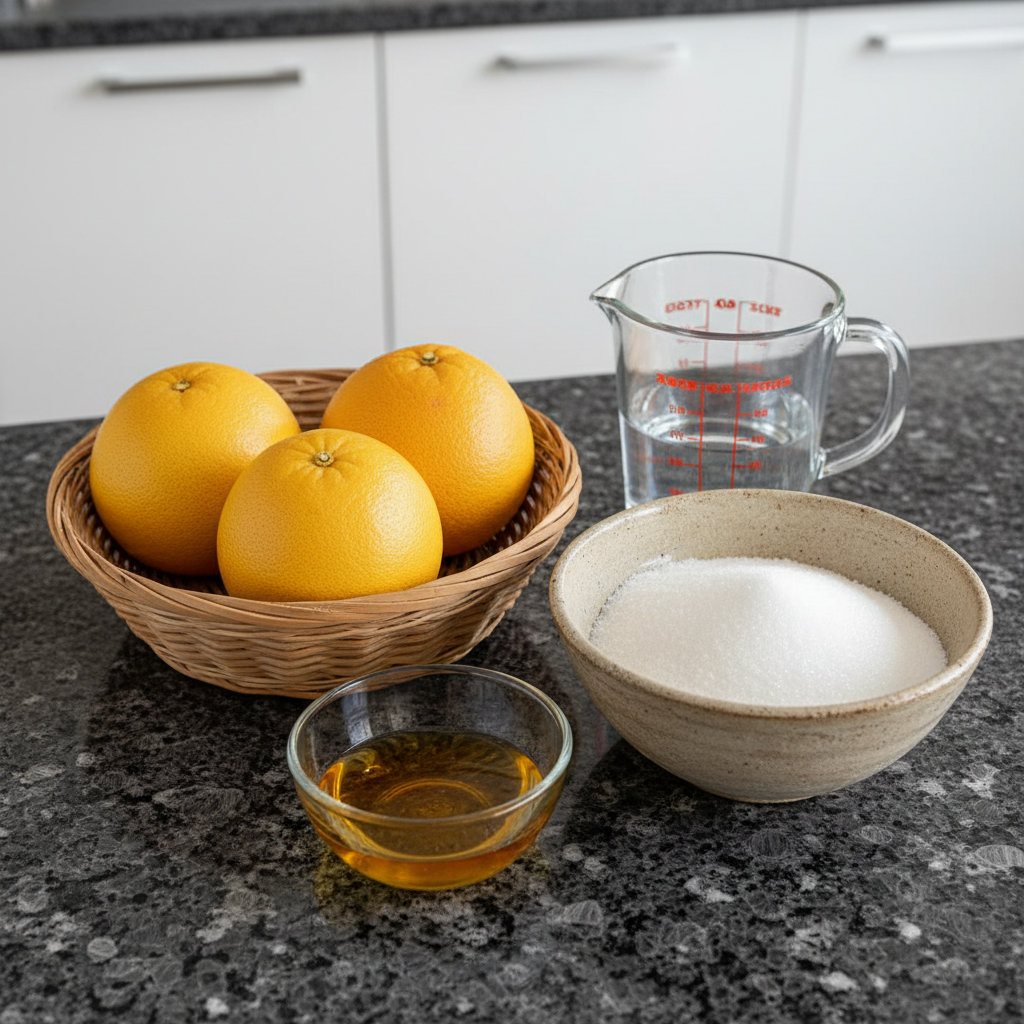
- 3 grapefruits (organic or unsprayed)
- 2 1/2 cups (500g) sugar (plus additional sugar for tossing the finished candied peel)
- 2 1/2 cups (625ml) water
- 2 tablespoons light corn syrup
Ingredient Notes & Substitutions
Let’s talk ingredients! Here are a few important notes to ensure your candied grapefruit peel turns out perfectly.
Grapefruits: If possible, use organic or unsprayed grapefruits to avoid any potential pesticide residue. Different grapefruit varieties, like Ruby Red or Oro Blanco, will influence the color and sweetness of your finished peel. Ruby Reds will lend a beautiful pink hue!
Sugar: Granulated sugar is the best choice for this recipe, providing a clean, consistent sweetness. While you can experiment with alternatives or sugar substitutes, keep in mind that they will alter the final texture and taste. You can learn more about the role of sugar in food at the Sugar Association website.
Corn Syrup: Light corn syrup helps prevent sugar crystallization, leading to a smoother, glossier candied peel. If you prefer, you can substitute it with another tablespoon or two of honey, agave nectar, or even just add a bit more sugar. However, the texture may be slightly different.
Water: Plain tap water is perfectly fine for this recipe.
How to Make Candied Grapefruit Peel
Step 1: Prepare the Grapefruit Peels
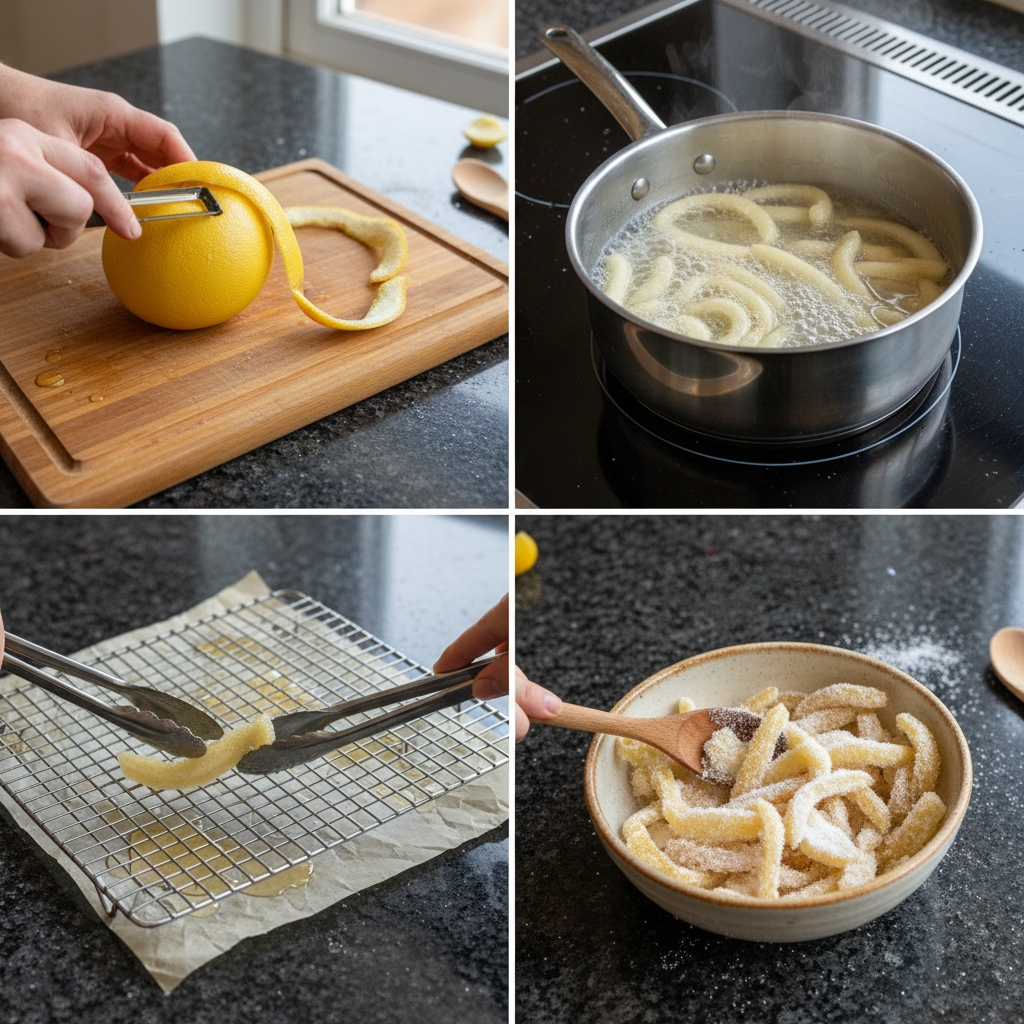
First, cut each grapefruit in half and juice them. Reserve that fresh juice for another purpose – it’s delicious in cocktails or as a refreshing drink!
Next, use a soup spoon to carefully scrape out all the pulp and membranes, leaving only the peel.
Using a chef’s knife, cut the grapefruit peels into strips just shy of 1/2-inch (1,25cm) wide. I like to twist the peels slightly as I cut to help release some of the bitter oils.
Step 2: Blanch the Peels
Place the grapefruit peels in a large pot and cover them completely with water. Bring the water to a boil and let the peels simmer for 5 minutes.
Drain the peels thoroughly, discarding the water. Repeat the simmering and draining process one more time. This crucial step helps remove bitterness from the peels.
Step 3: Cook the Peels in Syrup
After blanching the peels, place them back in the pot. If you’re using a candy thermometer, clip it to the side of the pot.
Add the sugar, water, and corn syrup (and honey!) to the pot. Bring the mixture to a boil over medium heat, stirring until the sugar is completely dissolved.
Once boiling, reduce the heat to a gentle, low boil. Cook the peels until they become translucent and glossy. The temperature should read about 218ºF (103ºC), which will take approximately 45 minutes.
If you’re not using a thermometer, look for visual cues: The peels should shimmer with translucence, and the syrup will thicken slightly and smell intensely of grapefruit. You’re aiming for the consistency of the 7th photo in the blog post.
Make sure the peels are cooked long enough, or they will not dry properly later.
Step 4: Dry and Sugar the Candied Peel
Carefully drain the cooked peels in a colander, allowing any excess syrup to drip off.
Spread the drained peels in a single layer on a wire cooling rack. Let them sit at room temperature for about 12 hours to dry out a bit. This step is important for achieving that perfect chewy texture.
Sprinkle some sugar (about 1/3 cup, 65g) on a baking sheet. Use your hands to toss the candied peel in the sugar, adding more sugar as needed, and shaking off any excess. Continue until the peels are well-coated and no longer feel sticky.
Troubleshooting: Why Are My Candied Grapefruit Peels Too Hard, Soft, or Sticky?
Sometimes, even with the best intentions, candied grapefruit peel doesn’t turn out exactly as planned. Here’s how to troubleshoot common issues:
Too Hard:
- Overcooking in the syrup: Aim for that 218°F (103°C) mark, and look for the translucent, glossy appearance. Once the peels reach this stage, remove them from the heat immediately.
- Insufficient moisture during drying: While you want the peels to dry, avoid overly dry environments. If your home is very dry, consider covering the peels loosely with parchment paper during the drying process.
Too Soft/Sticky:
- Undercooking in the syrup: Ensure the syrup thickens slightly and the peels become truly translucent. If they still seem opaque, continue cooking for a few more minutes.
- Incomplete drying: The 12-hour drying period is crucial. If the peels still feel sticky after this time, let them dry for a few more hours.
- High humidity environment: If you live in a humid area, try drying the peels in a slightly warmed oven (around 170°F or 77°C) for a few hours, keeping the door slightly ajar to allow moisture to escape.
Pro Tips & Troubleshooting
Pro Tips
- Twist the grapefruit peels slightly to release bitter oils before boiling.
- Don’t skip the blanching process – it’s essential for removing bitterness.
- Use a candy thermometer for precise syrup cooking and consistent results.
- Make sure to completely dry the candied peel before coating with sugar.
- The honey helps keep the peel moist and prevents it from becoming too hard.
- Use a vegetable peeler to remove just the zest of the grapefruit and avoid the bitter white pith.
- Let the candied grapefruit peel sit out to dry on a wire rack overnight. This is crucial for the final texture.
Common Mistakes to Avoid
- Not blanching the peels enough, resulting in a bitter taste.
- Cooking the syrup at too high a temperature, which can cause crystallization.
- Not drying the peels sufficiently, leading to a sticky final product.
- Using a pot that is too small, which can cause the syrup to boil over.
- Adding the sugar all at once, which can cause clumping.
Serving & Storage
Serving Ideas
Candied grapefruit peel is incredibly versatile! Here are a few of my favorite ways to enjoy it:
- Dipped in dark chocolate for a decadent treat.
- Chopped and added to cakes, muffins, or breads for a burst of citrus flavor. Consider adding some to these cranberry muffins for a festive twist.
- As a sophisticated garnish for cocktails or desserts.
- Served alongside cheese and crackers for an unexpected sweet and savory combination.
Storage and Make-Ahead
Proper storage is key to maintaining the quality of your homemade candied grapefruit peel.
Room Temperature: Store in an airtight container at room temperature for up to 2 weeks.
Refrigerator: Store in an airtight container in the refrigerator for up to 1 month.
Freezer: For longer storage, freeze in a single layer on a baking sheet, then transfer to a freezer bag or container. Can be frozen for up to 6 months.
How to tell if the candied peel has gone bad? Look for signs of mold, a sour odor, or a sticky, slimy texture. If you notice any of these, it’s best to discard the peel.
Adaptations for Special Occasions
Candied grapefruit peel makes a wonderful addition to a holiday dessert spread. Package it in decorative jars or tins for a thoughtful homemade gift.
Conclusion
This honey-kissed candied grapefruit peel recipe brings a unique twist to a classic treat. The honey not only enhances the flavor but also ensures a delightfully chewy texture. I hope you’ll find that this recipe is straightforward and yields delicious results, even if you’re new to candying. Feel free to experiment with variations, such as dipping the peel in chocolate or adding a pinch of your favorite spices. Try this honey-kissed Candied Grapefruit Peel recipe today and share your creations with us! Don’t forget to rate and review the recipe below.
Looking for another fun citrus treat? You might enjoy this recipe for candied orange peel!
FAQ
Here are some frequently asked questions about making candied grapefruit peel:
How do I store candied grapefruit peel and how long will it last?
Store it in an airtight container at room temperature for up to 2 weeks, in the refrigerator for up to 1 month, or in the freezer for up to 6 months.
What can I do with the leftover grapefruit syrup?
Don’t toss it! Use it to sweeten cocktails or tea, or as a glaze for cakes and other desserts.
Can I substitute honey for corn syrup?
Honey is already used in this recipe to improve the taste and texture. You can omit the corn syrup and use a bit more honey, but it will change the texture slightly and may result in a darker color.
What are the key steps to prevent crystallization?
Avoid overcooking, add an acid like a squeeze of lemon juice to the syrup, and ensure you have the proper sugar-to-water ratio.
Why are my candied grapefruit peels too hard, and how can I fix it?
This could be due to overcooking in the syrup or insufficient moisture during the drying process. Be sure to monitor the temperature carefully and avoid overly dry environments during drying. See the troubleshooting section above for more details!
Is it necessary to use organic grapefruits?
It’s beneficial to use organic grapefruits to avoid potential pesticide residue. However, if you can’t find organic, thoroughly washed, unsprayed grapefruits will also work.
Can I use other types of citrus?
Yes! Orange, lemon, and lime peels can also be candied using the same method. Each will offer a unique flavor profile. And speaking of oranges, you might want to try this easy orange cake recipe!
“`
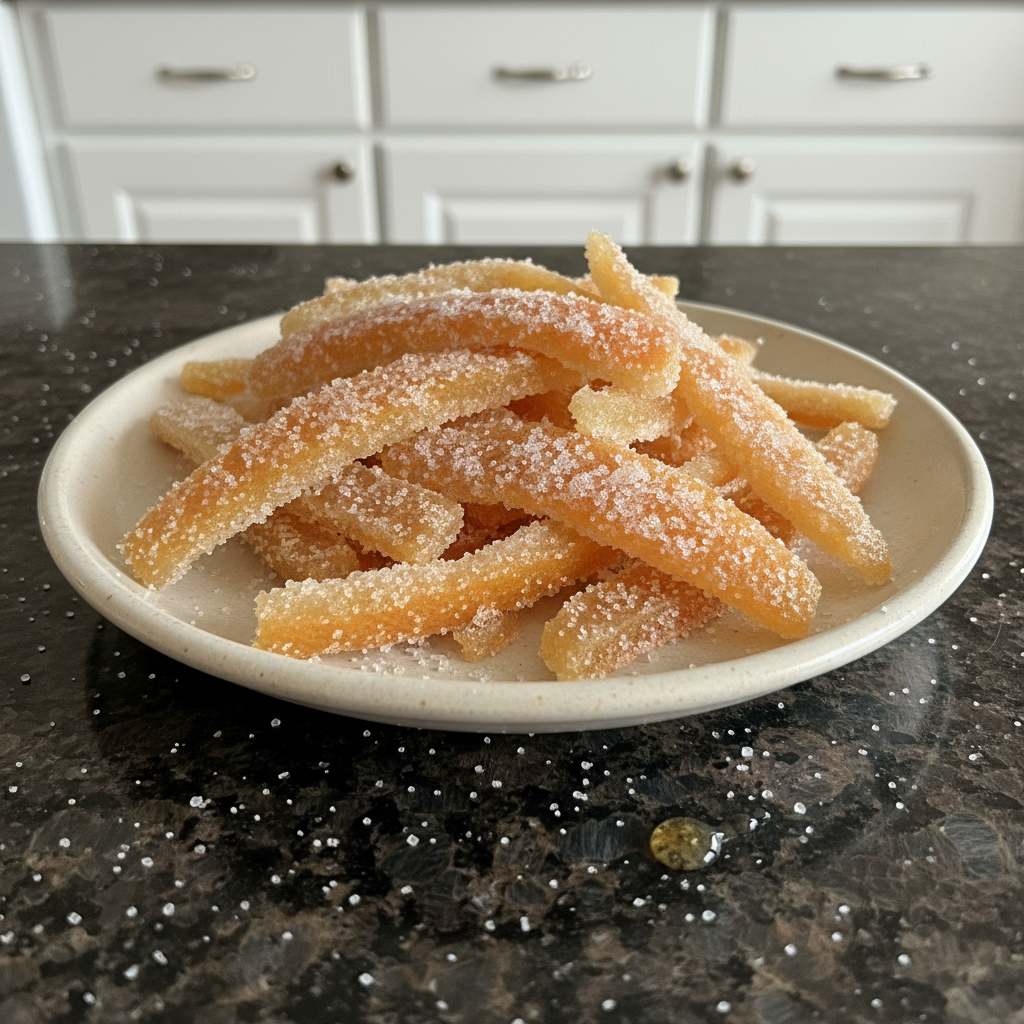
Candied Grapefruit Peel Recipe with a Honey Twist
Ingredients
Method
- Cut each grapefruit in half and juice them. Reserve that fresh juice for another purpose.
- Use a soup spoon to carefully scrape out all the pulp and membranes, leaving only the peel.
- Using a chef's knife, cut the grapefruit peels into strips just shy of 1/2-inch (1,25cm) wide. Twist the peels slightly as you cut to help release some of the bitter oils.
- Place the grapefruit peels in a large pot and cover them completely with water. Bring the water to a boil and let the peels simmer for 5 minutes.
- Drain the peels thoroughly, discarding the water. Repeat the simmering and draining process one more time. This crucial step helps remove bitterness from the peels.
- After blanching the peels, place them back in the pot. If you're using a candy thermometer, clip it to the side of the pot.
- Add the sugar, water, and corn syrup (and honey!) to the pot. Bring the mixture to a boil over medium heat, stirring until the sugar is completely dissolved.
- Once boiling, reduce the heat to a gentle, low boil. Cook the peels until they become translucent and glossy. The temperature should read about 218ºF (103ºC), which will take approximately 45 minutes.
- If you’re not using a thermometer, look for visual cues: The peels should shimmer with translucence, and the syrup will thicken slightly and smell intensely of grapefruit. You're aiming for the consistency of the 7th photo in the blog post.
- Make sure the peels are cooked long enough, or they will not dry properly later.
- Carefully drain the cooked peels in a colander, allowing any excess syrup to drip off.
- Spread the drained peels in a single layer on a wire cooling rack. Let them sit at room temperature for about 12 hours to dry out a bit. This step is important for achieving that perfect chewy texture.
- Sprinkle some sugar (about 1/3 cup, 65g) on a baking sheet. Use your hands to toss the candied peel in the sugar, adding more sugar as needed, and shaking off any excess. Continue until the peels are well-coated and no longer feel sticky.
Notes

Lia Monet is a food blogger, recipe developer, and the founder of EasyAsMeals, a food blog focused on easy recipes, quick dinners, and everyday home cooking. She creates tested, family-friendly recipes using simple ingredients to help busy families cook affordable and delicious meals at home.