Looking for a quick and easy dinner that’s packed with flavor? This Baked Boursin Salmon recipe is your answer! It’s ready in under 30 minutes and delivers perfectly cooked, juicy salmon with a creamy, herb-infused Boursin topping and a bright lemon-garlic marinade. Whether you’re a seasoned cook or just starting out, this recipe is sure to impress with its simplicity and delicious taste.
Why You’ll Love This Recipe
This Baked Boursin Salmon recipe stands out because of one simple technique: a quick 30-minute lemon-garlic marinade.
Quick & Easy: Ready in under 30 minutes, it is perfect for busy weeknights when you need a delicious and healthy meal on the table fast.
Flavorful: The combination of creamy Boursin cheese and the zesty lemon-garlic marinade creates an explosion of flavor that will tantalize your taste buds. The marinade tenderizes the salmon and infuses it with bright flavors.
Healthy: Salmon is a great source of protein and omega-3 fatty acids, making this dish a nutritious and satisfying choice. You can learn more about the benefits of omega-3 fatty acids on the Harvard School of Public Health website.
Ingredients Needed
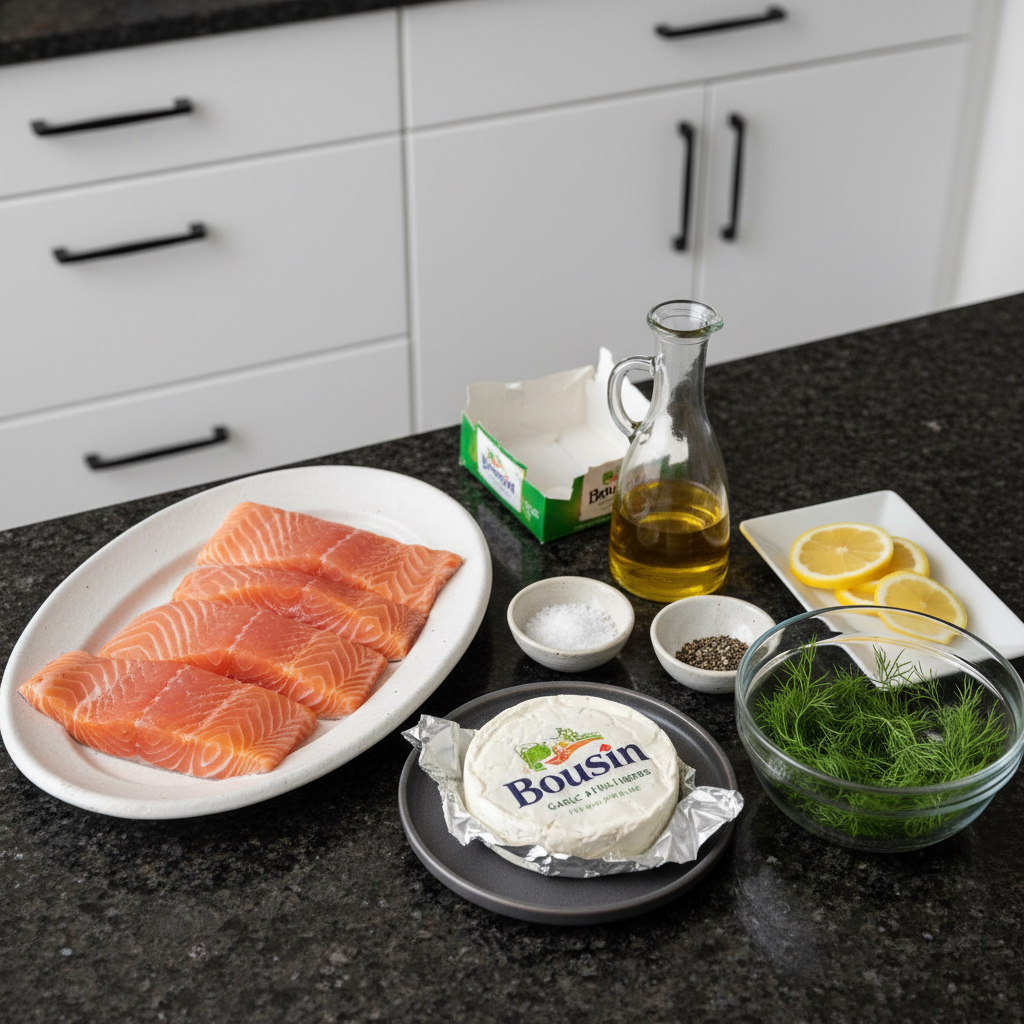
Here are the ingredients you’ll need to make this delicious Baked Boursin Salmon:
4 salmon fillets (skin on or off)
1 round Boursin garlic and fine herbs cheese
1 tablespoon olive oil
Salt to taste
Black pepper to taste
Lemon slices
Fresh parsley or dill for garnish
Optional: cherry tomatoes, asparagus spears, spinach, shallots, or crushed garlic
Ingredient Notes & Substitutions
Salmon: For the best flavor and texture, choose fresh, high-quality salmon fillets. Atlantic salmon is a popular choice, known for its rich flavor and higher fat content. Sockeye and King salmon offer a more intense flavor. When possible, look for sustainably sourced salmon.
Boursin Cheese: I recommend using Boursin garlic and fine herbs cheese as the primary choice for this recipe. For a slight variation, try Boursin shallot and chive or another herb cheese. If you’re dairy-free, try a cashew-based cheese.
Olive Oil: Extra virgin olive oil not only adds flavor but also offers health benefits. Its fruity notes complement the salmon and herbs beautifully.
Lemon: Fresh lemon juice is key to the marinade and adds a bright, citrusy touch to the finished dish. Don’t skip it! You can even add a little lemon zest.
Optional Vegetables: Feel free to add your favorite vegetables to the baking dish. Broccoli, zucchini, or bell peppers pair well with salmon.
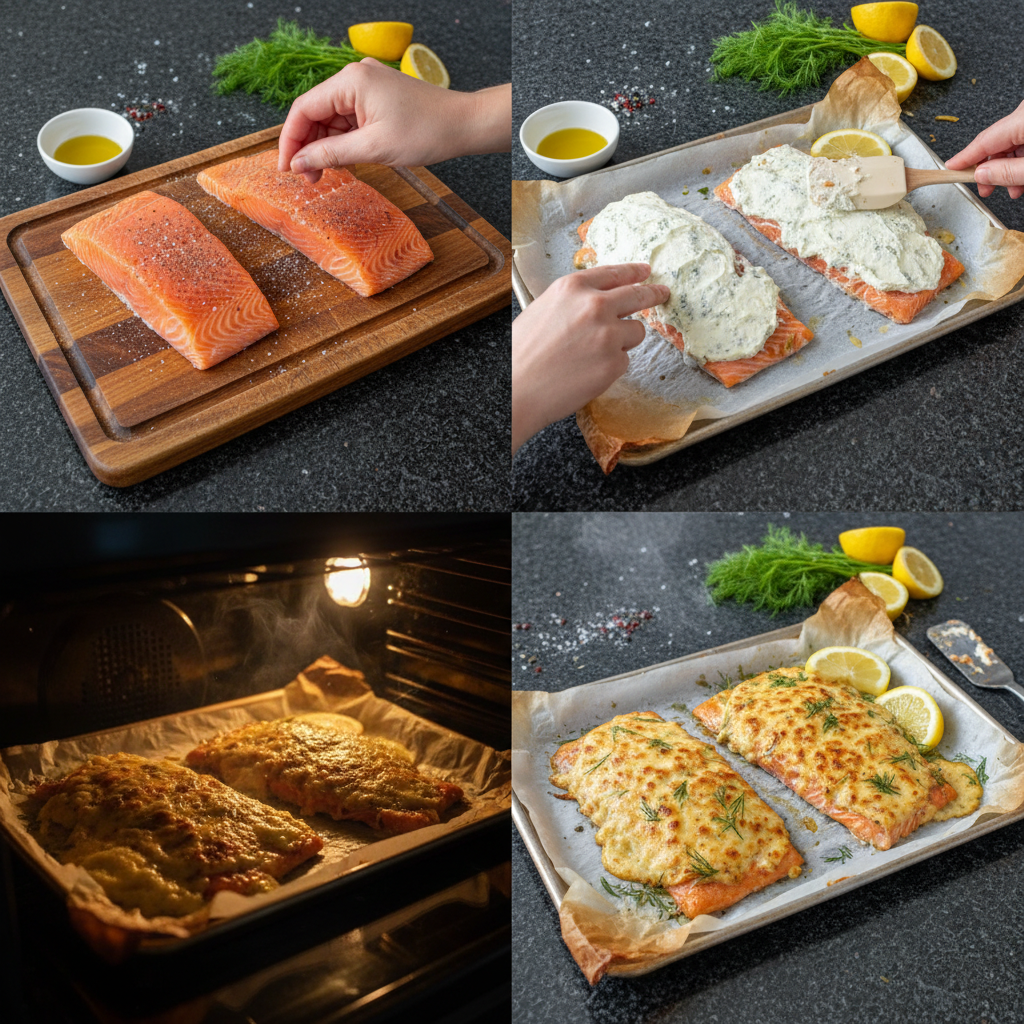
How to Make Baked Boursin Salmon
Let’s get cooking! Follow these simple steps to create your own Baked Boursin Salmon.
Step 1: Prepare the Oven and Baking Dish
Preheat oven to 400°F (200°C). Line a baking dish with foil or parchment paper for easy cleanup. This prevents the salmon from sticking and makes washing up a breeze.
Step 2: Marinate the Salmon
Pat salmon fillets dry with paper towels and place them in the baking dish. Drizzle with olive oil. For my special twist, marinate the salmon for 30 minutes in a mixture of olive oil, lemon juice, minced garlic, and a pinch of red pepper flakes. Season with salt and pepper. Optionally, add a little lemon zest for brightness. Patting the salmon dry helps it brown better and absorb the marinade more effectively.
Step 3: Add the Boursin Cheese
Spread or crumble Boursin cheese generously over each salmon fillet. I usually use about 1/4 of the cheese round per fillet, but feel free to adjust to your liking.
Step 4: Bake the Salmon
Bake for 14–17 minutes, depending on the thickness of the fillets, until the salmon is flaky and the cheese is soft and golden. To check for doneness, gently insert a fork into the thickest part of the salmon. It should flake easily. I like to check it a few minutes early to prevent overcooking. The USDA recommends an internal temperature of 145°F (63°C).
Step 5: Finish and Garnish
Remove from oven, squeeze fresh lemon juice over the top, and garnish with fresh parsley or dill before serving. The lemon juice adds a final burst of freshness that really elevates the dish.
Achieving Perfectly Cooked Salmon: Internal Temperature Guide
Cooking salmon to the correct internal temperature is crucial for both taste and food safety. Using a meat thermometer is the best way to ensure perfectly cooked salmon every time.
Here’s a quick guide:
- Medium-Rare: 125°F (52°C) – The center will be slightly translucent.
- Medium: 130-135°F (54-57°C) – The center will be opaque but moist.
- Medium-Well: 140°F (60°C) – Fully cooked, but still tender.
- Well-Done: 145°F (63°C) – The USDA recommends this temperature for food safety.
Insert the thermometer into the thickest part of the salmon fillet. Keep in mind that the internal temperature will continue to rise slightly after you remove the salmon from the oven, a process known as carryover cooking.
Selecting Sustainable Salmon: A Guide for Eco-Conscious Consumers
Choosing sustainable salmon is important for protecting our oceans and ensuring that future generations can enjoy this delicious fish. Sustainable salmon comes from fisheries or farms that are managed responsibly to minimize their environmental impact.
Here are some tips for identifying sustainable salmon:
- Look for certifications: The Marine Stewardship Council (MSC) and the Aquaculture Stewardship Council (ASC) certifications indicate that the salmon comes from a sustainable source.
- Check the label: Look for information about the origin of the salmon. Wild-caught salmon from well-managed fisheries is often a good choice.
- Ask your fishmonger: They can provide information about the sustainability practices of their suppliers.
By making informed choices, you can help support responsible fishing practices and protect our oceans.
Pro Tips & Troubleshooting
Pro Tips
- Marinate the salmon for the full 30 minutes for maximum flavor.
- Use a meat thermometer to ensure the salmon is cooked to the perfect internal temperature.
- Don’t overcrowd the baking dish; use two dishes if necessary.
- Add lemon slices under the salmon fillets to prevent sticking and boost flavor.
- For extra brightness, rub a small amount of lemon zest on top.
- Garnish generously with fresh herbs for added flavor and visual appeal.
Common Mistakes to Avoid
- Overbaking the salmon, which can result in dry fillets.
- Not patting the salmon dry before baking, which can prevent browning.
- Using old or low-quality Boursin cheese, which can affect the flavor.
- Skipping the marinade, which significantly impacts the flavor and texture.
- Using too much salt, which can overpower the delicate flavor of the salmon.
Serving & Storage
Serving Ideas
This Baked Boursin Salmon pairs beautifully with a variety of side dishes. I love serving it with roasted asparagus, lemon butter green beans, or a fresh cucumber dill salad. For a more substantial meal, try it with wild rice or garlic butter orzo. A crisp Sauvignon Blanc or Pinot Grigio is an excellent wine pairing. Garnish with fresh lemon slices and herbs for an elegant presentation.
If you’re looking for another great recipe, try these easy baked chicken breast ideas.
Storage and Make-Ahead
Store any leftover baked salmon in an airtight container in the refrigerator for up to 3 days. To reheat, gently warm it in the oven or microwave until heated through. Add a splash of water or lemon juice to prevent it from drying out. While you can prep the marinade and have it ready, I don’t recommend making this too far ahead of time or freezing, as the texture of the fish and cheese will suffer.
Conclusion
This Baked Boursin Salmon recipe is a winner because it’s quick, easy, flavorful, and healthy. The lemon-garlic marinade truly elevates the dish, adding a burst of brightness that perfectly complements the creamy Boursin cheese. Even if you’re a beginner cook, you can easily master this recipe. Feel free to experiment with different vegetables or herbs to customize it to your liking. Print this recipe, share it with your friends, or explore our other delicious salmon recipes!
For a romantic dinner idea, serve this with garlic butter shrimp pasta!
FAQ
Here are some frequently asked questions about making Baked Boursin Salmon:
Can I Use Frozen Salmon?
Yes, you can use frozen salmon, but thaw it completely before marinating and baking. Pat it dry to remove excess moisture.
Can I Make It Dairy Free?
Yes, substitute the Boursin cheese with a dairy-free alternative, such as a cashew-based cheese.
What temperature should salmon be cooked to?
The USDA recommends an internal temperature of 145°F (63°C). Use a meat thermometer to ensure accuracy. For more information, you can also refer to the USDA guidelines on safe internal cooking temperatures.
How to select sustainable salmon?
Look for certifications like MSC or ASC. Choose wild-caught salmon from well-managed fisheries.
What are the best vegetables to roast with salmon?
Asparagus, cherry tomatoes, broccoli, zucchini, and bell peppers are all great choices. Roast them alongside the salmon for a complete meal.
How can I prevent the salmon from drying out?
Don’t overbake it. Use a meat thermometer to ensure it’s cooked to the correct internal temperature. The marinade also helps keep it moist.
Can I Add Vegetables to the Pan?
Yes, add them in the last 15 minutes of cooktime. Be sure they are uniform in size so they cook evenly.
Looking for more easy dinner recipes? Check out this garlic butter beef and potatoes recipe!
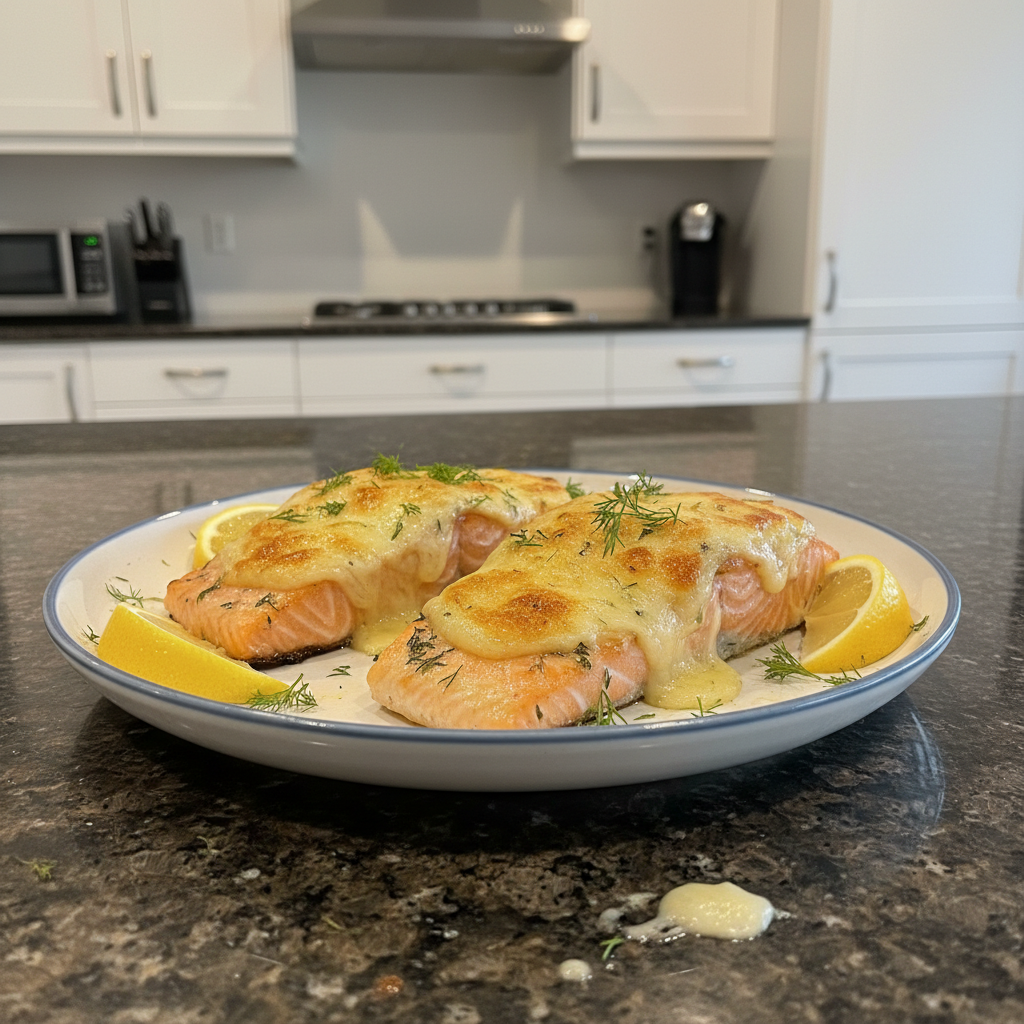
Easy Baked Boursin Salmon Recipe (Juicy & Flavorful!)
Ingredients
Equipment
Method
- Preheat oven to 400°F (200°C). Line a baking dish with foil or parchment paper for easy cleanup.
- Pat salmon fillets dry with paper towels and place them in the baking dish. Drizzle with olive oil. Marinate the salmon for 30 minutes in a mixture of olive oil, lemon juice, minced garlic, and a pinch of red pepper flakes. Season with salt and pepper. Optionally, add a little lemon zest for brightness. Patting the salmon dry helps it brown better and absorb the marinade more effectively.
- Spread or crumble Boursin cheese generously over each salmon fillet. I usually use about 1/4 of the cheese round per fillet, but feel free to adjust to your liking.
- Bake for 14–17 minutes, depending on the thickness of the fillets, until the salmon is flaky and the cheese is soft and golden. To check for doneness, gently insert a fork into the thickest part of the salmon. It should flake easily. The USDA recommends an internal temperature of 145°F (63°C).
- Remove from oven, squeeze fresh lemon juice over the top, and garnish with fresh parsley or dill before serving.
Notes