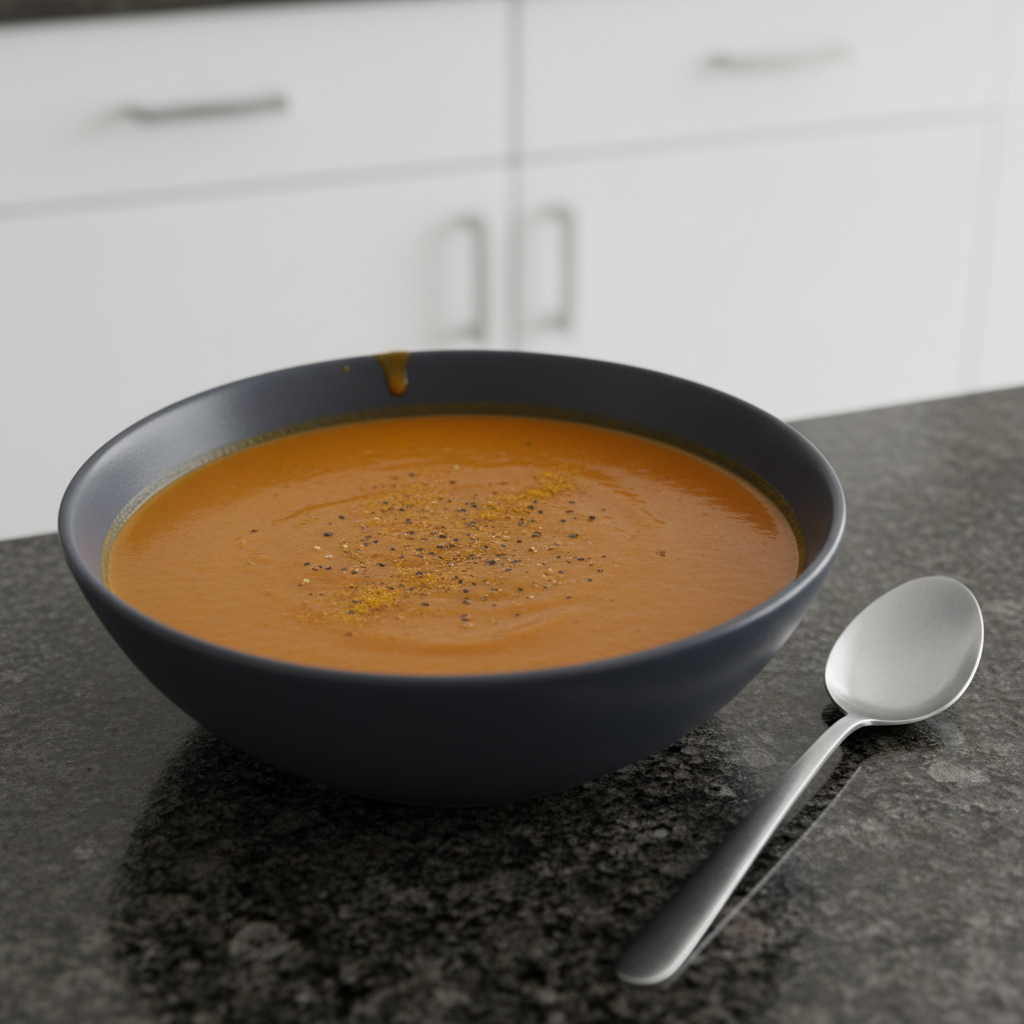
Have you ever craved that classic French onion soup, the kind with the deeply caramelized onions, rich broth, and bubbly, cheesy top? I’m excited to share my ultimate French onion soup recipe, one that elevates the traditional version to a whole new level of flavor. The secret? A simple yet transformative ingredient that will make your homemade onion soup recipe taste like it came straight from a Parisian bistro. Get ready to learn how to make this restaurant-quality delight in your own kitchen.
Why You’ll Love This French Onion Soup Recipe
This French onion soup recipe is a game-changer, taking the classic to new heights with a unique twist that enhances the overall flavor profile.
Balsamic Upgrade: The addition of a tablespoon of balsamic vinegar during the last few minutes of caramelizing the onions creates a symphony of flavors.
Flavor Science: The balsamic vinegar’s acidity beautifully balances the richness of the soup. It also enhances the Maillard reaction, leading to a deeper, more complex flavor profile. You can learn more about the Maillard reaction and how it affects flavor on the Exploratorium website.
Taste Sensation: Prepare for a delightful experience, as this soup offers savory, sweet, and umami notes that dance on your palate. This onion soup recipe is:
- Enhanced Flavor: Noticeably more complex and delicious compared to traditional recipes.
- Impressive and Satisfying: Perfect for special occasions or cozy nights in.
- Surprisingly Easy: Simple to make with clear, step-by-step instructions.
Ingredients Needed
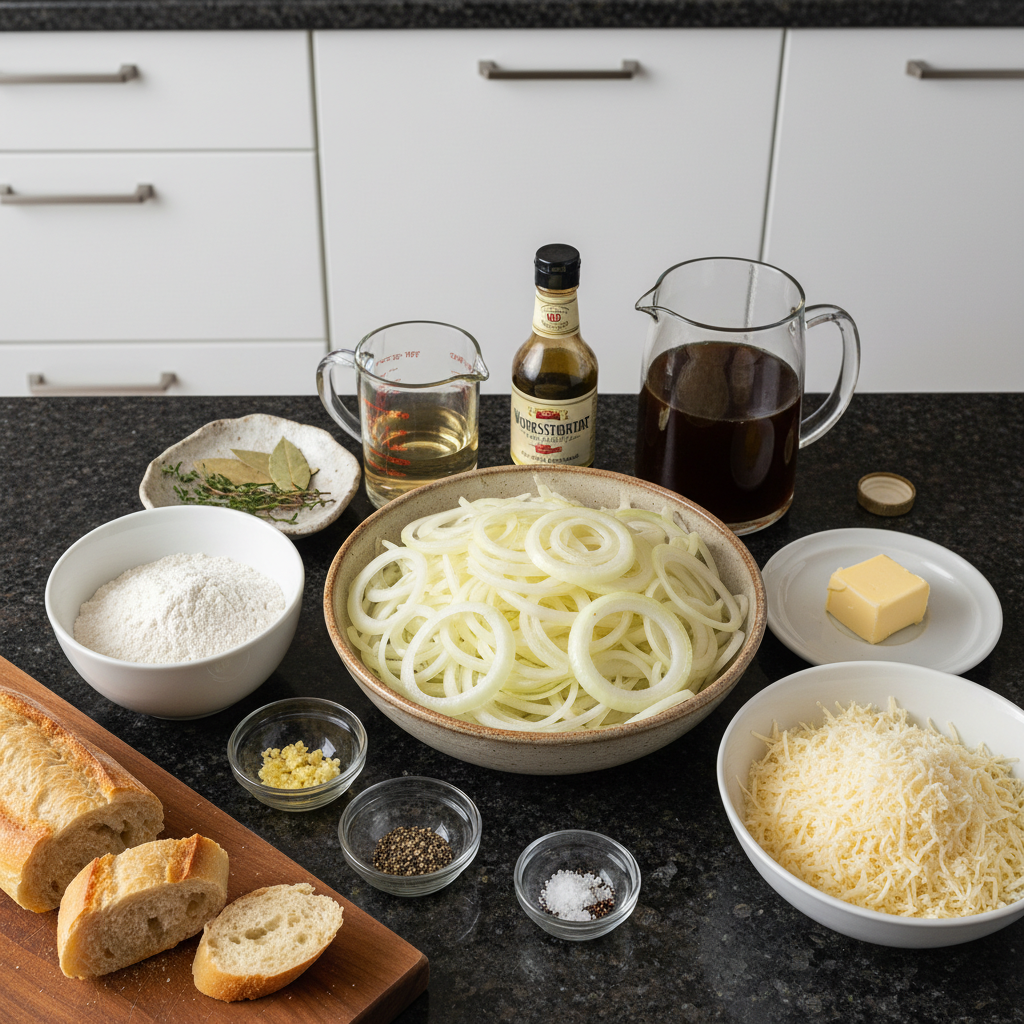
- 4 pounds yellow onions, peeled and thinly sliced (approximately 5-6 large onions)
- 3 tablespoons butter
- 4 cloves garlic, minced
- 3 tablespoons flour
- 1/2 cup dry white wine
- 6 cups of beef stock (or veggie stock)
- 1 teaspoon Worcestershire sauce
- 1 bay leaf
- 3 sprigs fresh thyme (or 1 teaspoon dried thyme)
- fine sea salt and freshly-cracked black pepper, to taste
- baguette
- grated or sliced cheese (such as Gruyere, Asiago, Swiss, Gouda or Mozzarella)
Ingredient Notes & Substitutions
Onions: Yellow onions are the standard for French onion soup, providing a balanced flavor. White or sweet onions can be used for a milder flavor. Red onions will significantly alter the flavor profile, so I don’t recommend them for this onion soup recipe.
Butter: Butter adds richness and depth to the soup. For a vegan alternative, use olive oil or vegan butter in equal amounts.
Wine: A dry white wine like Sauvignon Blanc or Pinot Grigio works best for deglazing the pan. If you prefer a non-alcoholic option, use dry sherry or extra broth with a splash of lemon juice.
Stock: Beef stock provides the most authentic and robust flavor. For a vegetarian option, use vegetable stock. Opt for low-sodium options to control the saltiness of the soup. You can also use bone broth for an extra rich onion soup recipe.
Cheese: Gruyere is the classic choice for French onion soup, offering a nutty, slightly salty flavor. Swiss cheese provides a mild, creamy taste, while Asiago offers a sharper, nuttier profile. You can also use a combination of these cheeses. Mozzarella is an acceptable alternative, though less flavorful.
Worcestershire Sauce: This adds a boost of umami. Most brands contain anchovies, but vegan Worcestershire sauces are readily available.
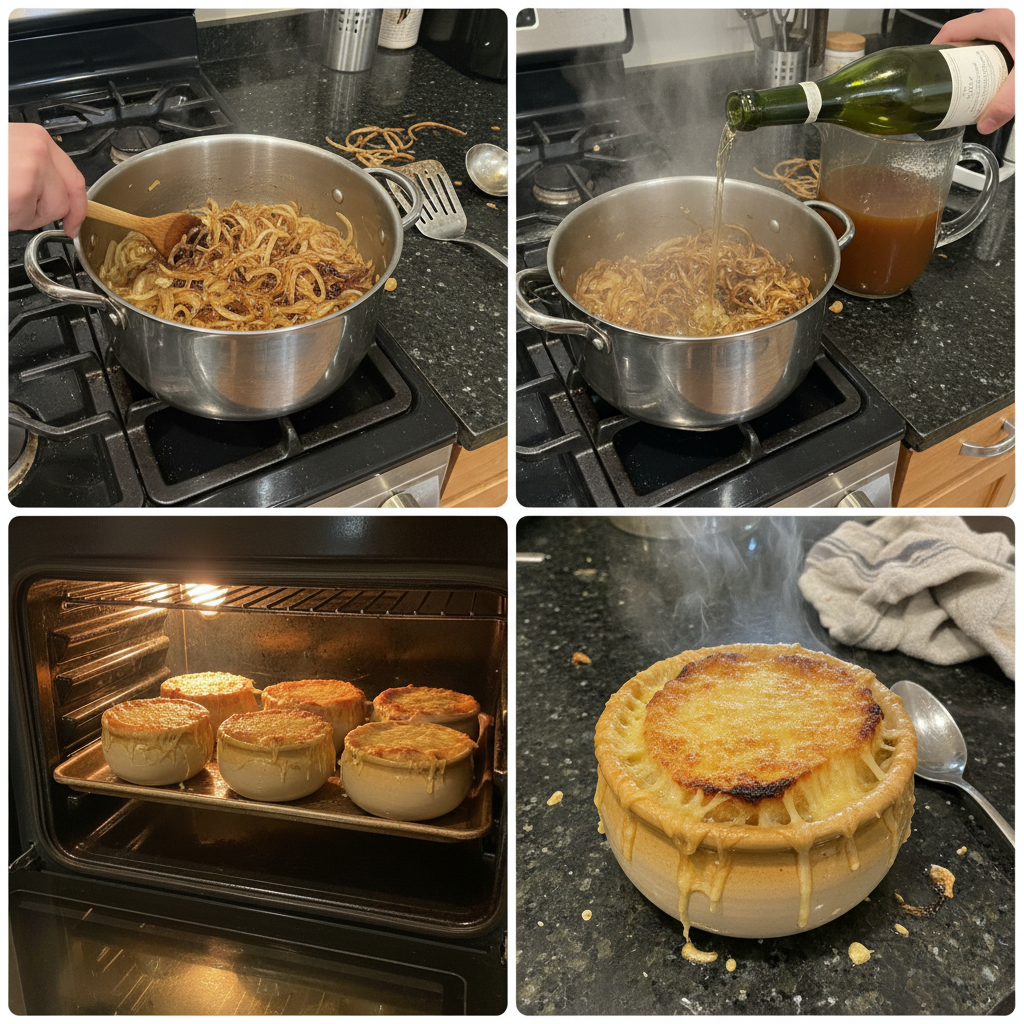
How to Make Onion Soup Recipe
Step 1: Caramelize the Onions
Caramelizing the onions is the most crucial step in making an amazing French onion soup recipe. This process, involving the Maillard reaction, brings out the natural sugars in the onions, creating a deep, sweet flavor and a beautiful golden-brown color. The aroma that fills your kitchen during this step is simply divine.
In a large heavy-bottomed stockpot, melt the butter over medium-high heat. Add the onions and sauté for about 30 minutes until caramelized (but not burnt). Initially, stir every 3-5 minutes, then about once a minute near the end of caramelization to prevent burning. Don’t rush this process. Add garlic and sauté for 2 minutes. Stir in the flour and cook for an additional 1 minute. Stir in the wine to deglaze the pan, using a wooden spoon to scrape up any browned bits on the bottom of the pan. As the wine simmers, it will lift all of those flavorful bits that have stuck to the bottom.
Step 2: Simmer the Soup
As the soup simmers, the flavors meld together, creating a harmonious and comforting dish. The aroma of thyme and Worcestershire sauce will fill your kitchen, making you eager for the final result.
Add the stock, Worcestershire, bay leaf, and thyme and stir to combine. Continue to cook until the soup reaches a simmer. Then reduce heat to medium-low, cover and simmer for at least 10 minutes. Discard the bay leaf and sprigs of thyme. Taste the soup and season with salt and pepper as needed. This is your opportunity to customize the seasoning.
Step 3: Toast the Bread
The toasted bread adds a delightful crunch and soaks up the flavorful broth, making each bite a perfect combination of textures and tastes. The aroma of toasted baguette is irresistible!
Preheat oven to 400°F. While the soup is simmering, slice the baguette into 1-inch thick pieces and arrange them in a single layer on a baking sheet. Bake for 6-8 minutes, until the bread is toasted and golden around the edges. Remove and set aside.
Step 4: Broil the Topping
Watching the cheese melt and bubble under the broiler is one of the most satisfying parts of making French onion soup. Be sure to keep a close eye on it to prevent burning.
Switch the oven to the broiler. Once the soup is ready to serve, place your oven-safe bowls on a thick baking sheet. Ladle the soup into each bowl, then top with a baguette slice and your desired amount of cheese (I used about 1/4 cup shredded cheese for each). Place on an oven rack about 6 inches from the heat and broil for 2-4 minutes, or until the cheese is melted and bubbly. Keep a close eye on them so that they do not burn. Remove from the oven and serve immediately while the soup is hot and bubbly.
Troubleshooting Common Issues
Here’s how to avoid some common pitfalls and ensure your onion soup recipe turns out perfectly:
Preventing Burnt Onions: Use a heavy-bottomed pot to distribute heat evenly. Stir frequently, especially towards the end of caramelization. If the onions start to stick and burn, add small amounts of water or wine, scraping up the browned bits. The goal is a dark golden brown, not black!
Soup Too Salty: Use low-sodium stock and taste frequently. If the soup is too salty, add a small amount of water or a squeeze of lemon juice to balance the flavors.
Soup Not Flavorful Enough: Ensure the onions are properly caramelized. Add a splash more Worcestershire sauce or a pinch of thyme. A parmesan rind simmered in the soup can also add depth.
Pro Tips & Troubleshooting
Pro Tips
- Don’t rush the caramelization process; it’s crucial for the soup’s flavor.
- Use a mandoline for evenly sliced onions.
- Add a pinch of sugar during caramelization to speed up the process (optional).
- Deglaze the pot with wine to capture all the flavorful browned bits.
- Taste and adjust seasoning throughout the cooking process.
- For extra richness, use bone broth instead of regular beef stock.
- The balsamic vinegar adds a depth that enhances the other flavors – don’t skip it!
Common Mistakes to Avoid
- Burning the onions: low and slow is key.
- Using too much salt: taste and adjust as you go.
- Not using oven-safe bowls: ensure your bowls can withstand the broiler’s heat.
- Burning the cheese: watch the broiler carefully.
Serving & Storage
Serving Ideas
This French onion soup recipe pairs beautifully with a variety of dishes. Consider serving it with:
- Salads: Everyday Salad, Berry Fruit Salad.
- Vegetables: Roasted Cabbage Wedges, Roasted Brussels Sprouts.
- Drinks: Pair with a dry red wine like Beaujolais or a crisp white wine like Sauvignon Blanc.
For garnishing, add fresh thyme sprigs, a drizzle of olive oil, or a sprinkle of parmesan cheese.
Storage and Make-Ahead
Make-Ahead: The soup base (before adding the bread and cheese) can be made up to 3 days in advance and stored in the refrigerator.
Storage: Store leftover soup in an airtight container in the refrigerator for up to 3 days.
Reheating: Reheat the soup on the stovetop over medium heat. Add fresh bread and cheese before broiling, if desired. Reheating with the cheese and bread already on is not recommended as the bread will become soggy.
Conclusion
This French onion soup recipe is more than just a meal; it’s an experience. It’s delicious, deeply flavorful, and sure to impress your family and friends. The balsamic vinegar twist elevates the soup to a new level, adding a unique depth and complexity that you won’t find in traditional recipes. I encourage you to try this recipe and share your creations! Print the recipe for future use, share it with friends, or explore other soup recipes on our site!
FAQ
What kind of onions are best for French onion soup, and why?
Yellow onions are the traditional choice for French onion soup due to their balanced flavor, availability, and caramelization properties. They offer a good balance of sweetness and savory notes, which deepens as they caramelize.
How do I prevent my onions from burning while caramelizing, and what do I do if they start to burn?
To prevent burning, use medium-low heat, stir frequently (especially towards the end), and ensure you’re using a heavy-bottomed pot. If they start to stick, add a tablespoon or two of water or wine to deglaze the pan and scrape up any browned bits from the bottom.
What are the best cheeses to use for the topping, and what flavor profiles do they offer?
Gruyere is the classic choice, offering a nutty and slightly salty flavor. Swiss cheese is a milder, creamy alternative. Asiago provides a sharper, nuttier taste. A blend of these cheeses can create a well-rounded flavor profile. More information on the different cheese types and their flavor profiles can be found at the Wisconsin Dairy website.
How can I easily adapt this recipe to be vegetarian or vegan?
For a vegetarian version, use vegetable broth instead of beef broth. For a vegan version, also substitute the butter with vegan butter or olive oil, use a vegan Worcestershire sauce, and top with your favorite vegan cheese alternatives.
How far in advance can I make the soup, and what’s the best way to store it?
You can make the soup base (before adding the bread and cheese) up to 3 days in advance. Store it in an airtight container in the refrigerator.
What is the best way to reheat French onion soup without ruining the texture?
Reheat the soup base on the stovetop over medium heat. Just before serving, ladle it into oven-safe bowls, top with fresh bread and cheese, and broil until the cheese is melted and bubbly. This keeps the bread from getting soggy.
If you enjoy making soups, you might like my recipe for Cream of Broccoli Soup.
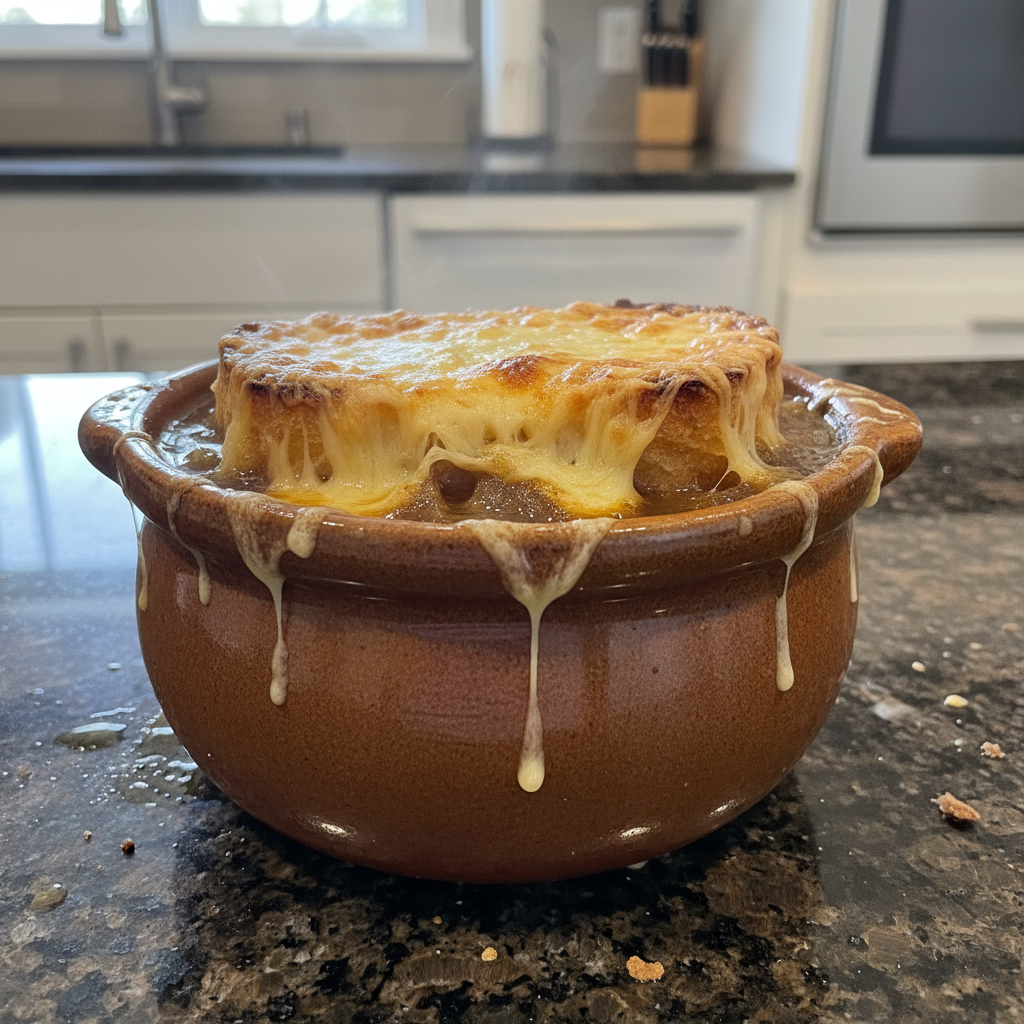
Best French Onion Soup Recipe with Balsamic Twist
Ingredients
Equipment
Method
- In a large heavy-bottomed stockpot, melt the butter over medium-high heat. Add the onions and sauté for about 30 minutes until caramelized (but not burnt). Initially, stir every 3-5 minutes, then about once a minute near the end of caramelization to prevent burning. Don't rush this process. Add garlic and sauté for 2 minutes. Stir in the flour and cook for an additional 1 minute. Stir in the wine to deglaze the pan, using a wooden spoon to scrape up any browned bits on the bottom of the pan. As the wine simmers, it will lift all of those flavorful bits that have stuck to the bottom.
- Add the stock, Worcestershire, bay leaf, and thyme and stir to combine. Continue to cook until the soup reaches a simmer. Then reduce heat to medium-low, cover and simmer for at least 10 minutes. Discard the bay leaf and sprigs of thyme. Taste the soup and season with salt and pepper as needed. This is your opportunity to customize the seasoning.
- Preheat oven to 400°F. While the soup is simmering, slice the baguette into 1-inch thick pieces and arrange them in a single layer on a baking sheet. Bake for 6-8 minutes, until the bread is toasted and golden around the edges. Remove and set aside.
- Switch the oven to the broiler. Once the soup is ready to serve, place your oven-safe bowls on a thick baking sheet. Ladle the soup into each bowl, then top with a baguette slice and your desired amount of cheese (I used about 1/4 cup shredded cheese for each). Place on an oven rack about 6 inches from the heat and broil for 2-4 minutes, or until the cheese is melted and bubbly. Keep a close eye on them so that they do not burn. Remove from the oven and serve immediately while the soup is hot and bubbly.
Notes

Lia Monet is a food blogger, recipe developer, and the founder of EasyAsMeals, a food blog focused on easy recipes, quick dinners, and everyday home cooking. She creates tested, family-friendly recipes using simple ingredients to help busy families cook affordable and delicious meals at home.