Niku Udon, a comforting bowl of Japanese beef noodle soup, is the perfect quick and satisfying meal. Imagine tender, thinly sliced beef and chewy udon noodles swimming in a rich, flavorful broth. This classic dish is especially appealing on a chilly day or when you need a warm hug in a bowl. This recipe shows you how to make delicious Niku Udon at home with a simple twist that elevates the flavor and tenderizes the beef.
Why You’ll Love This Savory Niku Udon Recipe
This Niku Udon recipe offers a unique twist that enhances both flavor and texture. The secret? A touch of sake.
Sake for Tender Beef: The sake in the beef marinade isn’t just for flavor; it tenderizes the meat. The enzymes in sake break down proteins, resulting in a more tender beef texture. This also adds a subtle fruity and umami flavor that beautifully complements the soy sauce and sugar.
Quick & Easy: This recipe is simple and fast, perfect for busy weeknights.
Family-Friendly: Niku Udon is a comforting and satisfying meal that appeals to both adults and children.
Budget-Friendly: It uses readily available ingredients, making it an affordable option for a delicious and comforting meal.
Ingredients Needed
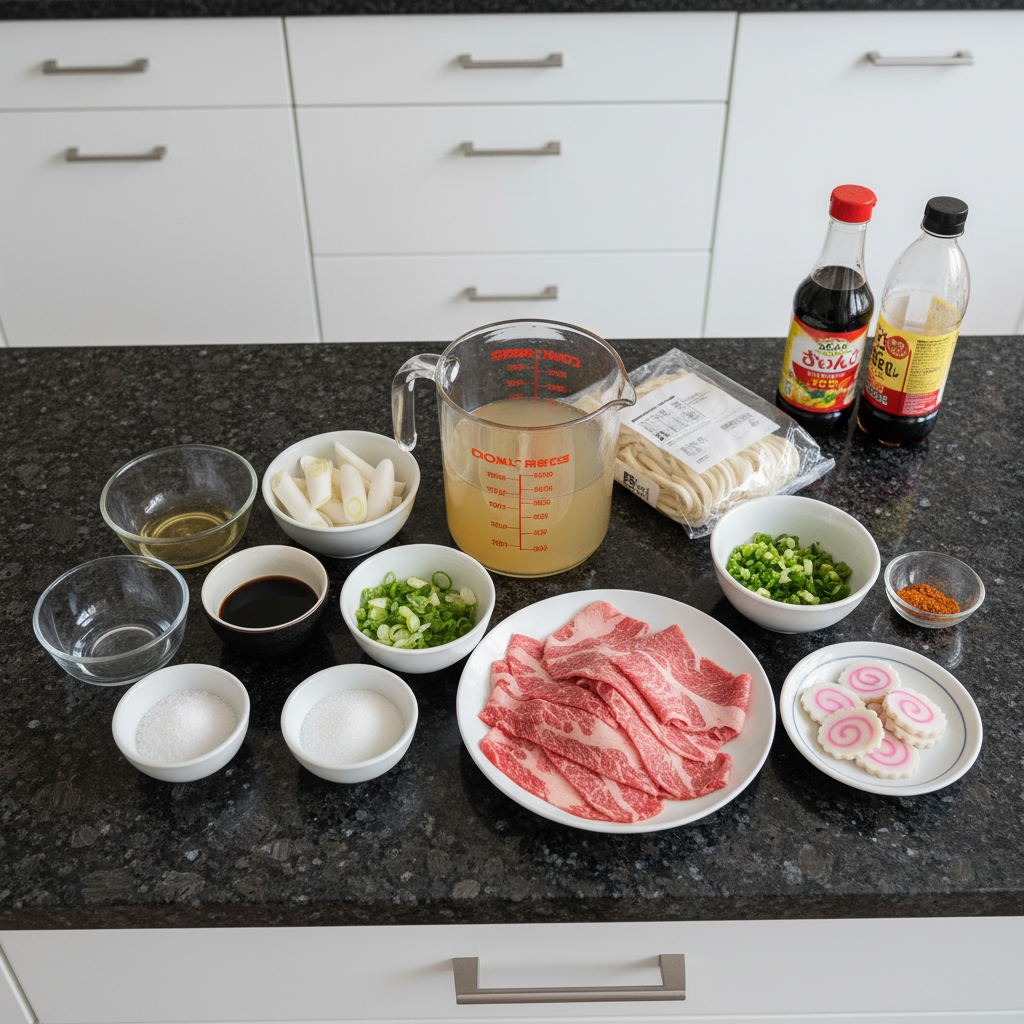
2½ cups dashi (Japanese soup stock) (use standard Awase Dashi, dashi packet or powder, or Vegan Dashi)
1½ Tbsp soy sauce
1 Tbsp mirin
1 tsp sugar
⅛ tsp Diamond Crystal kosher salt
½ Tokyo negi (naga negi; long green onion) (white part only; or use 2 green onions)
1 green onion/scallion (for topping)
4 sprigs mitsuba (Japanese parsley) (optional; for garnish)
6–8 oz thinly sliced beef (such as ribeye) (or learn how to slice meat thinly at home)
4 slices narutomaki (fish cakes) (optional)
1 Tbsp neutral oil
2 tsp sugar
1 Tbsp soy sauce
2 servings udon noodles (1.1 lb/500 g frozen or parboiled udon noodles; 6.3 oz/180 g dry udon noodles)
shichimi togarashi (Japanese seven spice) (optional)
⅓ cup mentsuyu (concentrated noodle soup base)
2⅓ cups water
1 Tbsp mirin
Ingredient Notes & Substitutions
Udon Noodles: You can use frozen, fresh, or dried udon noodles. Frozen udon is quick to prepare, while fresh offers a unique chewiness. Dried udon takes longer to cook. Choose your favorite type of udon noodles for this recipe.
Beef: While thinly sliced ribeye is ideal, other thinly sliced cuts like sirloin or even shaved beef will work. The key is to have thinly sliced beef for quick cooking and tenderness. If you can’t find pre-sliced beef, you can slice it yourself at home; see our guide below.
Dashi: You have several options for dashi. You can make it from scratch, use dashi packets, or use instant dashi powder. Dashi packets are a convenient option for a quick and flavorful broth. You can also use vegan dashi for a plant-based version. For more information, you might find this explanation of dashi on Wikipedia helpful.
Mirin: If you don’t have mirin, you can substitute a mixture of sake and a little sugar or dry sherry with a touch of honey.
Soy Sauce: For those with gluten sensitivities, gluten-free tamari is a great substitute for soy sauce. You can also read about the safety of soy sauce on a gluten-free diet.
Diamond Crystal Kosher Salt: Diamond Crystal kosher salt is preferred by many chefs for its clean taste and consistent salinity. If you don’t have it, you can use another brand of kosher salt, but you may need to adjust the amount to taste.
How to Make Niku Udon
Get Started
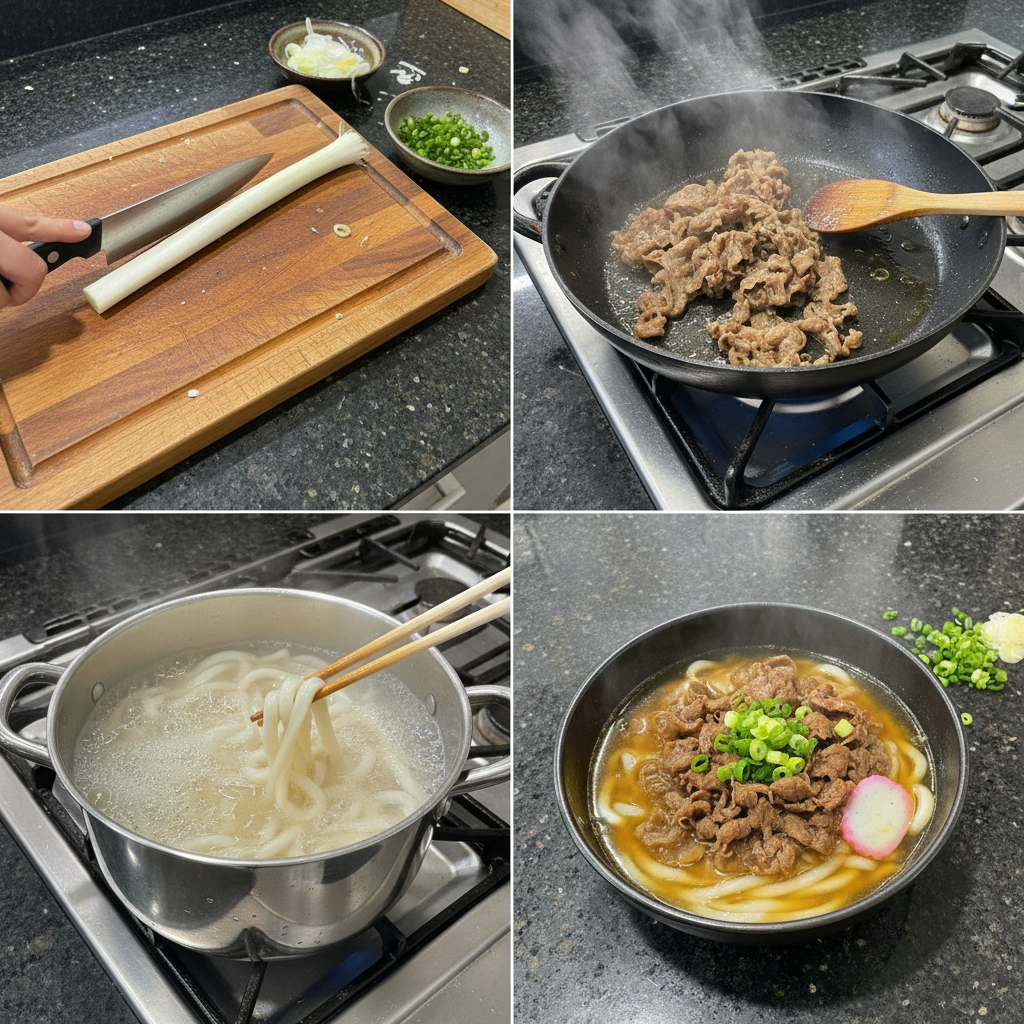
Gather all the ingredients. While you’re at it, prepare your toppings. Slice the green onions, mitsuba, and narutomaki (if using) and set them aside. This will save time later. Bring a large pot of water to a boil for the udon noodles. Once boiling, keep it covered on low heat until you ‘re ready to heat the noodles.
Prepare the Dashi Broth
First, make 2½ cups dashi (Japanese soup stock) of your choice. (To make a quick broth with mentsuyu noodle soup base, see the instructions at the end of the recipe.) I ‘ll show you how to make a quick dashi using a dashi packet (you can find it on Amazon). In a medium saucepan, add 2½ cups or 600 ml water and 1 dashi packet. Bring it to a boil over medium heat. You’ll know the water is at a rolling boil when large bubbles are rapidly rising and breaking at the surface.
Simmer and Infuse
Simmer for 2–3 minutes. Then, squeeze the liquid from the dashi packet and discard the packet. As it simmers, the aroma of the dashi will fill your kitchen.
Season the Broth
Season the dashi with 1½ Tbsp soy sauce, 1 Tbsp mirin, 1 tsp sugar, and ⅛ tsp Diamond Crystal kosher salt and mix it all together. Cover the pot with a lid to keep it hot and prevent evaporation. Turn off the heat and set aside. Taste the broth and adjust the seasoning to your liking. Some prefer a sweeter broth, while others prefer it saltier.
Prepare the Tokyo Negi
Cut the white part of ½ Tokyo negi (naga negi; long green onion) diagonally into ½-inch (1.3-cm) slices. Set aside. Cutting the negi diagonally helps it caramelize better and release more flavor.
Slice the Mitsuba
Thinly slice the leaves and tender stems of 4 sprigs mitsuba (Japanese parsley)(optional). Mitsuba adds a fresh, herbaceous note to the dish.
Slice the Green Onion
Cut 1 green onion/scallion into thin slices. Transfer the green onion slices and optional mitsuba to a small plate or bowl for topping the soup later.
Prepare the Beef and Narutomaki
Diagonally cut 4 slices narutomaki (fish cakes) (optional). Then, cut 6–8 oz thinly sliced beef (such as ribeye) in half to about 1½–2 inches (3.8–5 cm) wide. Cutting the beef makes it easier to eat and distributes the flavor more evenly throughout the soup.
Cook the Tokyo Negi
Heat the frying pan on medium heat. When it ‘s hot, add 1 Tbsp neutral oil and the Tokyo negi. The pan is hot enough when the oil shimmers.
Sauté the Negi and Beef
Sauté the negi until golden brown and tender. Then, add the thinly sliced beef and cook until it ‘s no longer pink. The smell of the negi caramelizing should be enticing.
Season the Beef
Add 2 tsp sugar and 1 Tbsp soy sauce.
Stir-fry the Beef
Stir-fry the meat until it is well coated with the seasoning. Remove from the heat. Be sure to remove the beef immediately to prevent overcooking and toughness.
Cook the Udon Noodles
Cook 2 servings udon noodles in boiling water according to the package instructions. For frozen udon noodles, boil from frozen for 1 minute to reheat. Use chopsticks to loosen the noodles so they don’t clump together.
Assemble the Niku Udon
Divide the drained udon noodles into individual serving bowls and pour the hot broth to cover.
Add Toppings and Serve
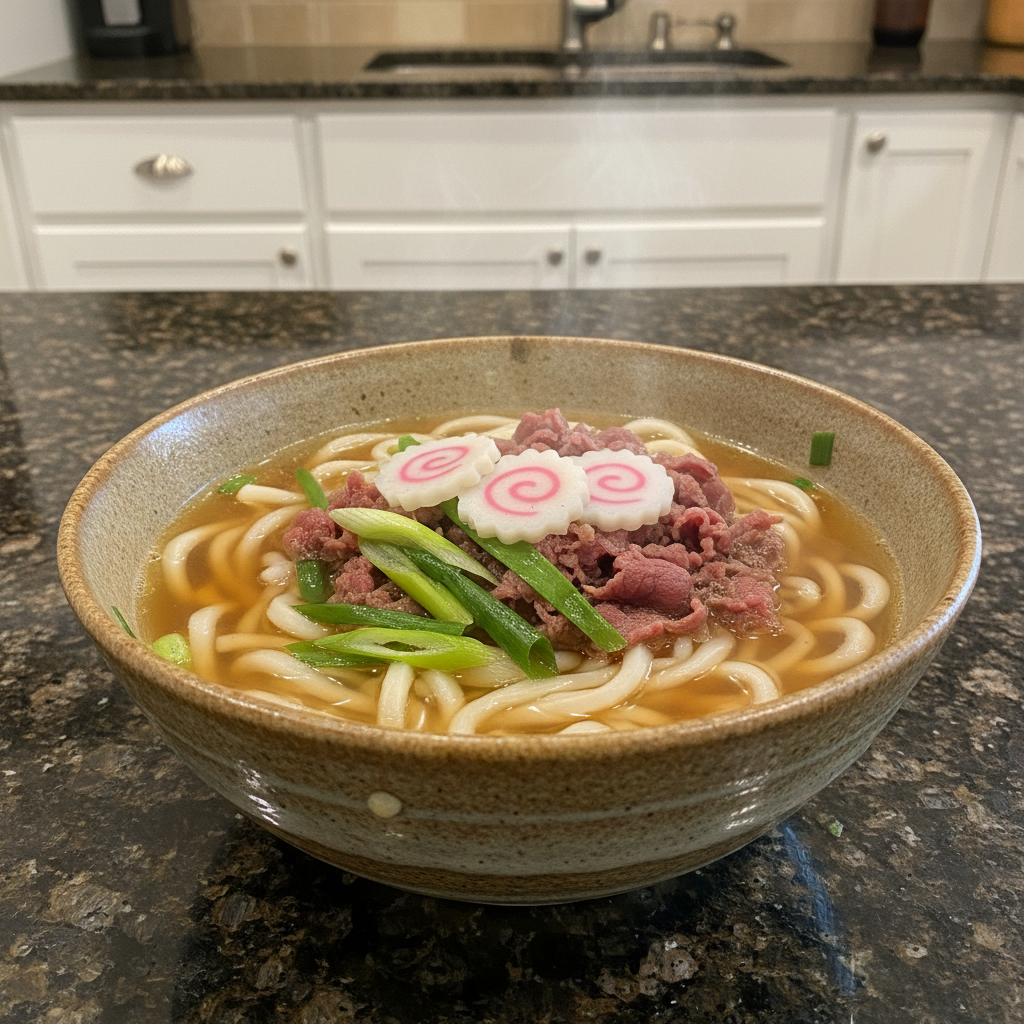
Place the stir-fried beef, narutomaki, green onions, and mitsuba on top. If you like it spicy, sprinkle shichimi togarashi (Japanese seven spice) on top. Enjoy! Feel free to customize your Niku Udon with your favorite toppings.
Quick Broth with Mentsuyu
In a medium saucepan, combine ⅓ cup mentsuyu (concentrated noodle soup base), 2⅓ cups water, and 1 Tbsp mirin and mix well. Bring the mixture to a gentle simmer over medium heat. Cover with a lid and turn off the heat. The udon broth is now ready to use. Mentsuyu simplifies the broth-making process, offering a shortcut without sacrificing flavor.
Storage
You can keep the stir-fried beef, udon noodles, and broth separately in airtight containers and store them in the refrigerator for up to 3 days.
Mastering the Noodles: Udon Types and Cooking Times
Udon noodles are a key component of Niku Udon, and understanding the different types and their cooking times is essential for achieving the perfect texture. There are three main types of udon noodles: fresh, frozen, and dried.
Fresh udon noodles have a soft, chewy texture and a slightly sweet flavor. They cook the fastest, usually in just a few minutes. Simply bring a pot of water to a boil and add the fresh udon noodles. Cook until they are heated through and slightly softened.
Frozen udon noodles are pre-cooked and then frozen. They have a similar texture to fresh udon, but they are even more convenient. To cook frozen udon, simply drop the frozen noodles into boiling water for about 1 minute, or until they are heated through. It’s important to remember that frozen udon just needs to be reheated, not boiled for an extended time, which can make them mushy.
Dried udon noodles have a firmer texture and a more pronounced wheat flavor. They take the longest to cook, typically around 10-15 minutes. Bring a large pot of water to a boil and add the dried udon noodles. Cook according to the package instructions, stirring occasionally to prevent sticking. Drain well before adding them to the soup.
Pro Tips & Troubleshooting
Pro Tips
Reheat frozen udon; don’t boil it. A 1-minute dip keeps the texture bouncy.
Loosen noodles with chopsticks so they don’t clump in the boiling water.
Use a wide pan to give the beef room to sear instead of steam.
Remove the beef as soon as it browns; ultra-thin slices cook in seconds.
Don’t skip the sake in the marinade; it truly tenderizes the beef.
Taste the broth before serving and adjust the soy sauce or sugar to your liking.
Common Mistakes to Avoid
Overcooking the beef: It will become tough and dry. Cook it quickly over medium-high heat.
Using too much salt: Start with less and add more to taste. Remember that soy sauce is already salty.
Letting the noodles clump together: Stir them frequently while cooking and rinse them after draining.
Boiling frozen udon for too long, resulting in mushy noodles.
Serving & Storage
Serving Ideas
Serve your Niku Udon with these delicious sides:
Blistered Shishito Peppers with Ginger Soy Sauce for a light veggie side.
Tomato Salad with Sesame Ponzu for a bright contrast.
Other options include Japanese side dishes like edamame, gyoza, or a simple seaweed salad. Consider serving with a cold Japanese beer or hot sake.
If you are looking for another flavorful soup, why not try this red lentil soup recipe?
Storage and Make-Ahead
Store leftover Niku Udon components separately (broth, noodles, beef) in airtight containers in the refrigerator for up to 3 days.
The broth and beef can be prepared a day or two in advance. Store them separately in the refrigerator. Cooking the noodles right before serving is best for optimal texture. However, pre-cooked noodles can be stored in the fridge and reheated quickly.
Reheat the broth in a saucepan over medium heat. Add the cooked beef during the last minute to warm it through. Reheat the noodles by briefly dipping them in boiling water or microwaving them with a splash of water. Assemble the dish with fresh toppings before serving.
Conclusion
Making Niku Udon at home is easier than you think! With tender, sake-infused beef, chewy udon noodles, and a flavorful broth, this dish is sure to become a family favorite. Don’t be intimidated if you’re a beginner; the steps are simple and straightforward. Feel free to experiment with different vegetables or add a spicy seasoning to customize your Niku Udon. Share your Niku Udon creations on social media or explore other Japanese recipes on the blog!
Also, if you’re looking for something different, you might enjoy a hearty vegetable barley soup recipe.
FAQ
Can I make this ahead?
Yes, the broth and beef can be made a day or two in advance and stored separately. Cook the noodles just before serving for the best texture.
Can I make it gluten-free?
Yes, use gluten-free tamari instead of soy sauce and ensure your udon noodles are gluten-free (some brands offer gluten-free options).
What if I have no mirin?
A good substitute for mirin is a mixture of sake and a little sugar, or dry sherry with a touch of honey.
What kind of beef should I use?
Thinly sliced ribeye is ideal, but other thinly sliced beef cuts like sirloin or even shaved beef work well. The key is thinness for quick cooking and tenderness.
How do I slice beef thinly at home?
Partially freeze the beef for about 30 minutes to make it easier to slice thinly. Use a sharp knife and slice against the grain.
What are the different types of udon noodles and how do they affect cooking time?
There are fresh, frozen, and dried udon noodles. Fresh cook the fastest, followed by frozen (which just need reheating), and dried take the longest. Adjust cooking time according to the package instructions to avoid overcooking.
Savory Niku Udon: Easy Japanese Beef Noodle Soup
Ingredients
Equipment
Method
- Gather all the ingredients. While you're at it, prepare your toppings. Slice the green onions, mitsuba, and narutomaki (if using) and set them aside. This will save time later. Bring a large pot of water to a boil for the udon noodles. Once boiling, keep it covered on low heat until you ‘re ready to heat the noodles.
- First, make 2½ cups dashi (Japanese soup stock) of your choice. (To make a quick broth with mentsuyu noodle soup base, see the instructions at the end of the recipe.) I ‘ll show you how to make a quick dashi using a dashi packet (you can find it on Amazon). In a medium saucepan, add 2½ cups or 600 ml water and 1 dashi packet. Bring it to a boil over medium heat. You'll know the water is at a rolling boil when large bubbles are rapidly rising and breaking at the surface.
- Simmer for 2–3 minutes. Then, squeeze the liquid from the dashi packet and discard the packet. As it simmers, the aroma of the dashi will fill your kitchen.
- Season the dashi with 1½ Tbsp soy sauce, 1 Tbsp mirin, 1 tsp sugar, and ⅛ tsp Diamond Crystal kosher salt and mix it all together. Cover the pot with a lid to keep it hot and prevent evaporation. Turn off the heat and set aside. Taste the broth and adjust the seasoning to your liking. Some prefer a sweeter broth, while others prefer it saltier.
- Cut the white part of ½ Tokyo negi (naga negi; long green onion) diagonally into ½-inch (1.3-cm) slices. Set aside. Cutting the negi diagonally helps it caramelize better and release more flavor.
- Thinly slice the leaves and tender stems of 4 sprigs mitsuba (Japanese parsley)(optional). Mitsuba adds a fresh, herbaceous note to the dish.
- Cut 1 green onion/scallion into thin slices. Transfer the green onion slices and optional mitsuba to a small plate or bowl for topping the soup later.
- Diagonally cut 4 slices narutomaki (fish cakes) (optional). Then, cut 6–8 oz thinly sliced beef (such as ribeye) in half to about 1½–2 inches (3.8–5 cm) wide. Cutting the beef makes it easier to eat and distributes the flavor more evenly throughout the soup.
- Heat the frying pan on medium heat. When it ‘s hot, add 1 Tbsp neutral oil and the Tokyo negi. The pan is hot enough when the oil shimmers.
- Sauté the negi until golden brown and tender. Then, add the thinly sliced beef and cook until it ‘s no longer pink. The smell of the negi caramelizing should be enticing.
- Add 2 tsp sugar and 1 Tbsp soy sauce.
- Stir-fry the meat until it is well coated with the seasoning. Remove from the heat. Be sure to remove the beef immediately to prevent overcooking and toughness.
- Cook 2 servings udon noodles in boiling water according to the package instructions. For frozen udon noodles, boil from frozen for 1 minute to reheat. Use chopsticks to loosen the noodles so they don’t clump together.
- Divide the drained udon noodles into individual serving bowls and pour the hot broth to cover.
- Place the stir-fried beef, narutomaki, green onions, and mitsuba on top. If you like it spicy, sprinkle shichimi togarashi (Japanese seven spice) on top. Enjoy! Feel free to customize your Niku Udon with your favorite toppings.
- In a medium saucepan, combine ⅓ cup mentsuyu (concentrated noodle soup base), 2⅓ cups water, and 1 Tbsp mirin and mix well. Bring the mixture to a gentle simmer over medium heat. Cover with a lid and turn off the heat. The udon broth is now ready to use. Mentsuyu simplifies the broth-making process, offering a shortcut without sacrificing flavor.
Notes